
Author name: Jens Götze

The SiO2 Gemstone Family

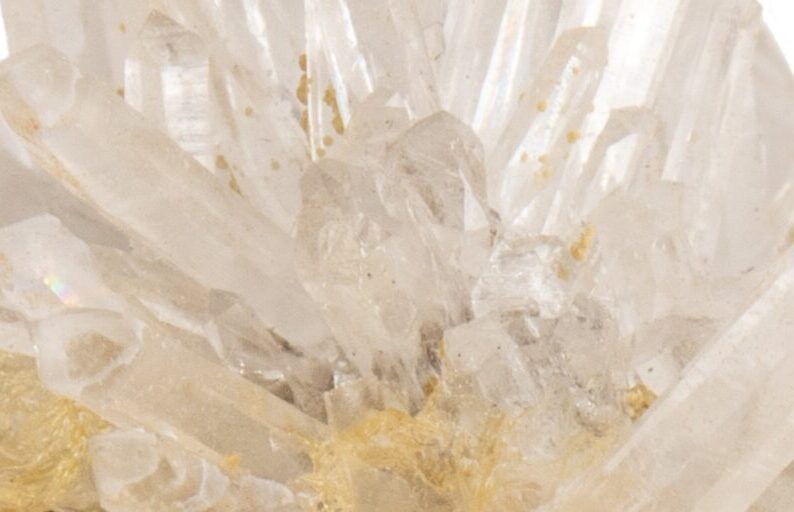
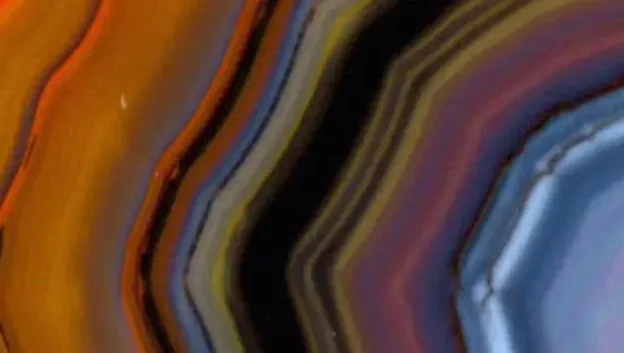
Quartz is the most popular and widely used gemstone of the SiO2 family with its phenomenal varieties and spectacular colors, e.g., near-colorless (rock crystal), purple (amethyst), yellow (citrine), smoky (smoky quartz), and pink. The colors of these varieties are mostly caused by trace contents of foreign ions, which in turn are activated by treatment with high-energy radiation and/or temperature treatment (so-called color centers). Cryptocrystalline SiO2 varieties such as agate, chrysoprase, or jasper mostly represent mixtures of SiO2 minerals and other phases, while the play of colors in amorphous precious opal is caused by light diffraction and interference. Despite their different origins and properties, all these SiO2 varieties have played a dominant role as gemstones and cut stone since antiquity.

This content is for Registered members only. To subscribe, please
join one of our participating societies or contact the Editorial Team.

Login
Already a member? Log in here

The SiO2 Gemstone Family Read More »

Quartz and SiO2—Simple Yet Exciting

Despite their simple chemical composition, silica (silicon dioxide, SiO2) minerals comprise a complex system with diverse polymorphs of distinct crystal structures and different stabilities and properties. Quartz is arguably the most important mineral throughout human history, from early survival tools to critical materials for modern advanced technology. In addition, quartz and other silica polymorphs and varieties are excellent archivers and important tools for deciphering geological, environmental, and planetary processes and histories.

This content is for Registered members only. To subscribe, please
join one of our participating societies or contact the Editorial Team.

Login
Already a member? Log in here

Quartz and SiO2—Simple Yet Exciting Read More »

Luminescence Images: What is it That You See?

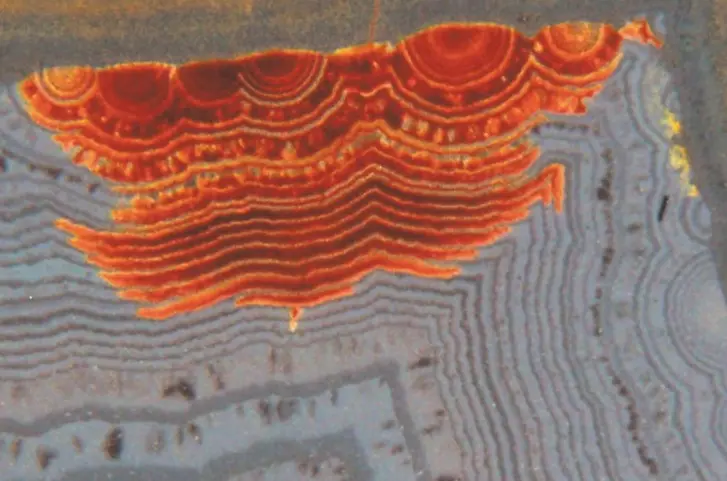
Luminescence imaging and hyperspectral luminescence mapping are powerful analytical tools with widespread applications in geosciences and materials science. The luminescence of minerals is mainly a defect phenomenon caused by lattice defects and/or impurity elements. This in turn allows one to study trace-element composition and the structural state of a sample by means of its emission. One of the most spectacular and widely used applications of luminescence images is to visualise internal textures in minerals that are not revealed by other analytical techniques. Herein we present a selection of examples for the extraordinary sensitivity of luminescence imaging. We also show that precise information on samples is obtained if luminescence imaging is combined with spectroscopic analysis of the emission and/ or complementary analytical techniques.

This content is for Registered members only. To subscribe, please
join one of our participating societies or contact the Editorial Team.

Login
Already a member? Log in here

Luminescence Images: What is it That You See? Read More »

Scroll to Top

December 2025 --The Variscan Orogeny in Europe – Understanding Supercontinent Formation

The Variscan orogen formed between 380 and 300 million years ago through several accretionary and collisional cycles, culminating with the construction of the Pangea supercontinent. This process occurred via sequential opening and closure of oceanic basins, synchronous detachment of Gondwana derived continental ribbons, and their outboard amalgamation onto the Laurussia margin. The Variscan orogen is rather unique compared with other orogenic belts on Earth: its overthickened and dominantly magmatic crust in the central belt, surprisingly minor mantle involvement in the magmatic and geodynamic processes, coherent and pulsed magmatism along the collision suture, and its complex accretionary history. Because its final product, Pangea, is the youngest and best-understood supercontinent on Earth, the Variscan orogeny offers clues for understanding the mechanisms of supercontinent formation.