Zeolites
Tobias B. Weisenberger, G. Diego Gatta, Alessio Langella and David L. Bish – Guest Editors
Table of Contents
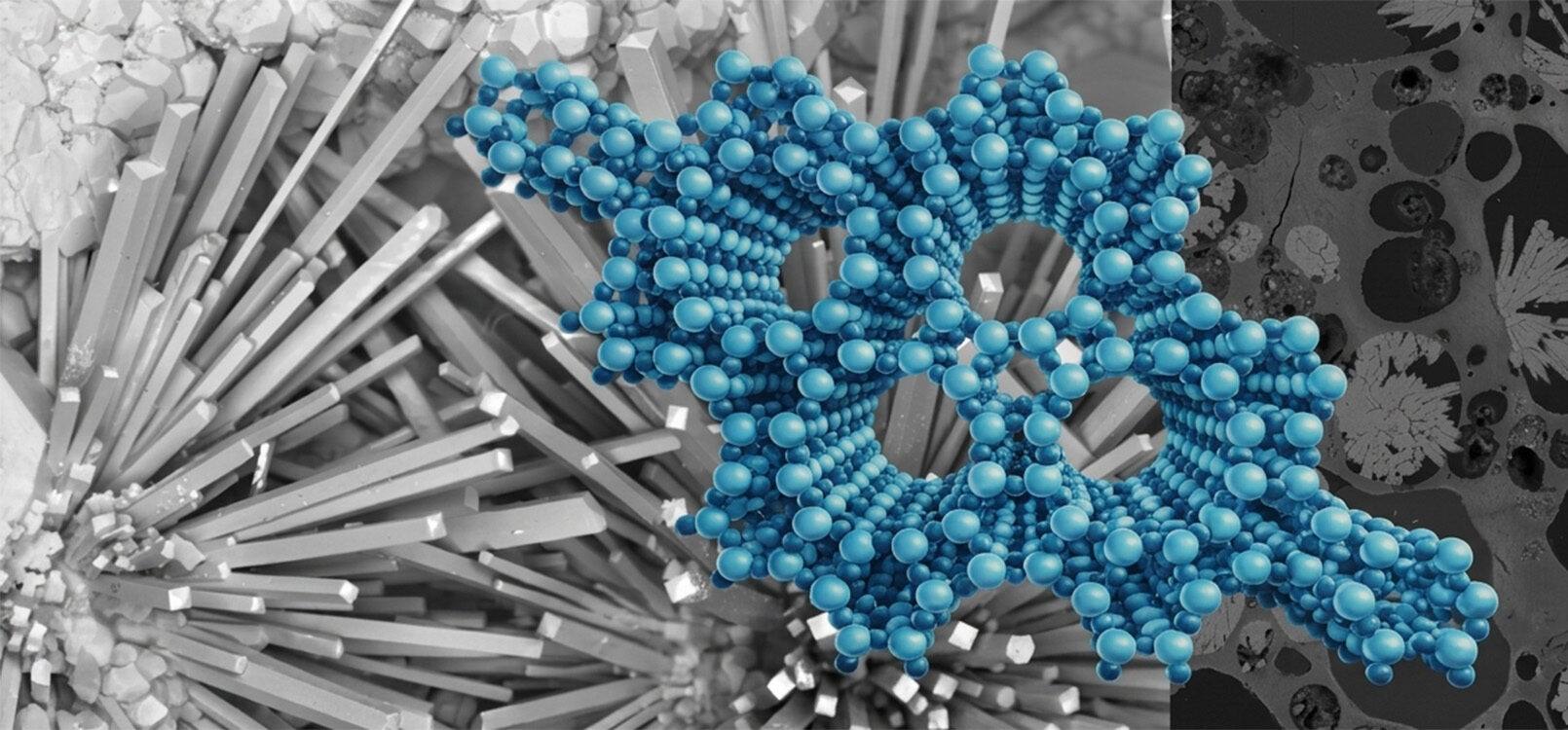
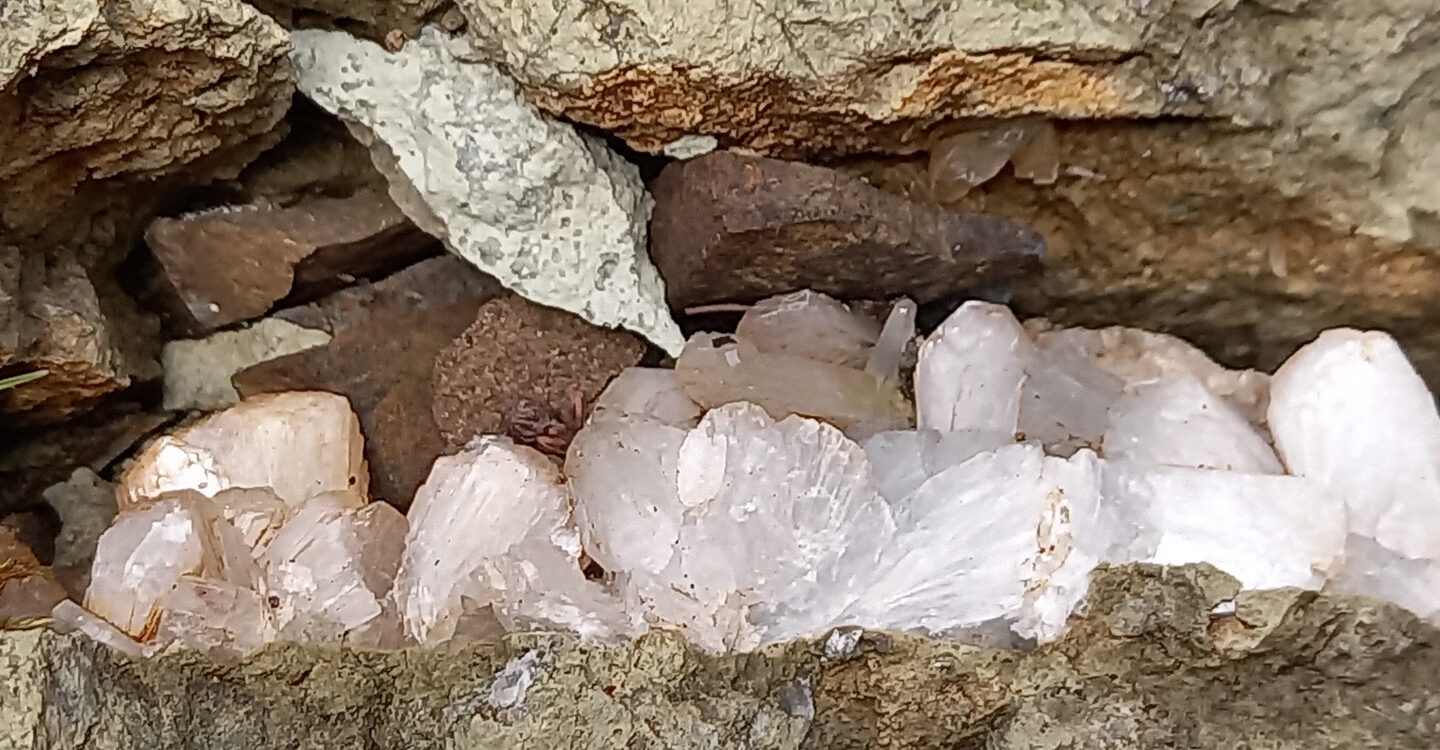
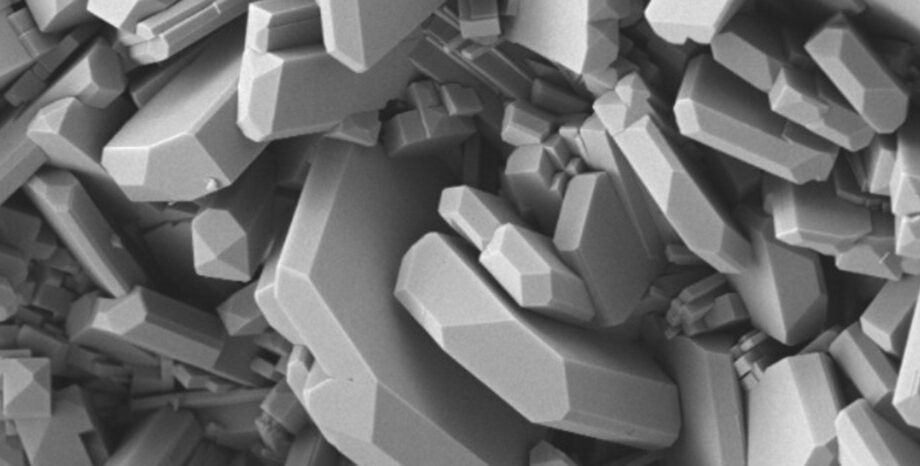
Zeolites are among the most versatile minerals in the Earth’s crust. These tectosilicates possess open-framework crystal structures containing interconnected channels and cages that accommodate H2O molecules and exchangeable cations. Their unique structures give rise to a remarkable range of properties, including reversible hydration and dehydration, ion-exchange capacity, and molecular sieving behavior. As a result, zeolites have attracted sustained interest from mineralogists, geochemists, materials scientists, and engineers for over a century. Natural zeolites form under relatively low-temperature conditions in diverse geological environments. Their occurrence provides valuable insights into fluid–rock interactions and the evolution of near-surface geological systems through space and time. In addition, their physicochemical characteristics make them important industrial minerals with an ever-increasing range of technological applications.
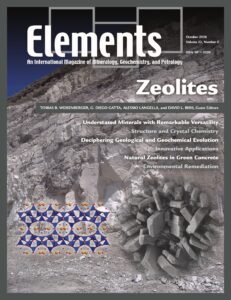
This Elements issue highlights recent advances in our understanding of natural zeolites, from their formation and crystal chemistry to their behavior under non-ambient conditions. Contributions also explore emerging and established applications in areas, such as sustainable construction materials, environmental remediation, filtering material during wine and beer production, agriculture, and pharmaceutical research. By bringing together perspectives from both fundamental and applied sciences, this issue aims to showcase the continuing importance of natural zeolites and identify promising directions for future research and innovation.
- Natural Zeolites: Understated Minerals with Remarkable Versatility
- Natural Zeolite Crystal Chemistry: Structural Diversity and Behavior Under Non-ambient Conditions
- Zeolites as Tools for Interpreting Geological and Geochemical Conditions
- New and Innovative Applications of Natural Zeolites
- Natural Zeolites: Pathways to Green and Durable Cement and Concrete
- Applications of Zeolites in Environmental Remediation
SHAPING EARTH’S HABITABILITY
Guest Editors: Priyadarshi Chowdhury (National Institute of Science Education & Research, India), Eva E. Stüeken (University of St. Andrews, UK), and Peter A. Cawood (Monash University, Australia)
Earth is the only known planet to sustain life, but its journey to habitability was anything but straightforward. Life emerged early in the Archean and evolved over billions of years into the complex biosphere we observe today. This proposed thematic issue focuses on a series of key events in Earth’s early history that collectively enabled it to host a diverse and persistent biosphere. These include the delivery and retention of life-essential elements, formation of oceans, emergence of subaerial continents, oxygenation of the atmosphere and oceans, climate stabilization, and the onset of plate tectonics. Over the past two decades, each of these events has been investigated in detail—but largely in isolation. This issue seeks to integrate these advances by investigating why, when, and how these transformations occurred, how they were interconnected, and how they shaped Earth’s capacity to host life. For this, we will draw insights from geochemistry, petrology, sedimentology, geodynamics, and big-data science approaches. Understanding this co-evolution of Earth’s different components is central to the 21st-century Earth sciences. Insights from this issue will offers a valuable framework for assessing the habitability of other rocky planets, which will engage a broader readership and foster appreciation for Earth’s uniqueness as a living world.
- Transforming Earth: The Path to Habitability
- Origin of Life-essential Volatiles: A Start from the Magma Ocean
- From Mafic Beginnings to Felsic Heights: The Evolution of Subaerial Crust
- Oxygenation of the Atmosphere and Oceans
- Making a Clement, Habitable Climate
- Life With and Without Plate Tectonics
- Earth’s Carbon Cycle Thermostat: Beyond the Textbook Model (February 2026)
- Mineral Physics Applied to Earth and Planetary Sciences (April 2026)
- Quartz (June 2026)
- Stromatolites and Other Microbialites (August 2026)
- Zeolites (October 2026)
- Shaping Earth’s Habitability (December 2026)
Thematic Articles