


Author name: Josef Dufek

The Nature of Active Magma Reservoirs and Storage Underneath Cascade Volcanoes

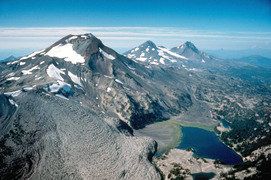
Volcanic activity is dictated by crustal pathways and reservoirs through which magma ascends and collects. The Cascades are a natural laboratory to study the influence of the crust on erupted magmas and subterranean reservoirs. The interaction of ascending magmas with the variable subduction geometry and tectonics of the overriding North American plate has given rise to a diversity of magmatic storage conditions. The confluence of geochemical and geophysical investigations emphasizes that most magmatic systems in the Cascades have been built at multiple levels in the crust, as determined by tectonics, pre-existing structure, and magmatic flux from the mantle.

This content is for Registered members only. To subscribe, please
join one of our participating societies or contact the Editorial Team.

Login
Already a member? Log in here

The Nature of Active Magma Reservoirs and Storage Underneath Cascade Volcanoes Read More »

Cascadia: Subduction and People

The well-studied Cascadia subduction zone has enriched our general understanding of global subduction zones. This Elements issue explores the interconnected set of processes that link geodynamics, tectonics, and magmatism at depth and the surface expressions of these processes, which shape the landscape and give rise to natural hazards in the Cascadia region. This issue also addresses the impact of subduction zone processes on human populations using cultural records, and reviews the state of knowledge of Cascadia while highlighting some key outstanding research questions.

This content is for Registered members only. To subscribe, please
join one of our participating societies or contact the Editorial Team.

Login
Already a member? Log in here

Cascadia: Subduction and People Read More »

Scroll to Top

December 2025 --The Variscan Orogeny in Europe – Understanding Supercontinent Formation

The Variscan orogen formed between 380 and 300 million years ago through several accretionary and collisional cycles, culminating with the construction of the Pangea supercontinent. This process occurred via sequential opening and closure of oceanic basins, synchronous detachment of Gondwana derived continental ribbons, and their outboard amalgamation onto the Laurussia margin. The Variscan orogen is rather unique compared with other orogenic belts on Earth: its overthickened and dominantly magmatic crust in the central belt, surprisingly minor mantle involvement in the magmatic and geodynamic processes, coherent and pulsed magmatism along the collision suture, and its complex accretionary history. Because its final product, Pangea, is the youngest and best-understood supercontinent on Earth, the Variscan orogeny offers clues for understanding the mechanisms of supercontinent formation.