


Author name: Anne H. Peslier

Water in Differentiated Planets, the Moon, and Asteroids

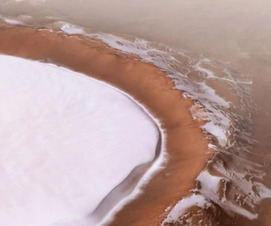
The distribution of water in differentiated Solar System bodies depends on many factors including size, distance from the Sun, and how they incorporated water. Most of this water is likely locked as hydrogen in mantle minerals and could amount to several Earth oceans worth in mass for the largest planets. An essential compound for the development of life, water also has a tremendous influence on planetary evolution and volcanism. Only Earth has an active exchange of water between surface and mantle. Surface water on other differentiated bodies mostly results from degassing by volca- noes whose mantle sources are inherited from magma ocean processes early in their history. Airless bodies also acquire surface water by impacts, spallation, and from the solar wind.

This content is for Registered members only. To subscribe, please
join one of our participating societies or contact the Editorial Team.

Login
Already a member? Log in here

Water in Differentiated Planets, the Moon, and Asteroids Read More »
Unique, Antique Vesta

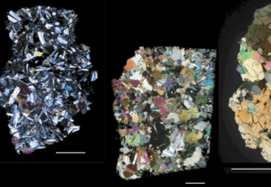
Most asteroids are collisional rubble from eons past, and few of them have survived intact. Vesta, the second most massive asteroid, is the only differentiated, rocky body in this category. This asteroid provides a unique view of the kinds of planetesimals that accreted to form the terrestrial planets. We know more about this asteroid than any other, thanks to its recently completed exploration by the orbiting Dawn spacecraft and studies of the ~1000 meteorites derived from it. The synergy provided by in situ analyses and samples has allowed an unparalleled understanding of Vesta’s mineralogy, petrology, geochemistry, and geochronology.

This content is for Registered members only. To subscribe, please
join one of our participating societies or contact the Editorial Team.

Login
Already a member? Log in here

Unique, Antique Vesta Read More »

Scroll to Top

December 2025 --The Variscan Orogeny in Europe – Understanding Supercontinent Formation

The Variscan orogen formed between 380 and 300 million years ago through several accretionary and collisional cycles, culminating with the construction of the Pangea supercontinent. This process occurred via sequential opening and closure of oceanic basins, synchronous detachment of Gondwana derived continental ribbons, and their outboard amalgamation onto the Laurussia margin. The Variscan orogen is rather unique compared with other orogenic belts on Earth: its overthickened and dominantly magmatic crust in the central belt, surprisingly minor mantle involvement in the magmatic and geodynamic processes, coherent and pulsed magmatism along the collision suture, and its complex accretionary history. Because its final product, Pangea, is the youngest and best-understood supercontinent on Earth, the Variscan orogeny offers clues for understanding the mechanisms of supercontinent formation.