
Author name: Karen L. Scrivener

The Rise of Portland Cements

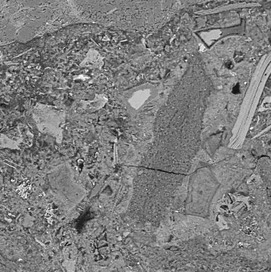
This chapter tells the story of Portland cement, from its invention in the
19th century until its present-day hegemony as the number one manufactured mineral product. The success story of Portland cement is rooted in
the unique combination of the abundance of its raw materials, the reactivity of the high-temperature clinker product toward water, and the properties of the calcium silicate and aluminate hydration products. Further development of Portland cements today mainly addresses the formidable challenge of reducing process CO2 emissions. Options include partial replacement of clinker by low-carbon resources, material-efficient use of cement and concrete products, and end-of-pipe carbon capture and storage or use.

This content is for Registered members only. To subscribe, please
join one of our participating societies or contact the Editorial Team.

Login
Already a member? Log in here

The Rise of Portland Cements Read More »
Cement and Concrete—Past, Present, and Future

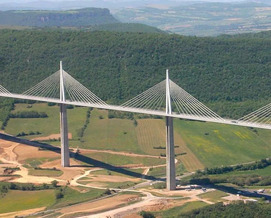
The need to meet the globally increasing demand for construction
materials, while reducing the environmental impact of cement and concrete production, poses a technological and societal dilemma. Detailed knowledge concerning the mineralogical, geochemical, and microstructural features of ancient and modern binders is fundamental for novel, sustainable, cement-based materials to be designed, manufactured, and deployed. This introduction provides several basic concepts related to cement and concrete, as well as a general overview of the role played by these construction materials in ancient civilizations and in today’s society, and of how they are expected to evolve to ensure a sustainable, inclusive, and resilient urban future.

This content is for Registered members only. To subscribe, please
join one of our participating societies or contact the Editorial Team.

Login
Already a member? Log in here

Cement and Concrete—Past, Present, and Future Read More »

Scroll to Top

December 2025 --The Variscan Orogeny in Europe – Understanding Supercontinent Formation

The Variscan orogen formed between 380 and 300 million years ago through several accretionary and collisional cycles, culminating with the construction of the Pangea supercontinent. This process occurred via sequential opening and closure of oceanic basins, synchronous detachment of Gondwana derived continental ribbons, and their outboard amalgamation onto the Laurussia margin. The Variscan orogen is rather unique compared with other orogenic belts on Earth: its overthickened and dominantly magmatic crust in the central belt, surprisingly minor mantle involvement in the magmatic and geodynamic processes, coherent and pulsed magmatism along the collision suture, and its complex accretionary history. Because its final product, Pangea, is the youngest and best-understood supercontinent on Earth, the Variscan orogeny offers clues for understanding the mechanisms of supercontinent formation.