Thematic Articles

Burned or Buried: What Controls the Long-term Preservation of Organic Carbon?

The preservation of organic carbon (OC) in marine sediments is a fundamental control on Earth’s long-term carbon cycle and climate. Globally, less than 2% of carbon fixed by primary producers is ultimately buried, yet specific environments and geological intervals exhibit markedly enhanced preservation. These variations reflect changes in organic matter composition, mineral associations, microbial activity, geochemical conditions, temperature, and sediment transport. Planetary-scale changes in climate, tectonics, continental configuration, biological evolution, and ocean circulation have repeatedly altered these controls, promoting enhanced OC burial during key periods of Earth history. OC preservation has thus acted as an important stabilizing feedback following major carbon-cycle perturbations. Here, we examine these mechanisms and their significance through time.

This content is for Registered members only. To subscribe, please
join one of our participating societies or contact the Editorial Team.

Login
Already a member? Log in here

Burned or Buried: What Controls the Long-term Preservation of Organic Carbon? Read More »
The Fate of Ocean Alkalinity: Carbonate Formation and Reverse Weathering Reactions

The ocean’s buffering capacity, or alkalinity, regulates the amount of atmospheric CO2 the ocean can sequester. Typically, it is assumed that the formation of carbonate minerals is the only sink for ocean alkalinity. However, in recent years, the formation of alumino-silicate phases in the seabed via reactions that consume alkalinity and produce CO2 (reverse weathering) has been shown to be significant in the modern ocean and is thought to provide a control on the long-term C cycle. Evolutionary changes in the modes of carbonate production and the availability of certain seawater constituents are also important controls on CaCO3 formation beyond the flux of alkalinity into the ocean. Here we explore the links between biogeochemical cycles, seawater chemistry, and alkalinity sinks.

This content is for Registered members only. To subscribe, please
join one of our participating societies or contact the Editorial Team.

Login
Already a member? Log in here

The Fate of Ocean Alkalinity: Carbonate Formation and Reverse Weathering Reactions Read More »

The Role of Seawater Interaction with the Ocean Floor in the Carbon Cycle

Seawater circulation through oceanic crust acts as an essential sink for CO2 and affects the alkalinity budget of the ocean. Seafloor weathering and ridge flank hydrothermal activity contribute to modern carbon sequestration by taking up carbon at a rate < 0.5 Tmol y−1. In addition, these processes release < 1 Tmol y−1 alkalinity to the ocean. During warmer eras in Earth history, the carbon uptake rates were considerably higher. Estimates range between 2.1 and 3.4 Tmol y−1 during the Cretaceous and Jurassic. The more intense carbonation of the seafloor in the Mesozoic is due to higher temperatures and less pelagic sedimentation in the deep ocean. Accelerated rates of reaction between seawater and basalt and prolonged durations of exposure of igneous crust to seawater led to more intense basalt alteration and carbonate formation within the crust. The interactions between oceanic crust and seawater hence profoundly influence global carbon cycling on long time scales.

This content is for Registered members only. To subscribe, please
join one of our participating societies or contact the Editorial Team.

Login
Already a member? Log in here

The Role of Seawater Interaction with the Ocean Floor in the Carbon Cycle Read More »

Continental Weathering as Climate Stabilizer

Conventional wisdom on Earth’s long-term habitability relies on a negative feedback loop among climate, silicate weathering, and atmospheric CO2 concentrations. Essentially, climate modulates the rate of CO2 consumption associated with silicate weathering, which in turn stabilizes climate through the greenhouse effect of atmospheric CO2. This review assesses the efficacy of continental weathering as a climate stabilizer, including the supply of bedrock available for weathering, the influences of atmospheric oxygenation and land-plant colonization on weathering efficiency, and CO2-emitting weathering processes that may counteract the negative feedback associated with silicate weathering. Basalt weathering plays a key role in mitigating these constraints, as it can sustain a large weathering-derived CO2 sink and has exhibited a high sensitivity to climatic changes through much of the Earth’s history.

This content is for Registered members only. To subscribe, please
join one of our participating societies or contact the Editorial Team.

Login
Already a member? Log in here

Continental Weathering as Climate Stabilizer Read More »

Igneous and Metamorphic CO₂ Sources: How Large and How Variable?

Igneous and metamorphic processes play a critical role in the geological carbon cycle and Earth’s long-term habitability by transferring carbon between rocks and the ocean–atmosphere system. The magnitude of these carbon fluxes, both in the present day and throughout Earth’s history, remains poorly constrained. Traditional models link carbon degassing to riverine bicarbonate fluxes, but these approaches rely on the questionable assumption that the modern system is in steady-state. Here, we summarize the current state of research on quantifying igneous and metamorphic carbon fluxes using direct measurements, geochemical proxies, and ancient rock records. We also examine the spatial and temporal variability of these processes, which is crucial for understanding their influence on Earth’s carbon cycle over geological timescales.

This content is for Registered members only. To subscribe, please
join one of our participating societies or contact the Editorial Team.

Login
Already a member? Log in here

Igneous and Metamorphic CO₂ Sources: How Large and How Variable? Read More »

How Well Do We Understand the Geological Carbon Cycle?

The foundation of our understanding of the geological carbon cycle, and how this acts as Earth’s “thermostat,” was articulated in a seminal paper in 1981 (Walker et al). They suggested that silicate weathering on the continents acts as a stabilizing feedback on the carbon cycle such that increased atmospheric pCO2 leads to increased weathering rates and hence increased removal of CO from the atmosphere. This “textbook model” is at the core 2 of most models of long-term biogeochemical cycles. We summarize evidence that there are many other processes in the geological carbon cycle that may be equally or more important than those in the Walker model. We argue there is a need to move beyond the textbook model in both teaching and research.

This content is for Registered members only. To subscribe, please
join one of our participating societies or contact the Editorial Team.

Login
Already a member? Log in here

How Well Do We Understand the Geological Carbon Cycle? Read More »

Assembling Pangaea – The Complex Morphology of the Laurussia – Gondwana Collision

The Late Paleozoic convergence and collision between Gondwana and Laurentia resulted in along-strike variations in the Alleghanian–Mauritanide–Variscan orogeny during the assembly of the greater part of Pangaea. A series of ca. 380–290 Ma events segmented the orogen into two principal geodynamic domains with contrasting tectonic evolutions. In the northeast, the European Variscan belt records multiple subduction–collisional tectonic events, including indentation by Laurussian and later Gondwanan promontories and by Gondwana-derived terranes. Late-stage events (330–290 Ma) produced strongly curved deformation belts (oroclines), and late- to post-orogenic extension. In contrast, the southern Appalachians formed southwest of the promontory collisions where subduction of Rheic Ocean remnants produced a continuous Andean-style orogenic arc that preceded ca. 290 Ma terminal collision. We explain Pangaea amalgamation using a global model of mantle convection like that of modern Earth.

This content is for Registered members only. To subscribe, please
join one of our participating societies or contact the Editorial Team.

Login
Already a member? Log in here

Assembling Pangaea – The Complex Morphology of the Laurussia – Gondwana Collision Read More »

Granites and the Nature of the Variscan Crust

The orogenic crust of the European Variscan belt is granite-rich and only locally has a mafic lower layer. The core of the belt originated by massive melting of fertile quartzo–feldspathic sources (felsic meta-sedimentary or meta-igneous) derived from an Ediacaran–Ordovician accretionary system. An unusually felsic lower crust formed either by relamination of previously subducted continental crust or by melting of crustal rocks to produce a granitic upper crust and a laminated, restitic lower crust. This is in strong contrast to conventional models, developed mainly for magmatic arcs, that find or infer mafic lower crustal compositions. Thus, global estimates on the nature and evolution of the continental crust should consider the heterogeneity of the deep crust produced in various types of orogenies.

This content is for Registered members only. To subscribe, please
join one of our participating societies or contact the Editorial Team.

Login
Already a member? Log in here

Granites and the Nature of the Variscan Crust Read More »

Evolution and Structure of the European Variscan Lithospheric Mantle

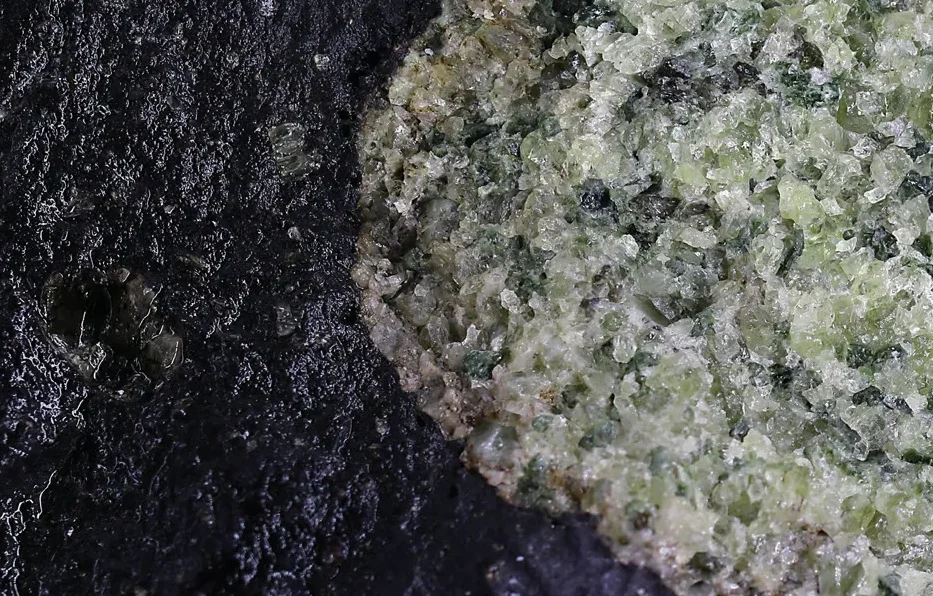
Tectonically emplaced peridotites and mantle xenoliths present complementary aspects of the evolution of the Variscan lithospheric mantle. The former have diverse origins and document complex histories of melt–rock reactions, exhumation along various pressure–temperature–time (P–T–t) paths, and emplacement into the crust, unravelling plate boundary evolution during Variscan subduction and collision. Mantle xenoliths exhumed by Cenozoic volcanism reveal ancient partial melting and mostly post-Variscan metasomatism episodes. Yet, their coarse-grained textures potentially record Variscan deformation. Dominantly belt-parallel fast seismic directions of the in situ Variscan lithospheric mantle may record flow normal to the convergence direction, but parallel to the boundaries of the Baltica and Avalonia blocks in central Europe, and to the main strike-slip faults and late extension in the Massif Central and Iberia.

This content is for Registered members only. To subscribe, please
join one of our participating societies or contact the Editorial Team.

Login
Already a member? Log in here

Evolution and Structure of the European Variscan Lithospheric Mantle Read More »

Extent and Role of Cratonic Lithosphere in the Variscan Orogeny

Thick and relatively cold cratonic lithosphere of Laurussia and Gondwana shaped the Variscan orogen as those continents collided diachronously to form Pangaea. Herein, we summarize and integrate geological and geophysical results that show how cratonic lithosphere of those composite continents created the Variscan geologic foundation of Europe and northwestern Africa. Our analysis focuses on the lithospheric architecture of Baltica, Avalonia, and Gondwana-derived terranes to distinguish preserved cratonic domains from reworked zones. Zircon provenance analysis further constrains terrane origins and accretion history. The European Variscan belt is distinguished by the large proportion of Gondwana-derived terranes compared with its orogenic core. Its tectonic system reflects inherited rift architecture and the influence of rigid lithospheric promontories, setting it apart from other collisional belts.

This content is for Registered members only. To subscribe, please
join one of our participating societies or contact the Editorial Team.

Login
Already a member? Log in here

Extent and Role of Cratonic Lithosphere in the Variscan Orogeny Read More »

Scroll to Top

December 2025 --The Variscan Orogeny in Europe – Understanding Supercontinent Formation

The Variscan orogen formed between 380 and 300 million years ago through several accretionary and collisional cycles, culminating with the construction of the Pangea supercontinent. This process occurred via sequential opening and closure of oceanic basins, synchronous detachment of Gondwana derived continental ribbons, and their outboard amalgamation onto the Laurussia margin. The Variscan orogen is rather unique compared with other orogenic belts on Earth: its overthickened and dominantly magmatic crust in the central belt, surprisingly minor mantle involvement in the magmatic and geodynamic processes, coherent and pulsed magmatism along the collision suture, and its complex accretionary history. Because its final product, Pangea, is the youngest and best-understood supercontinent on Earth, the Variscan orogeny offers clues for understanding the mechanisms of supercontinent formation.