The Executive Committee is responsible for the management of Elements.
The Executive Committee:
provides the financial oversight for Elements and approves the annual budget and cost allocation to the Participating Societies;
provides timely information to the appropriate officers, committees and staff of the Participating Societies;
approves the appointments of the Principal Editors and Executive Editor of Elements;
The Executive Committee consists of members (one per Participating Society) are appointed by their respective Participating Society. The Participating Societies are responsible for the selection of their representative on the Executive Committee. Affiliated Organizations do not have membership on the Executive Committee.
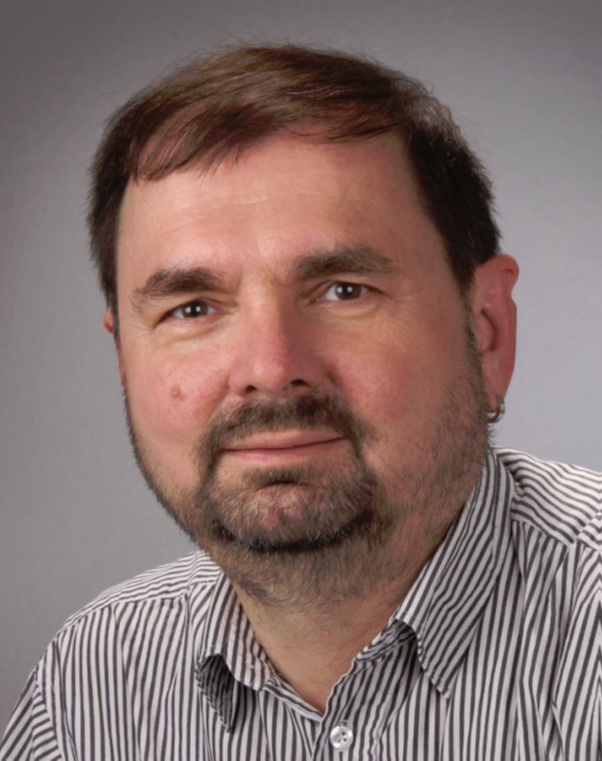
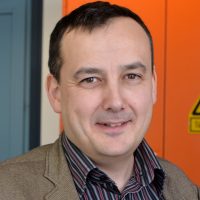
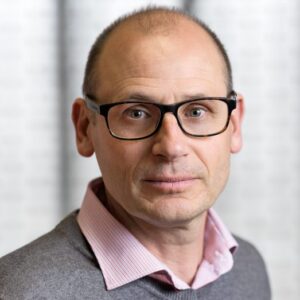
Klaus Mezger Institute for Geological Sciences University of Bern Baltzerstrasse 1+3 3012 Bern Switzerland E-mail: klaus.mezger@unibe.ch
The physical and chemical state of the Earth’s interior. The accretion and differentiation of the Earth and the composition of the core.
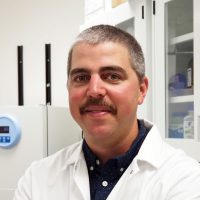
Ben Tutolo University of Calgary Department of Geoscience Earth Science 550, 2500 University Dr. NW Calgary, AB, T2N 1N4 CANADA E-mail: benjamin.tutolo@ucalgary.ca
Research Interests
I study how interactions between water, rocks, and gases affect life on Earth and Mars. To do this, I bring together techniques from the fields of hydrogeology, geochemistry, and mineralogy. Primary research projects currently include developing electrochemical CO2 capture and basalt carbonation as climate change solutions and interpreting the geologic history of Mars as recorded in the sediments of Gale Crater, often with help from studies of analogous systems here on Earth.
Alicia (Cici) Cruz-Uribe School of Earth and Climate Sciences 5790 Bryand Global Sciences Center Orono, ME 04469-5790 E-mail: alicia.cruzuribe@maine.edu
Research Interests
Interested in metamorphic petrology and geochemistry, particularly of subduction zone rocks. She is the head of the MAGIC Laboratory and oversees the Experimental Petrology Laboratoryat the University of Maine.
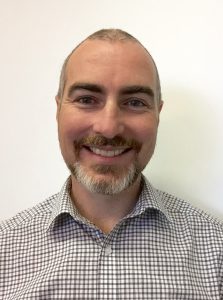
Orfan Shouakar-Stash University of Waterloo Department of Earth and Environmental Sciences Waterloo, Ontario, Canada E-mail: orfan@uwaterloo.ca
Interests relate to the development and implementation of isotopic tools in organic and inorganic contaminant investigations, and for studies of water quality analysis.
Jens Andersen
Camborne School of Mines University of Exeter Penryn Campus Penryn, Cornwall TR10 9FE United Kingdom E-mail: J.C.Andersen@exeter.ac.uk
Petrology, geochemistry, ore formation and raw material extraction in igneous and magmatic-hydrothermal environments. Layered mafic-ultramafic intrusions, granites, and granite-related vein systems. Critical metal mineralization and exploration (platinum-group elements, cobalt, nickel, indium, tin, tungsten). Applied mineralogy and geometallurgy. Understanding how metal deportment influences processing efficiency, co-product recovery and leaching of metals into the environment.
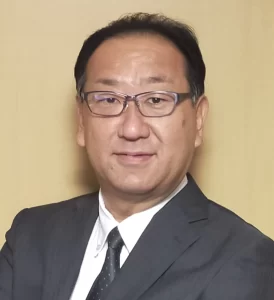
Toru Inoue
Hiroshima University
Department of Earth and Planetary Systems Science Kagamiyama 1-3-1, Higashi-Hiroshima 739-8526, Japan E-mail:toinoue@hiroshima-u.ac.jp
Deep Earth geophysics and mineral physics, especially focusing on the effects of water on deep Earth materials
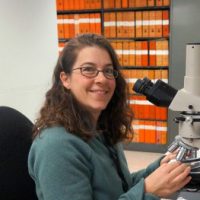
Catherine (Cari) Corrigan, Chair of Executive Committee Smithsonian Institution National Museum of Natural History Dept. of Mineral Sciences; MRC-119 10th St. and Constitution Ave. NW Washington, DC 20560, USA E-mail: corriganc@si.edu
Geochemistry of Martian meteorites and impact melts in ordinary chondrites. She has also worked on the Opportunity Rover PanCam team and on iron meteorites, lunar meteorites and terrestrial impact rocks.
Prof. David R Lentz PhD PGeo FGC FSEG UNB Research Chair in Economic Geology Dept of Earth Sciences University of New Brunswick 2 Bailey Drive Fredericton, NB E3B5A3 Canada E-mail: dlentz@unb.ca
Research Interests
David’s research focuses on magmatic–hydrothermal mineralizing processes across diverse ore systems, including massive-sulfide deposits, porphyry Cu–Mo–Au systems, granophile and skarn systems, IOA/IOCG deposits, and Li–Cs–Ta–Sn and U–REE pegmatites relevant to the Green Transition. He is particularly interested in magma–carbonate interaction and its controls on mineralization, vapour saturation, skarn formation, and long-term atmospheric CO2 release.
Barb Dutrow Louisiana State University Department of Geology & Geophysics E235 Howe-Russell Bldg Baton Rouge LA 70803-4101 United States E-mail: dutrow@lsu.edu
Metamorphic petrology and mineralogy in regards to the development of metamorphic terranes. Her research combines geologic field mapping, geochemical and mineral chemical data, theoretical analyses and experimental work.
Mark E. Hodson Environment Department University of York York YO10 5DD United Kingdom E-mail: mark.hodson@york.ac.uk
Low-temperature biogeochemistry with specific focus on mineral dissolution, soil contamination and remediation and earthworm ecology and ecotoxicology
Marek Michalik Jagiellonian University Institute of Geological Sciences ul. Gronostajowa 3a Krakow PL-30-387 Poland E-mail: marek.michalik@uj.edu.pl
Research Interests
Mineralogy and geochemistry of low-temperature processes; aerosols (origin and sources); biomass and coal combustion products; utilization of slags and ashes; igneous petrology
Isabel Abad Departamento de Geología Universidad de Jaén 23071 Jaén España E-mail: miabad@ujaen.es
Research Interests Mineral transformations in low-temperature environments with a special focus on clay minerals in low-grade metamorphism, fault rocks, and hydrothermal processes.
Katerina Dontsova University of Arizona Shantz Building Rm 515 1177 E 4th St. Tucson, AZ 85721 E-mail: dontsova@arizona.edu
Research Interests Soil chemistry and mineralogy, inorganic and organic carbon sequestration in the soils during biological weathering, fate and transport of organic contaminants in soils.
Sylvie Demouchy Laboratoire Magmas et Volcans Université Clermont Auvergne 6 Avenue Blaise Pascal 63178 AUBIERE Cedex France E-mail: sylvie.demouchy@uca.fr
Research Interests
high-pressure and high-temperature experimental geochemistry and mineral physics
Costanza Bonadiman Dept. Physics and Earth Sciences University of Ferrara Via Saragat, 1 44100 Ferrara, Italy E-mail:
costanza.bonadiman@unife.it
Research Interests
Petrology and geochemistry of mantle xenoliths to understand the composition and evolution in time and space of the Earth’s mantle.
Jörg Hermann
Institute for Geological Sciences University of Bern Baltzerstrasse 1+3 3012 Bern Switzerland E-mail:
Process-oriented, interdisciplinary studies of crystalline rocks; subduction processes in the Alps; deep water and carbon cycles; formation and differentiation of continental crust and orogenic cycles, accessory phases in petrology and diffusion in minerals
December 2025 --The Variscan Orogeny in Europe – Understanding Supercontinent Formation
The Variscan orogen formed between 380 and 300 million years ago through several accretionary and collisional cycles, culminating with the construction of the Pangea supercontinent. This process occurred via sequential opening and closure of oceanic basins, synchronous detachment of Gondwana derived continental ribbons, and their outboard amalgamation onto the Laurussia margin. The Variscan orogen is rather unique compared with other orogenic belts on Earth: its overthickened and dominantly magmatic crust in the central belt, surprisingly minor mantle involvement in the magmatic and geodynamic processes, coherent and pulsed magmatism along the collision suture, and its complex accretionary history. Because its final product, Pangea, is the youngest and best-understood supercontinent on Earth, the Variscan orogeny offers clues for understanding the mechanisms of supercontinent formation.