

Author name: Nicholas J. Tosca

The Precambrian Greenalite Factory

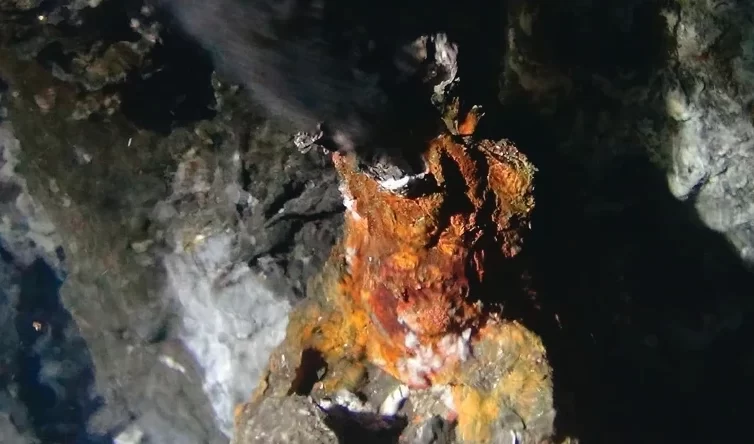
Over the last decade, high-resolution petrographic examinations of the sedimentary record revealed that greenalite was deposited across several continental margins and throughout many Archean successions. What physical and chemical processes could be responsible for this distribution? Combined sedimentological observations and geochemical results identify and strongly constrain greenalite’s origins in Precambrian sediments, specifically for iron formation deposits. Although greenalite often formed as a pore water or bottom water precipitate, the Precambrian greenalite factory may have resided at the interface between subseafloor hydrothermal vent fluids and anoxic seawater. Once formed, however, greenalite’s stratigraphic distribution was ultimately controlled by its susceptibility to oxidation, a property first recognised by geologists over 120 years ago.

This content is for Registered members only. To subscribe, please
join one of our participating societies or contact the Editorial Team.

Login
Already a member? Log in here

The Precambrian Greenalite Factory Read More »
Greenalite: A Tiny Crystal with a Big Story

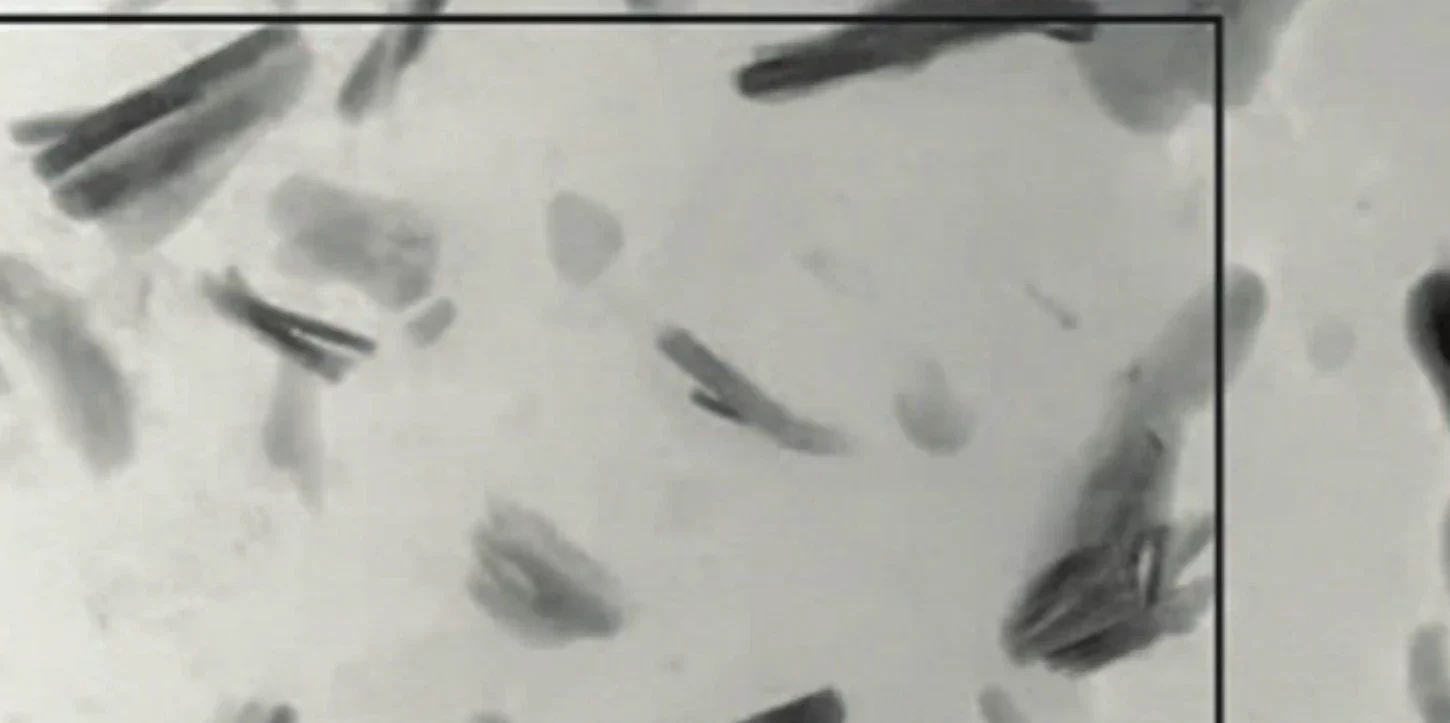
After years of relative obscurity, greenalite is stepping into the limelight. Although first identified in late Paleoproterozoic iron formations over 120 years ago, its true extent has until recently remained hidden due to its minute crystal size and inconspicuous optical properties. In the last decade, nanoparticulate greenalite has become a prime candidate in the deposition of iron formations. Together with experiments and modeling, greenalite is shedding new light on the composition of the early oceans, the role of biology in iron deposition, and H2
production during serpentinization. While the origin of greenalite is hotly debated, greenalite’s antiquity makes it an invaluable guide into environmental conditions on primordial Earth during the emergence and early evolution of life.

This content is for Registered members only. To subscribe, please
join one of our participating societies or contact the Editorial Team.

Login
Already a member? Log in here

Greenalite: A Tiny Crystal with a Big Story Read More »

Scroll to Top

December 2025 --The Variscan Orogeny in Europe – Understanding Supercontinent Formation

The Variscan orogen formed between 380 and 300 million years ago through several accretionary and collisional cycles, culminating with the construction of the Pangea supercontinent. This process occurred via sequential opening and closure of oceanic basins, synchronous detachment of Gondwana derived continental ribbons, and their outboard amalgamation onto the Laurussia margin. The Variscan orogen is rather unique compared with other orogenic belts on Earth: its overthickened and dominantly magmatic crust in the central belt, surprisingly minor mantle involvement in the magmatic and geodynamic processes, coherent and pulsed magmatism along the collision suture, and its complex accretionary history. Because its final product, Pangea, is the youngest and best-understood supercontinent on Earth, the Variscan orogeny offers clues for understanding the mechanisms of supercontinent formation.