

ELEMENTS Heritage
Elements Heritage articles take us on a journey through the lives and careers of individuals who are part of our rich scientific heritage, preserving their stories for future generations.
Proposals for future articles are welcome and should be sent to the Elements Executive Editor.

JOSEPH R. SMYTH (1944–2026): ARE THE OCEANS JUST THE TIP OF THE ICEBERG?
By Steven D. Jacobsen, Ross J. Angel, Yu Ye, Tiziana Boffa-Ballaran | April 2026
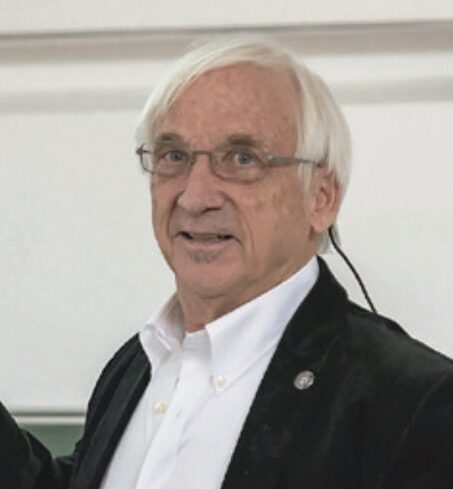
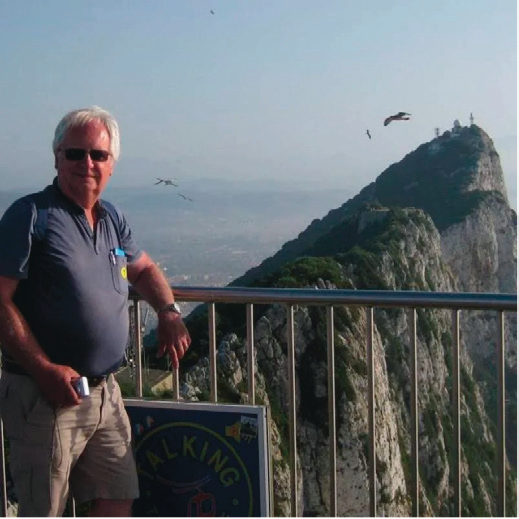
Legendary mineralogist Professor Joseph (Joe) R. Smyth passed away in January 2026, in Boulder, Colorado, USA. Perhaps best known for predicting that wadsleyite could incorporate oceans worth of “water” into the mantle transition zone (Smyth 1987), Joe was a professor of mineralogy at the University of Colorado (CU) Boulder, which suited his outdoor lifestyle. Joe studied geology at Virginia Tech, USA (BS 1966), which was becoming an early center of gravity for the field of mineral crystal chemistry at the time. Pursuing that interest, Joe moved to Chicago to work with Joseph V. Smith, one of the great mineralogists of the time. Joe’s work at The University of Chicago (PhD 1970) focused on developing instrumentation for high-temperature crystallography, which he utilized to over 1000 °C to greatly expand knowledge of the hightemperature phase transitions in pyroxenes.
MARK BUKOWINSKI AND HIS LEGACY IN THEORETICAL MINERAL PHYSICS
By Lars Stixrude | April 2026
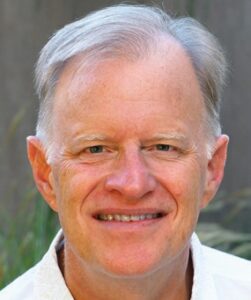
Is it possible to predict the structure and properties of minerals ab initio—that is with no more information than the identity of the nuclei and fundamental physical constants? Increasingly the answer is yes and theoretical mineral physics—as it has been called—has become an important contributor to our understanding of the behavior of Earth materials and their role in Earth and planetary processes.
MINERAL PHYSICS: HOW A DISCIPLINE FOUND ITS IDENTITY
By Robert Cooper Liebermann | April 2026
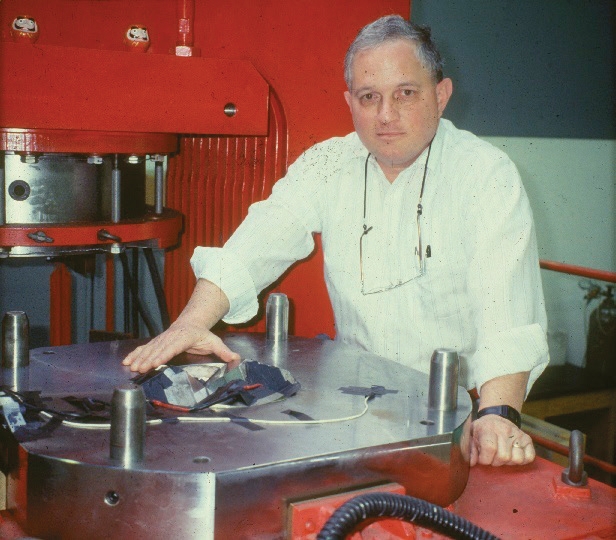
How did the term “mineral physics” become adopted to define an area of research in the geosciences? According to Robert Hazen, “mineral physics” is the study of mineralogical problems through the application of the principles of condensed matter physics. In reality, mineral physicists use not only physics but also solidstate chemistry. In addition, they study not only minerals, but all materials related to natural minerals (e.g., structural analogs, glasses, melts, and fluids).
A LOOK BACK ON THE HISTORY OF THE MINERALOGICAL SOCIETY’S INVOLVEMENT WITH ELEMENTS MAGAZINE
By Kevin Murphy | December 2025
On the first day of IMA 2002—the International Mineralogical Association meeting held in Edinburgh, organized by Ian Parsons and the Mineralogical Society—I clearly remember an informal meeting with the indefatigable Rod Ewing, when MinSoc was invited to become an early supporter of the initiative that was to become Elements Magazine.
CONFESSIONS OF AN ELEMENTS COPYEDITOR
By Patrick Roycroft | October 2025
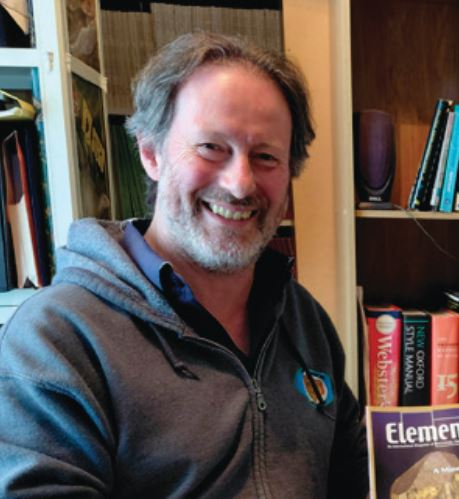
A tip-off from fellow Irishman Kevin Murphy of the Mineralogical Society of Great Britain and Ireland. I had just written the book 648 Billion Sunrises: A Geological Miscellany of Ireland (2015, Orpen Press), and I was working on a Heritage Council of Ireland project with the National Museum of Ireland (before I joined them) on saving University College Dublin’s huge and historic mineral collection. Kevin had somehow remembered that I had previously worked as an editor from 2000 to 2011 with the nowdefunct H. W. Wilson Co. He emailed me mid-2015 saying there was an editing job going at Elements and that, with my writing, editing, and geology background, I should apply.
JOHN W. MORGAN: POWERED BY OSMIUM
By Richard J. Walker and Holly J. Stein | August 2025
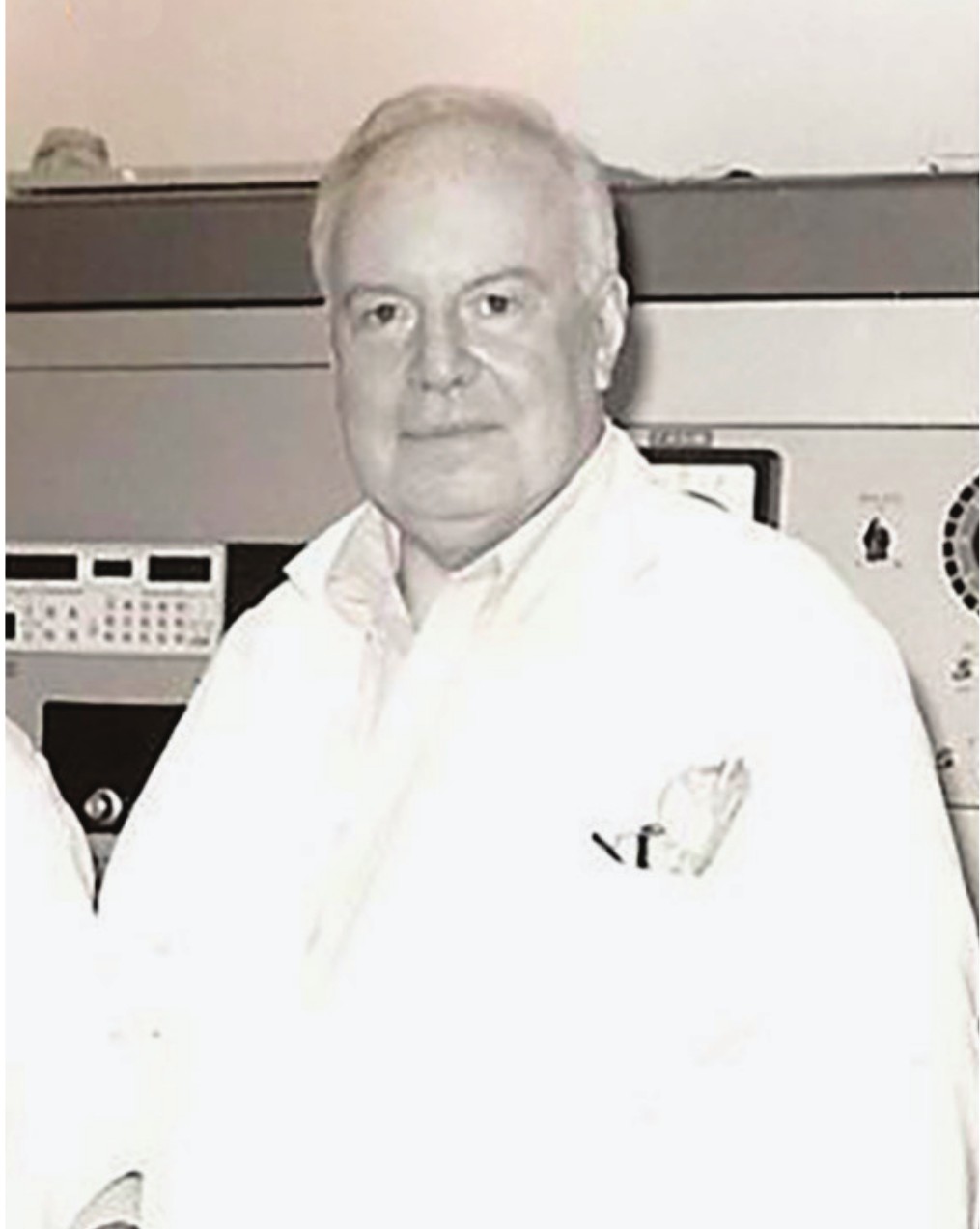
John Morgan’s (Fig. 1) contributions to the study of siderophile elements, and the Re-Os isotope system in particular, cannot be overstated. John’s dissertation project at the Australian National University in the early 1960s involved development of chemical separation and neutron activation measurement techniques of some illustrious elements, such as U and Th, but also included Re and Os, less known at that time. These technique advances led to capabilities that permitted the accurate measurement of Re and Os at the ng/g and below concentration levels necessary to interrogate common rock types.
ANDAO DU: RE-OS ISOTOPE GEOCHEMISTRY’S UNSUNG HEROINE
By Holly Stein and Gang Yang | August 2025
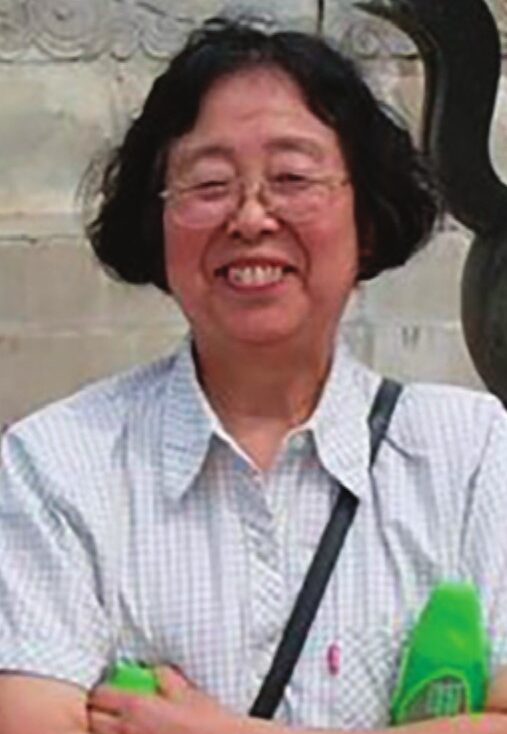
Professor Du’s interest in Re-Os geochronology first sparked during her time in the Department of Earth, Planetary, and Space Sciences at the University of California at Los Angeles (UCLA), where she initially focused on neutron activation analysis to determine major and trace element concentrations in meteorites. It was there that she recognized the emerging significance of Re-Os isotopic dating and shifted her research direction towards this promising field. Subsequently, she joined the Re-Os isotopic analysis research project at Lawrence Berkeley National Laboratory and then further refined her expertise in Re-Os separation techniques during her visit to the U.S.
ORIGINS OF ELEMENTS MAGAZINE – PART II: PLANNING (NOVEMBER 2003–DECEMBER 2004)
By Rod Ewing, Pierrette Tremblay, Founding Editor, MSA Executive Director, J. Alex Speer | August 2025
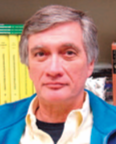
At the Fall MSA Council Meeting on November 1, 2003, Elements’ pioneer Rod Ewing (Fig. 1) provided an update on the magazine’s development, reviewed the latest proposal, and distributed several mock-ups of the magazine’s cover and interior. He reported that printing and mailing the magazine would be most cost effective in Canada or the USA. While Rod believed the project was feasible with just MSA and MAC on board, he noted that if the Mineralogical Society and the Geochemical Society also participated, the magazine could certainly be produced. Specific cost details couldn’t be finalized until it was clear which societies would participate.
ORIGINS OF ELEMENTS MAGAZINE – PART I: CONCEPTION (APRIL 2001–NOVEMBER 2003)
By J. Alex Speer, Visionary of Elements Magazine | June 2025
Because the Mineralogical Society of America (MSA) is a publishing society, the MSA Council determined at its Fall 2000 meeting that individuals elected Vice President would automatically serve as Chair of the Publication Committee to provide direct exposure to a central aspect of the society. As a result, Rod Ewing, elected MSA Vice President in Fall 2000, became the first Chair of the Publication Committee.
FURTHER STORIES FROM THE BACK DOOR OF ELEMENTS: FINAL DECISIONS AND THE LAUNCH
By Michael F. Hochella, Jr. Elements Founding Principal Editor of Geochemistry | April 2025

I am not sure exactly when I first met Rod Ewing, but it was in the early 1980s. In 1977, I arrived at Stanford, with BS and MS degrees from Virginia Tech. Rod had finished his PhD and left just three years earlier, and his ghost was there in the same labs that I was now occupying. So, it seemed that I knew him even before we met, and that was a good thing. As colleagues, we both went along our own paths until the end of the century, when I became president of the Geochemical Society (GS) (2000–2001, a twoyear term) and he became president of the Mineralogical Society of America (MSA) in 2002 (a oneyear term).
HAPPY 20th ANNIVERSARY, ELEMENTS
Elements is 20 years old! What a milestone, and what an opportune time to look back at its beginnings and the objectives that were set for it. The publishing landscape has changed dramatically since then. In 2025, just about every scientific journal is published online only, we read newspapers online, and it is even becoming hard to find printing paper, with the result that printing prices are getting out of hand. Such changes were on the horizon 20 years ago, and it was envisaged that Elements, because of its thematic nature, would be one of the last Earth science publications to maintain a print version.
AN YIN: THE RELUCTANT REVOLUTIONARY OF HIMALAYAN GEOLOGY
By T. Mark. Harrison, Michael A. Murphy, A. Alexander G. Webb, and Peter J. Haproff | December 2024
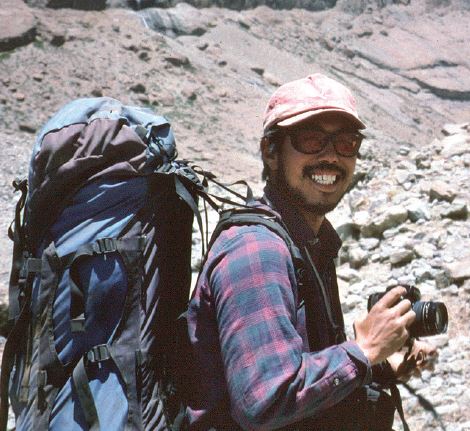
Professor An Yin passed away suddenly at the age of 64 on July 12, 2023, while instructing the UCLA undergraduate field camp in the White Mountains of eastern California, USA. The sudden loss of this intellectual giant was felt acutely across the geologic world, mitigated only by the model he left us of how the combination of intellectual rigor, originality, and passion can lead to stunning new insights into how our planet works. Our testament to Yin’s key contributions to understanding the geology of the Himalaya, a Sanskrit portmanteau for cold (hima) and dwelling (ālaya), reminds us that this mountain belt is no longer the Medhavinalaya—Sanskrit for the place where our brilliant teacher dwells.
Professor Rodney C. Ewin: The Consummate Multidisciplinary Scientist and Founding Editor of Elements
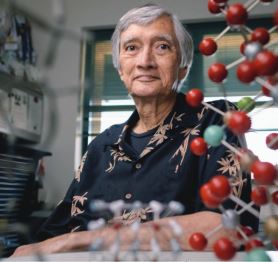
Prof. Rodney Charles Ewing of Stanford University passed away on Saturday, July 13, 2024, at age 77. Rod was the inaugural Frank Stanton Professor of Nuclear Security in the Stanford Center for International Security and Cooperation (CISAC) in the Freeman Spogli Institute for International Studies (FSI) and was also a professor in the Department of Earth & Planetary Sciences in the Stanford-Doerr School of Sustainability, USA (2014–2024). He was a senior fellow at FSI and at the Precourt Institute for Energy and was co-director of Mineral-X. A giant in the fields of mineral sci- ences, geochemistry, nuclear materials and security, and materials science and engineering, Rod Ewing made fundamental contributions to understanding the effects of radiation on minerals, ceramics, and nuclear materials in his more than 50-year career. Rod is also remembered for his great service to and active role in many professional societies, which exempli- fies his strong belief that service is just as important as research. He was beloved by over 100 graduate students and postdocs for whom he served as mentor and by dozens of professional colleagues who had the privilege of working with Rod over his long and extremely fruitful career.
Dr Barbara S. Neumann: Clay Scientist, Industrial Pioneer, Creator of Laponite
By Kirill Shafran, Christopher V. Jeans and Simon J. Kemp | February, 2021
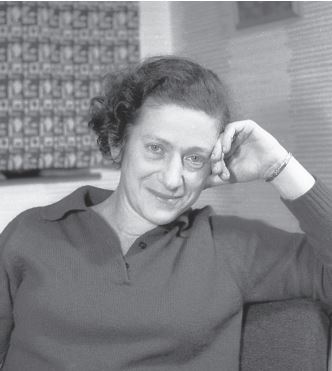
Dr Barbara Zsusanna (Susanna) Neumann was the inventor of the extraordinary product known as Laponite®, which is a synthetic hectorite clay. The range of Laponite® products, developed in the UK during the early 1960s, is one of the first examples of truly nano-dimensional materials manufactured on an industrial scale at the time when the field of nanotechnology was only being hinted at (Feynman 1960). These hectorite-like synthetic nano-clays with very unusual properties have been an enduring commercial success for the UK company that first patented and introduced them to the market, Laporte Industries, and which is now a part of the BYK company.