


Author name: Fred Jourdan

Dating Terrestrial Impact Structures

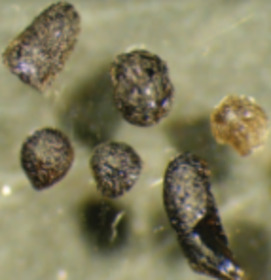
Hypervelocity impacts of asteroids and comets have played a key role in the evolution of the Solar System and planet Earth. Geochronology, the science that investigates the ages of rocks, has become a preponderant tool for dating impact events and for assessing whether they are related in time to mass extinctions on Earth. Impact events are instantaneous compared to other geological processes and, in theory, represent easy targets for multitechnique geochronology. Yet, only a few terrestrial impact events are accurately and precisely dated. A dating campaign is urgently needed if we are to fully understand the role of impacts in Earth history.

This content is for Registered members only. To subscribe, please
join one of our participating societies or contact the Editorial Team.

Login
Already a member? Log in here

Dating Terrestrial Impact Structures Read More »
Shock Metamorphism of Minerals

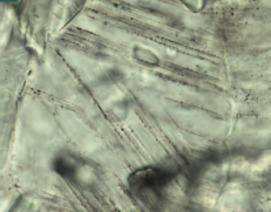
The hypervelocity impact of extraterrestrial objects causes unequivocal changes in the target due to extreme deformation rates, pressures up to hundreds of gigapascals, and postshock temperatures that may even vaporize silicates. This article introduces the basic principles of shock compression, as required to understand the formation and geological significance of shock-metamorphic effects in minerals. Special emphasis is placed on the formation of high-pressure phases such as stishovite and diamond as well as on the decomposition of carbonates.

This content is for Registered members only. To subscribe, please
join one of our participating societies or contact the Editorial Team.

Login
Already a member? Log in here

Shock Metamorphism of Minerals Read More »

Scroll to Top

December 2025 --The Variscan Orogeny in Europe – Understanding Supercontinent Formation

The Variscan orogen formed between 380 and 300 million years ago through several accretionary and collisional cycles, culminating with the construction of the Pangea supercontinent. This process occurred via sequential opening and closure of oceanic basins, synchronous detachment of Gondwana derived continental ribbons, and their outboard amalgamation onto the Laurussia margin. The Variscan orogen is rather unique compared with other orogenic belts on Earth: its overthickened and dominantly magmatic crust in the central belt, surprisingly minor mantle involvement in the magmatic and geodynamic processes, coherent and pulsed magmatism along the collision suture, and its complex accretionary history. Because its final product, Pangea, is the youngest and best-understood supercontinent on Earth, the Variscan orogeny offers clues for understanding the mechanisms of supercontinent formation.