


Author name: Allison M. Macfarlane

Nuclear Energy and Uranium Resources

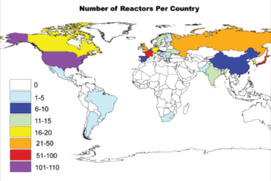
The amount of electricity generated by nuclear power plants may increase in the next few decades, as this form of energy is one of the few that are proven, reliable, and relatively carbon dioxide free. A question often asked about nuclear power is how long its main resource, uranium, will last. In the face of a large expansion of nuclear power to deal with climate change considerations, we revisit the question of the adequacy of the uranium resource and show that there is adequate supply for at least the next century and probably more.

This content is for Registered members only. To subscribe, please
join one of our participating societies or contact the Editorial Team.

Login
Already a member? Log in here

Nuclear Energy and Uranium Resources Read More »
Energy: The Issue of the 21st Century

Energy usage makes modern life possible. Without it we would have no communications, transportation, food, health, and many other services and products that we rely on daily. Energy issues are moving to the forefront in the 21st century because of constraints imposed by increasing energy needs, climate change, energy security, and the apparent decline of fossil fuel resources. The main challenge is how to provide more energy for more people worldwide while at the same time reducing greenhouse gas and pollution emissions and providing secure and plentiful energy supplies. There is no silver bullet, so a variety of energy resources and technologies will be required.

This content is for Registered members only. To subscribe, please
join one of our participating societies or contact the Editorial Team.

Login
Already a member? Log in here

Energy: The Issue of the 21st Century Read More »

Scroll to Top

December 2025 --The Variscan Orogeny in Europe – Understanding Supercontinent Formation

The Variscan orogen formed between 380 and 300 million years ago through several accretionary and collisional cycles, culminating with the construction of the Pangea supercontinent. This process occurred via sequential opening and closure of oceanic basins, synchronous detachment of Gondwana derived continental ribbons, and their outboard amalgamation onto the Laurussia margin. The Variscan orogen is rather unique compared with other orogenic belts on Earth: its overthickened and dominantly magmatic crust in the central belt, surprisingly minor mantle involvement in the magmatic and geodynamic processes, coherent and pulsed magmatism along the collision suture, and its complex accretionary history. Because its final product, Pangea, is the youngest and best-understood supercontinent on Earth, the Variscan orogeny offers clues for understanding the mechanisms of supercontinent formation.