


Author name: Ambre Luguet

The Osmium Isotope Perspective on the Dynamics of the Post-Archean Mantle

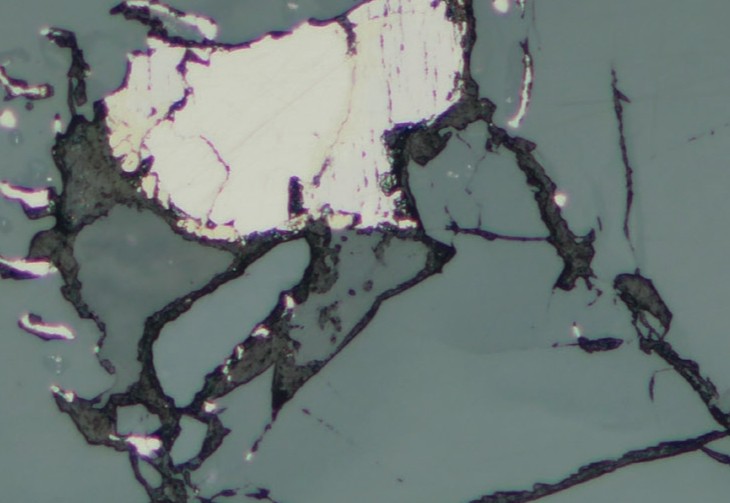
The 187Re–187Os system offers a unique perspective among the isotopic approaches used to understand planetary evolution because of the chalcophile and siderophile affinities of the parent and daughter elements and their contrasting behaviors during partial melting. Considered the geochronometer of choice to study the Earth’s mantle, from the scale of individual minerals to large-scale outcrops, this system has revealed the survival of Archean and Proterozoic mantle in younger tectonic settings, and has demonstrated local to regional coupling, and sometimes decoupling, between the crust and mantle. Osmium isotopes are also key tracers of melt–peridotite and mantle–crust interactions and recycling processes in subduction zones, and have furthered our understanding of the origin of multi-scale geochemical and isotopic heterogeneities.

This content is for Registered members only. To subscribe, please
join one of our participating societies or contact the Editorial Team.

Login
Already a member? Log in here

The Osmium Isotope Perspective on the Dynamics of the Post-Archean Mantle Read More »
Platinum-Group Elements: A New Set of Key Tracers for the Earth’s Interior

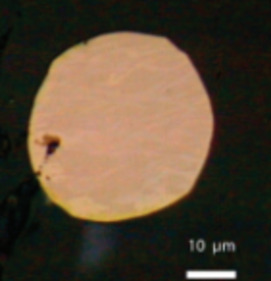
Due to their “iron-loving” properties, platinum-group elements (PGE) are expected to be stored in the Earth’s core. Although very low, at a few parts per billion, PGE concentrations measured in mantle-derived rocks are too high to be in chemical equilibrium with the core. The “late veneer” model offers the best explanation for this paradox—it postulates that a flux of primitive meteorites hit the early Earth after core formation had ceased. However, the inferred PGE composition of the hypothetical primitive mantle exhibits slight positive excesses of Ru, Rh, and Pd compared to the canonical chondritic signature. Such deviations have triggered considerable debate about the composition of the late veneer and the extent of reworking of PGE signatures by igneous processes within the Earth’s mantle.

This content is for Registered members only. To subscribe, please
join one of our participating societies or contact the Editorial Team.

Login
Already a member? Log in here

Platinum-Group Elements: A New Set of Key Tracers for the Earth’s Interior Read More »

Scroll to Top

December 2025 --The Variscan Orogeny in Europe – Understanding Supercontinent Formation

The Variscan orogen formed between 380 and 300 million years ago through several accretionary and collisional cycles, culminating with the construction of the Pangea supercontinent. This process occurred via sequential opening and closure of oceanic basins, synchronous detachment of Gondwana derived continental ribbons, and their outboard amalgamation onto the Laurussia margin. The Variscan orogen is rather unique compared with other orogenic belts on Earth: its overthickened and dominantly magmatic crust in the central belt, surprisingly minor mantle involvement in the magmatic and geodynamic processes, coherent and pulsed magmatism along the collision suture, and its complex accretionary history. Because its final product, Pangea, is the youngest and best-understood supercontinent on Earth, the Variscan orogeny offers clues for understanding the mechanisms of supercontinent formation.