


Author name: Roger H. Mitchell

What is a Kimberlite? Petrology and Mineralogy of Hypabyssal Kimberlites

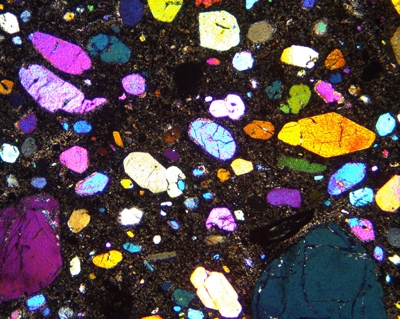
Hypabyssal kimberlites are subvolcanic intrusive rocks crystallised from mantle-derived magmas poor in SiO2 and rich in CO2 and H2O. They are complex, hybrid rocks containing significant amounts of mantle-derived fragments, primarily olivine with rare diamonds, set in a matrix of essentially magmatic origin. Unambiguous identification of kimberlites requires careful petrographic examination combined with mineral compositional analyses. Melt inclusion studies have shown that kimberlite melts contain higher alkali concentrations than previously thought but have not clarified the ultimate origin of these melts. Because of the hybrid nature of kimberlites and their common hydrothermal alteration by fluids of controversial origin (magmatic and/or crustal), the composition of primary kimberlite melts remains unknown.

This content is for Registered members only. To subscribe, please
join one of our participating societies or contact the Editorial Team.

Login
Already a member? Log in here

What is a Kimberlite? Petrology and Mineralogy of Hypabyssal Kimberlites Read More »
Kimberlites: From Deep Earth to Diamond Mines

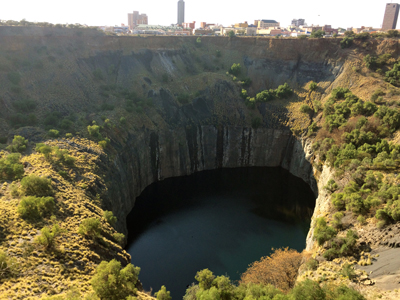
Kimberlites are rare, enigmatic, low-volume igneous rocks. They are highly enriched in magnesium, volatiles (CO2 and H2O) and incompatible trace elements and are thought to be the most deeply derived (>150 km) magmatic rocks on Earth. Kimberlites occur in ancient and thick continental lithosphere, forming intrusive sheets and composite pipes, commonly in clusters. Despite their rarity, kimberlites have attracted considerable attention because they entrain not only abundant mantle fragments but also diamonds, which can provide a uniquely rich picture of the deep Earth. This issue summarises current thinking on kimberlite petrology, geochemistry, and volcanology and outlines the outstanding questions on the genesis of kimberlites and associated diamond mines.

This content is for Registered members only. To subscribe, please
join one of our participating societies or contact the Editorial Team.

Login
Already a member? Log in here

Kimberlites: From Deep Earth to Diamond Mines Read More »

Scroll to Top

December 2025 --The Variscan Orogeny in Europe – Understanding Supercontinent Formation

The Variscan orogen formed between 380 and 300 million years ago through several accretionary and collisional cycles, culminating with the construction of the Pangea supercontinent. This process occurred via sequential opening and closure of oceanic basins, synchronous detachment of Gondwana derived continental ribbons, and their outboard amalgamation onto the Laurussia margin. The Variscan orogen is rather unique compared with other orogenic belts on Earth: its overthickened and dominantly magmatic crust in the central belt, surprisingly minor mantle involvement in the magmatic and geodynamic processes, coherent and pulsed magmatism along the collision suture, and its complex accretionary history. Because its final product, Pangea, is the youngest and best-understood supercontinent on Earth, the Variscan orogeny offers clues for understanding the mechanisms of supercontinent formation.