
Author name: Marilyn L. Fogel

Nitrogen in Extraterrestrial Environments: Clues to the Possible Presence of Life

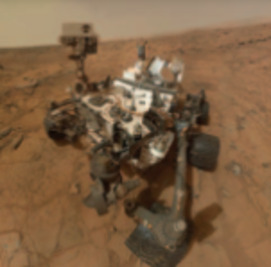
Nitrogen is a critical element for living organisms on Earth. While atmospheric N2 is plentiful, organisms find it difficult to metabolize, requiring chemical modifications that are rare or absent in abiotic chemistry. Living organisms reduce N2 to NH3 with elaborate, energy-intensive, biochemical processing to create nitrogen-bearing carbon compounds essential for life. Astrobiologists have long discussed what role nitrogen could play in shaping life on other planets. Work on Martian meteorites has provided new insights into nitrogen cycling on Mars. Research on meteorites ties into investigations by NASA’s Mars Science Laboratory that are providing on-theground information to piece together a more cohesive picture of the importance of nitrogen for establishing a habitable environment.

This content is for Registered members only. To subscribe, please
join one of our participating societies or contact the Editorial Team.

Login
Already a member? Log in here

Nitrogen in Extraterrestrial Environments: Clues to the Possible Presence of Life Read More »
Geoscience Meets Biology: Raman Spectroscopy in Geobiology and Biomineralization

Raman spectroscopy is widely applied in metamorphic petrology and offers many opportunities for geological and tectonic research. Minimal sample preparation preserves sample integrity and microtextural information, while use with confocal microscopes allows spatial resolution down to the micrometer level. Raman spectroscopy clearly distinguishes mineral polymorphs, providing crucial constraints on metamorphic conditions, particularly ultrahigh-pressure conditions. Raman spectroscopy can also be used to monitor the structure of carbonaceous material in metamorphic rocks. Changes in structure are temperature-sensitive, so Raman spectroscopy of carbonaceous material is widely used for thermometry. Raman spectroscopy can also detect and quantify strain in micro-inclusions, offering new barometers that can be applied to understand metamorphic and tectonic processes without any assumptions about chemical equilibrium.

This content is for Registered members only. To subscribe, please
join one of our participating societies or contact the Editorial Team.

Login
Already a member? Log in here

Geoscience Meets Biology: Raman Spectroscopy in Geobiology and Biomineralization Read More »

Scroll to Top

December 2025 --The Variscan Orogeny in Europe – Understanding Supercontinent Formation

The Variscan orogen formed between 380 and 300 million years ago through several accretionary and collisional cycles, culminating with the construction of the Pangea supercontinent. This process occurred via sequential opening and closure of oceanic basins, synchronous detachment of Gondwana derived continental ribbons, and their outboard amalgamation onto the Laurussia margin. The Variscan orogen is rather unique compared with other orogenic belts on Earth: its overthickened and dominantly magmatic crust in the central belt, surprisingly minor mantle involvement in the magmatic and geodynamic processes, coherent and pulsed magmatism along the collision suture, and its complex accretionary history. Because its final product, Pangea, is the youngest and best-understood supercontinent on Earth, the Variscan orogeny offers clues for understanding the mechanisms of supercontinent formation.