
Author name: Anhuai Lu

Interactions between Semiconducting Minerals and Bacteria under Light

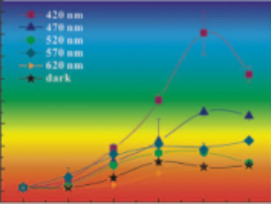
A synergistic reaction pathway has been identified between semiconducting minerals and bacteria. Such reactions sustain electron and energy flow from light to nonphototrophic bacteria via semiconducting minerals, which act as a catalytic shuttle. Understanding this pathway may shed light on a unique ecosystem that potentially carries out phototrophic metabolism without the involvement of phototrophic organisms. Four key natural elements of this system are sunlight, semiconducting minerals, nonphototrophic bacteria, and water. This pathway also suggests a “selfcleansing” mechanism that may exist in nature, whereby both oxidative and reductive degradation of contaminants can occur.

This content is for Registered members only. To subscribe, please
join one of our participating societies or contact the Editorial Team.

Login
Already a member? Log in here

Interactions between Semiconducting Minerals and Bacteria under Light Read More »
Mineral–Microbe Interactions and Implications for Remediation

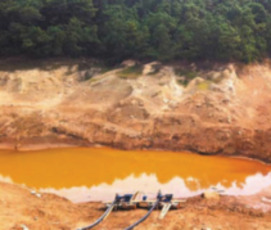
Minerals and microbes have coevolved throughout much of Earth history. They interact at the microscopic scale, but their effects are manifested macroscopically. Minerals support microbial growth by providing essential nutrients, and microbial activity alters mineral solubility and the oxidation state of certain constituent elements. Microbially mediated dissolution, precipitation, and transformation of minerals are either directly controlled by microorganisms or induced by biochemical reactions that usually take place outside the cell. All these reactions alter metal mobility, leading to the release or sequestration of heavy metals and radionuclides. These processes therefore have implications for ore formation and the bioremediation of contaminated sites.

This content is for Registered members only. To subscribe, please
join one of our participating societies or contact the Editorial Team.

Login
Already a member? Log in here

Mineral–Microbe Interactions and Implications for Remediation Read More »

Scroll to Top

December 2025 --The Variscan Orogeny in Europe – Understanding Supercontinent Formation

The Variscan orogen formed between 380 and 300 million years ago through several accretionary and collisional cycles, culminating with the construction of the Pangea supercontinent. This process occurred via sequential opening and closure of oceanic basins, synchronous detachment of Gondwana derived continental ribbons, and their outboard amalgamation onto the Laurussia margin. The Variscan orogen is rather unique compared with other orogenic belts on Earth: its overthickened and dominantly magmatic crust in the central belt, surprisingly minor mantle involvement in the magmatic and geodynamic processes, coherent and pulsed magmatism along the collision suture, and its complex accretionary history. Because its final product, Pangea, is the youngest and best-understood supercontinent on Earth, the Variscan orogeny offers clues for understanding the mechanisms of supercontinent formation.