



Author name: Anne Pommier

Plugged-in Planet: Accessing the Interior of the Earth and Other Terrestrial Bodies via Electrical Properties

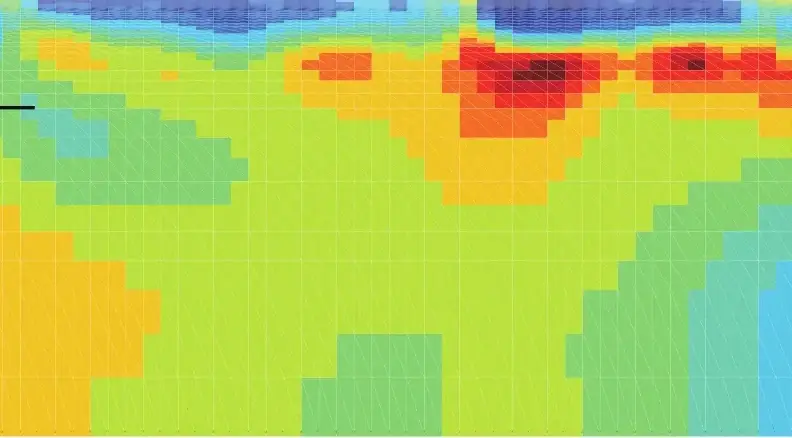
Among the different methods used to probe the interior of planets and moons in the Solar System, the ones providing access to the electrical properties of rocks are particularly powerful. From field induction measurements to laboratory impedance spectroscopy experiments, several techniques explore the electrical response of geomaterials at different scales of observation, from planetary to atomic. Detailed snapshots of the Earth’s crust and mantle are obtained from the combination of magnetotelluric surveys with laboratory measurements. In space, induction observations complemented by electrical laboratory experiments have been key to defining the layered structure and thermal state of several terrestrial bodies. Future electrical investigations will continue to reveal the present structure of planetary deep interiors, which is necessary to decipher their evolution.
This content is for Registered members only. To subscribe, please
join one of our participating societies or contact the Editorial Team.

Login
Already a member? Log in here

Plugged-in Planet: Accessing the Interior of the Earth and Other Terrestrial Bodies via Electrical Properties Read More »

Probing Deep Hydrogen Using Electrical Conductivity

Electrical conductivity is perhaps the physical property of rocks that is most sensitive to the presence of hydrogen. Hydrogen enhances conductivity via proton conduction in minerals or by stabilizing highly conductive phases, such as hydrous silicate melts or aqueous fluids. Hydrogen might also be stored in the metallic core. Electrical conductivity measurements in the laboratory can be used to interpret magnetotelluric maps of the mantle in terms of hydrogen content and distribution. In active tectonic settings like subduction zones, anomalously high conductivities have revealed the distribution and migration pathways of H-bearing melts and fluids, illuminating the transport of hydrogen in our planet’s interior.

This content is for Registered members only. To subscribe, please
join one of our participating societies or contact the Editorial Team.

Login
Already a member? Log in here

Probing Deep Hydrogen Using Electrical Conductivity Read More »

Io: A Unique World in our Solar System

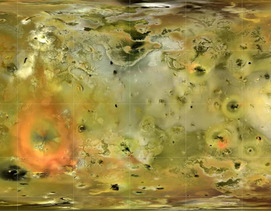
Jupiter’s moon Io is the most volcanically active world in our Solar System. Eruptions on Io sustain its atmosphere, feed the Jovian magnetosphere, and contaminate neighboring moons. This unique volcanic and tectonic activity is powered by tidal heating, caused by its gravitational interactions with Jupiter and other moons. The silicate crust of Io is coated with sulfur compounds, and its interior—one that is exceptional for an outer-planet moon—is composed of a metallic core and a silicate mantle that may host a magma ocean. Such spectacular large-scale volcanism and high heat flow provide insights into the processes that shaped all terrestrial bodies. Future exploration of Io would answer key questions and herald a new era of discoveries about the evolution of terrestrial planets and moons within our Solar System and beyond.

This content is for Registered members only. To subscribe, please
join one of our participating societies or contact the Editorial Team.

Login
Already a member? Log in here

Io: A Unique World in our Solar System Read More »

Scroll to Top

December 2025 --The Variscan Orogeny in Europe – Understanding Supercontinent Formation

The Variscan orogen formed between 380 and 300 million years ago through several accretionary and collisional cycles, culminating with the construction of the Pangea supercontinent. This process occurred via sequential opening and closure of oceanic basins, synchronous detachment of Gondwana derived continental ribbons, and their outboard amalgamation onto the Laurussia margin. The Variscan orogen is rather unique compared with other orogenic belts on Earth: its overthickened and dominantly magmatic crust in the central belt, surprisingly minor mantle involvement in the magmatic and geodynamic processes, coherent and pulsed magmatism along the collision suture, and its complex accretionary history. Because its final product, Pangea, is the youngest and best-understood supercontinent on Earth, the Variscan orogeny offers clues for understanding the mechanisms of supercontinent formation.