


Author name: Anthony E. Williams-Jones

Hydrothermal Mobilisation of the Rare Earth Elements – a Tale of “Ceria” and “Yttria”

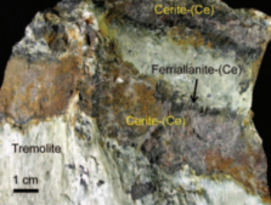
Although the rare earth elements have been thought by many to be immobile in hydrothermal fluids, we have known since the first attempts to separate them in the early nineteenth century that they are soluble in aqueous solutions. Driven by a need to isolate individual REEs for industrial applications, and more recently to explore for them, we have started to develop an understanding of their solubility and speciation in hydrothermal fluids. This knowledge is allowing us to understand the processes that promote their transport in the Earth’s crust, their concentration, and their fractionation.

This content is for Registered members only. To subscribe, please
join one of our participating societies or contact the Editorial Team.

Login
Already a member? Log in here

Hydrothermal Mobilisation of the Rare Earth Elements – a Tale of “Ceria” and “Yttria” Read More »
Gold in Solution

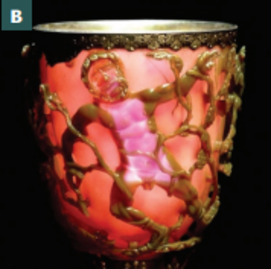
Although gold is a noble metal and is effectively insoluble even in strong acids, we have known for nearly 500 years that it can be concentrated to mineable levels by being transported as dissolved species in crustal fluids (indeed, most economic gold deposits owe their origin to this mode of transport). From alchemy and later experimental chemistry and geochemistry, we have developed an understanding of the solubility and speciation of gold in aqueous liquids and other crustal fluids. This knowledge informs us about the processes that promote the transport of gold in the Earth’s crust, result in exploitable gold deposits and lead to the remobilization of gold in the surficial environment.

This content is for Registered members only. To subscribe, please
join one of our participating societies or contact the Editorial Team.

Login
Already a member? Log in here

Gold in Solution Read More »

Scroll to Top

December 2025 --The Variscan Orogeny in Europe – Understanding Supercontinent Formation

The Variscan orogen formed between 380 and 300 million years ago through several accretionary and collisional cycles, culminating with the construction of the Pangea supercontinent. This process occurred via sequential opening and closure of oceanic basins, synchronous detachment of Gondwana derived continental ribbons, and their outboard amalgamation onto the Laurussia margin. The Variscan orogen is rather unique compared with other orogenic belts on Earth: its overthickened and dominantly magmatic crust in the central belt, surprisingly minor mantle involvement in the magmatic and geodynamic processes, coherent and pulsed magmatism along the collision suture, and its complex accretionary history. Because its final product, Pangea, is the youngest and best-understood supercontinent on Earth, the Variscan orogeny offers clues for understanding the mechanisms of supercontinent formation.