Author name: Axel Müller

Quartz-derived Solutions for Renewable Energy Production, Semiconductors, and Beyond

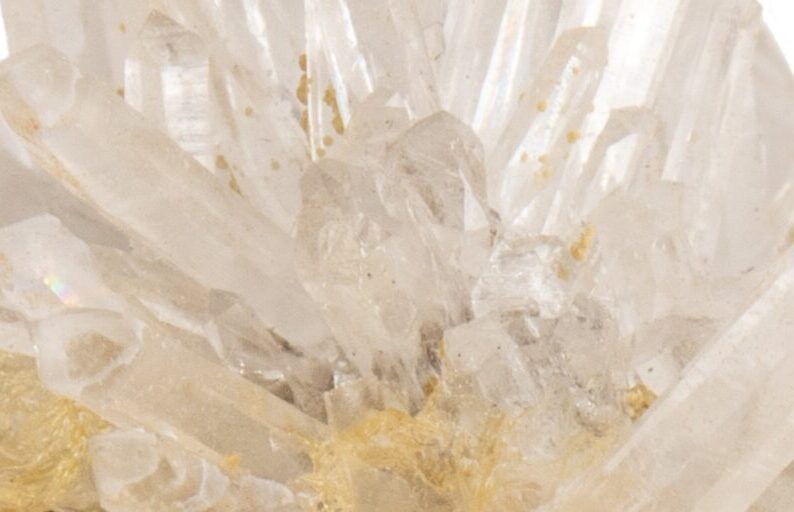
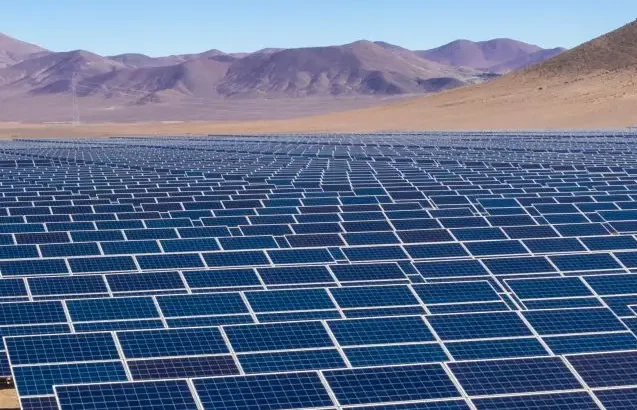
Humankind’s use of silica raw materials began at least 1.85 million years ago with production of flint tools and spans to today’s more than 1000 industrial applications, all relying on its chemistry and specific physical properties. Among the key achievements are the discovery of the piezoelectric effect of quartz for timekeeping, the critical importance of silicon-based semiconductor technologies for the digitalization of our society, and the production of renewable energy through photovoltaics. One of the greatest challenges regarding raw material supply and security lies in identifying new quartz deposits of sufficient purity, size, and properties to meet increasing demands. Although quartz is mined from a variety of deposits, economically viable sources remain difficult to locate for reasons that we explain.

This content is for Registered members only. To subscribe, please
join one of our participating societies or contact the Editorial Team.

Login
Already a member? Log in here

Quartz-derived Solutions for Renewable Energy Production, Semiconductors, and Beyond Read More »
The Narrative of Quartz and Silica in the Earth and Other Planetary Bodies

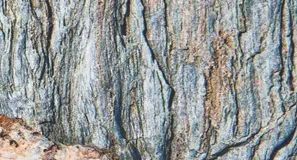
Quartz and other silica minerals are amongst the most important constituents of the Earth’s crust, both as rock-forming mineral components and as tools for understanding Earth processes. Quartz and other forms of silica are essential parts of both the geological and biochemical cycles with the potential to help us understand the processes of our planet across disciplines. This article is a narrative of quartz, starting with its crystallization from fractionated, silica-rich magmas, transport, and deposition of silica by hydro- thermal fluids, as well as physical, chemical, and biogenic processes resulting in silica weathering, transport, accumulation, and the formation of sedimentary silica deposits. Extraterrestrial quartz and silica occurrences are also discussed.

This content is for Registered members only. To subscribe, please
join one of our participating societies or contact the Editorial Team.

Login
Already a member? Log in here

The Narrative of Quartz and Silica in the Earth and Other Planetary Bodies Read More »

Quartz and SiO2—Simple Yet Exciting

Despite their simple chemical composition, silica (silicon dioxide, SiO2) minerals comprise a complex system with diverse polymorphs of distinct crystal structures and different stabilities and properties. Quartz is arguably the most important mineral throughout human history, from early survival tools to critical materials for modern advanced technology. In addition, quartz and other silica polymorphs and varieties are excellent archivers and important tools for deciphering geological, environmental, and planetary processes and histories.

This content is for Registered members only. To subscribe, please
join one of our participating societies or contact the Editorial Team.

Login
Already a member? Log in here

Quartz and SiO2—Simple Yet Exciting Read More »

Scroll to Top

December 2025 --The Variscan Orogeny in Europe – Understanding Supercontinent Formation

The Variscan orogen formed between 380 and 300 million years ago through several accretionary and collisional cycles, culminating with the construction of the Pangea supercontinent. This process occurred via sequential opening and closure of oceanic basins, synchronous detachment of Gondwana derived continental ribbons, and their outboard amalgamation onto the Laurussia margin. The Variscan orogen is rather unique compared with other orogenic belts on Earth: its overthickened and dominantly magmatic crust in the central belt, surprisingly minor mantle involvement in the magmatic and geodynamic processes, coherent and pulsed magmatism along the collision suture, and its complex accretionary history. Because its final product, Pangea, is the youngest and best-understood supercontinent on Earth, the Variscan orogeny offers clues for understanding the mechanisms of supercontinent formation.