Author name: Nicholas J. Tosca

The Precambrian Greenalite Factory

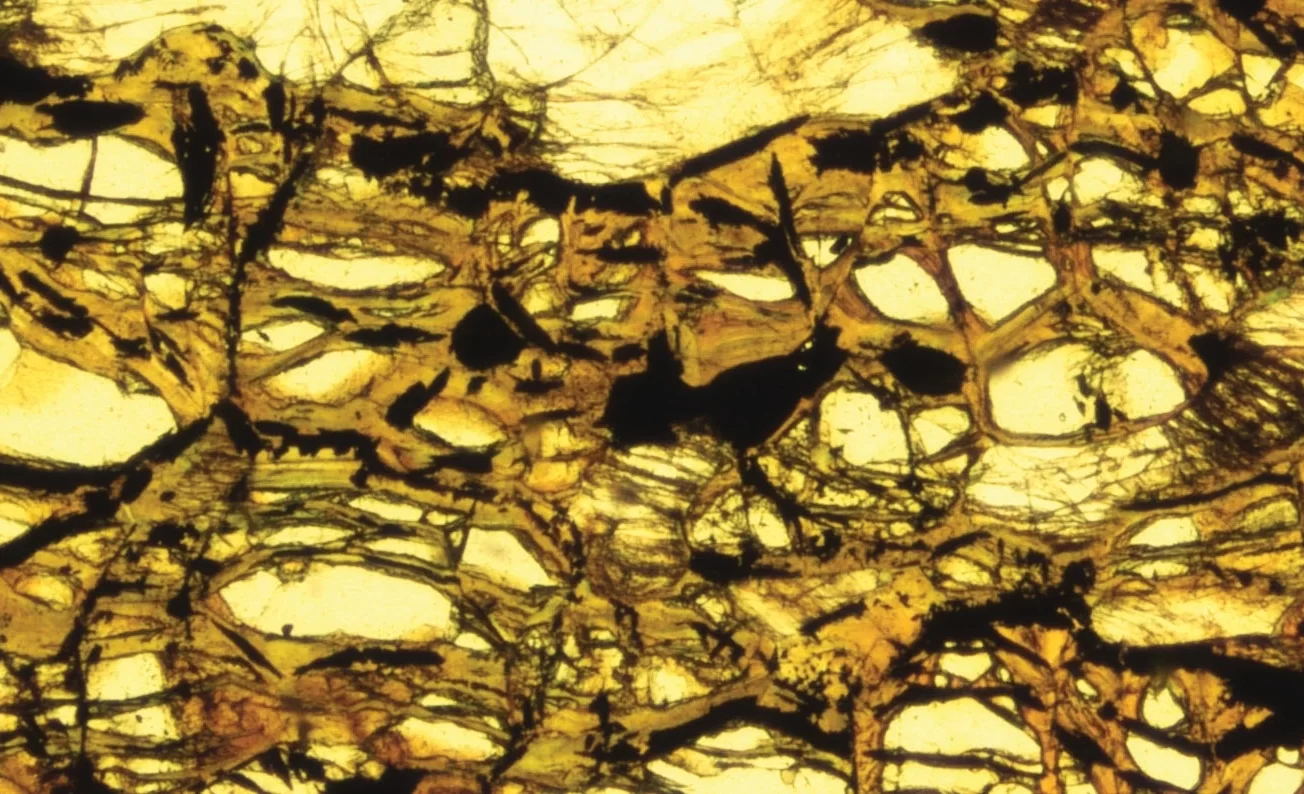
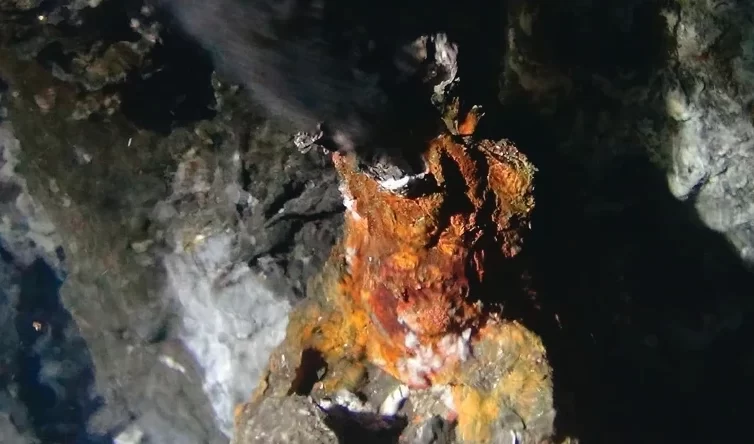
Over the last decade, high-resolution petrographic examinations of the sedimentary record revealed that greenalite was deposited across several continental margins and throughout many Archean successions. What physical and chemical processes could be responsible for this distribution? Combined sedimentological observations and geochemical results identify and strongly constrain greenalite’s origins in Precambrian sediments, specifically for iron formation deposits. Although greenalite often formed as a pore water or bottom water precipitate, the Precambrian greenalite factory may have resided at the interface between subseafloor hydrothermal vent fluids and anoxic seawater. Once formed, however, greenalite’s stratigraphic distribution was ultimately controlled by its susceptibility to oxidation, a property first recognised by geologists over 120 years ago.

This content is for Registered members only. To subscribe, please
join one of our participating societies or contact the Editorial Team.

Login
Already a member? Log in here

The Precambrian Greenalite Factory Read More »

Serpentine Solid Solutions and Hydrogen Production on Early Earth and Mars

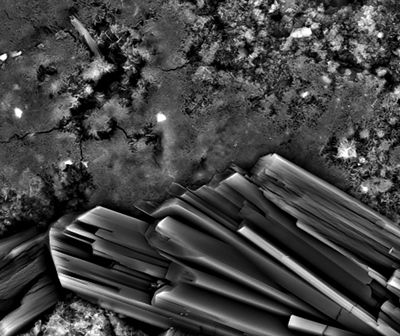
The unusual structural properties of the Fe-Mg serpentine minerals permit significant chemical variability, but the mechanisms and extent of elemental substitution have only recently come to light. New results show that greenalite forms solid solutions with the Fe(III) end-member hisingerite, cronstedtite, and Mg-serpentines, with the composition depending on formation conditions. Leveraging this new mineralogical context enables quantitative estimation of H₂ production on Earth and Mars. Together, these advances indicate that greenalite solid solutions in ancient rocks produced and released H₂ and thus contributed to planetary habitability. Examination of Martian rocks and analogous Earth materials shows greenalite-hisingerite minerals were responsible for H₂ fluxes to the ancient Martian atmosphere and could be important contributors to planetary habitability throughout the Solar System.

This content is for Registered members only. To subscribe, please
join one of our participating societies or contact the Editorial Team.

Login
Already a member? Log in here

Serpentine Solid Solutions and Hydrogen Production on Early Earth and Mars Read More »

The Role of Reactive Transport Modeling in Geologic Carbon Storage

The engineered storage of CO2 in Earth’s subsurface provides one of the most promising means of reducing net greenhouse gas emissions. Paramount to the success of this method is ensuring that CO2 injected into the subsurface is securely stored. Reactive transport models can be used to answer the key question regarding CO2 storage, “Will the injected CO2 be secure, and over what timescale?” Here, we explore examples of how reactive transport models have been used to simulate the range of geochemical and hydrologic processes that will take place over thousands of years and across many spatial scales to answer that key question.

This content is for Registered members only. To subscribe, please
join one of our participating societies or contact the Editorial Team.

Login
Already a member? Log in here

The Role of Reactive Transport Modeling in Geologic Carbon Storage Read More »

Scroll to Top

December 2025 --The Variscan Orogeny in Europe – Understanding Supercontinent Formation

The Variscan orogen formed between 380 and 300 million years ago through several accretionary and collisional cycles, culminating with the construction of the Pangea supercontinent. This process occurred via sequential opening and closure of oceanic basins, synchronous detachment of Gondwana derived continental ribbons, and their outboard amalgamation onto the Laurussia margin. The Variscan orogen is rather unique compared with other orogenic belts on Earth: its overthickened and dominantly magmatic crust in the central belt, surprisingly minor mantle involvement in the magmatic and geodynamic processes, coherent and pulsed magmatism along the collision suture, and its complex accretionary history. Because its final product, Pangea, is the youngest and best-understood supercontinent on Earth, the Variscan orogeny offers clues for understanding the mechanisms of supercontinent formation.