


Author name: Bernd G. Lottermoser

Recycling, Reuse and Rehabilitation of Mine Wastes

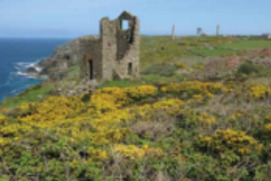
If we want to ensure a sustainable future for the human race, we must learn to prevent, minimize, reuse and recycle waste. Reuse of mine wastes allows their beneficial application, whereas recycling extracts resource ingredients or converts wastes into valuable products. Yet, today, many of the proposed reuse and recycling concepts for mine wastes are not economic. Consequently, the great majority of mine wastes are still being placed into waste storage facilities. Significant research efforts are required to develop cost-effective reuse and recycling options and to prevent the migration of contaminants from rehabilitated waste repositories in the long term.

This content is for Registered members only. To subscribe, please
join one of our participating societies or contact the Editorial Team.

Login
Already a member? Log in here

Recycling, Reuse and Rehabilitation of Mine Wastes Read More »
Mine Wastes: Past, Present, Future

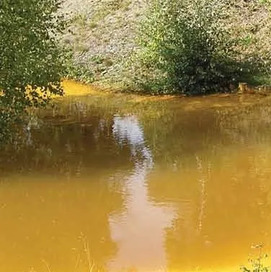
Mine wastes are unwanted, currently uneconomic, solid and liquid materials found at or near mine sites. Volumetrically they are one of the world’s largest waste streams, and they often contain high concentrations of elements and compounds that can have severe effects on ecosystems and humans. Multidisciplinary research on mine wastes focuses on understanding their character, stability, impact, remediation and reuse. This research must continue if we are to understand and sustainably manage the immense quantities of historic, contemporary and future mine wastes, given the trend to exploit larger deposits of lower-grade ores.

This content is for Registered members only. To subscribe, please
join one of our participating societies or contact the Editorial Team.

Login
Already a member? Log in here

Mine Wastes: Past, Present, Future Read More »

Scroll to Top

December 2025 --The Variscan Orogeny in Europe – Understanding Supercontinent Formation

The Variscan orogen formed between 380 and 300 million years ago through several accretionary and collisional cycles, culminating with the construction of the Pangea supercontinent. This process occurred via sequential opening and closure of oceanic basins, synchronous detachment of Gondwana derived continental ribbons, and their outboard amalgamation onto the Laurussia margin. The Variscan orogen is rather unique compared with other orogenic belts on Earth: its overthickened and dominantly magmatic crust in the central belt, surprisingly minor mantle involvement in the magmatic and geodynamic processes, coherent and pulsed magmatism along the collision suture, and its complex accretionary history. Because its final product, Pangea, is the youngest and best-understood supercontinent on Earth, the Variscan orogeny offers clues for understanding the mechanisms of supercontinent formation.