

Author name: Bruce M. Simonson

Iron Ore Deposits Associated with Precambrian Iron Formations

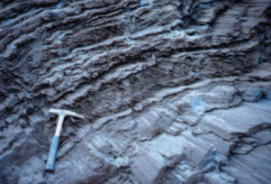
Most large deposits of iron ore are associated with iron formations for the simple reason that they have the highest iron concentrations of any “normal” rock type. Iron formations are found in all Precambrian shields. Iron was preconcentrated in iron formations by surface processes in Precambrian marginal-marine environments, as outlined elsewhere in this issue.

This content is for Registered members only. To subscribe, please
join one of our participating societies or contact the Editorial Team.

Login
Already a member? Log in here

Iron Ore Deposits Associated with Precambrian Iron Formations Read More »
Distal Impact Ejecta Layers: Spherules and More

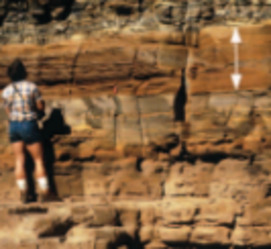
During the formation of large impact structures, layers of melted and crushed rock (ejecta) are deposited over large areas of the Earth’s surface. Ejecta thrown farther than 2.5 crater diameters are called distal ejecta. At distances greater than ~10 crater diameters, the distal ejecta layers consist primarily of millimeter-scale glassy bodies (impact spherules) that form from melt and vapor-condensate droplets. At least 28 distal ejecta layers have been identified. Distal ejecta layers can be used to place constraints on cratering models, help fill gaps in the cratering record, and provide direct correlation between impacts and other terrestrial events.

This content is for Registered members only. To subscribe, please
join one of our participating societies or contact the Editorial Team.

Login
Already a member? Log in here

Distal Impact Ejecta Layers: Spherules and More Read More »

Scroll to Top

December 2025 --The Variscan Orogeny in Europe – Understanding Supercontinent Formation

The Variscan orogen formed between 380 and 300 million years ago through several accretionary and collisional cycles, culminating with the construction of the Pangea supercontinent. This process occurred via sequential opening and closure of oceanic basins, synchronous detachment of Gondwana derived continental ribbons, and their outboard amalgamation onto the Laurussia margin. The Variscan orogen is rather unique compared with other orogenic belts on Earth: its overthickened and dominantly magmatic crust in the central belt, surprisingly minor mantle involvement in the magmatic and geodynamic processes, coherent and pulsed magmatism along the collision suture, and its complex accretionary history. Because its final product, Pangea, is the youngest and best-understood supercontinent on Earth, the Variscan orogeny offers clues for understanding the mechanisms of supercontinent formation.