


Author name: nicholas-j-tosca

How to Make an Alkaline Lake: Fifty Years of Chemical Divides

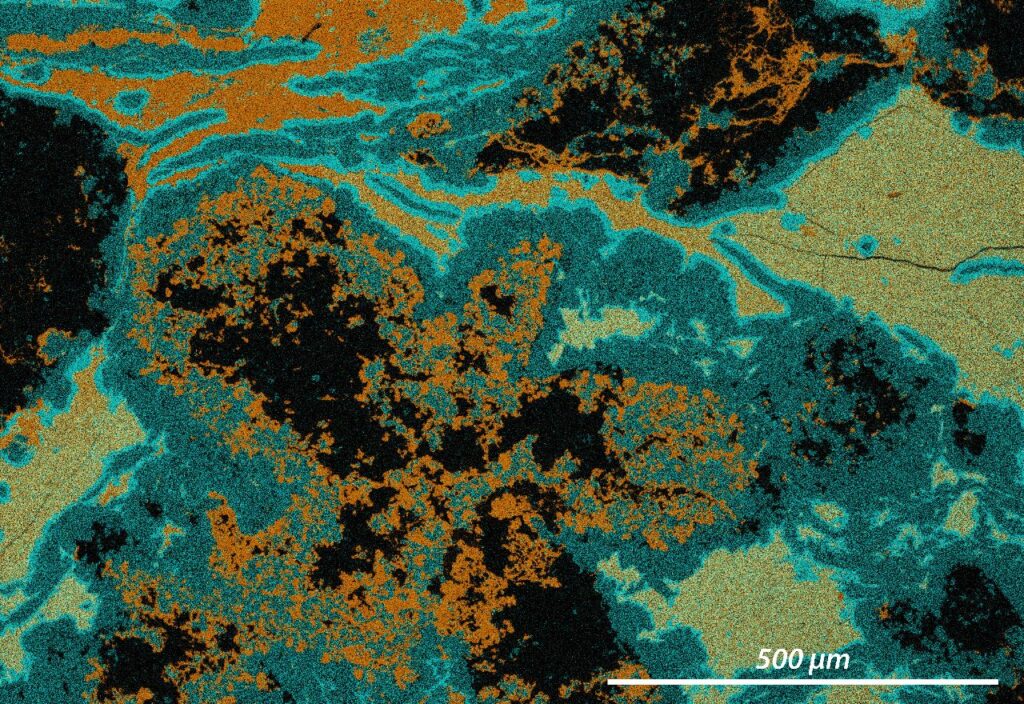
Of all the surface environments on our planet, alkaline lakes are among the most distinctive and significant in terms of their biogeochemistry, climatic sensitivity, and associated mineral deposits. But how does the Earth produce alkaline lakes? Fifty years ago, Lawrence Hardie and Hans Eugster hypothesised that the bewildering complexity of non-marine evaporites could be explained by common successions of mineral precipitation events, or chemical divides. Since that time, the chemical divide concept has provided Earth scientists with an enduring framework within which to integrate new advances in mineral–water equilibria and kinetics, sedimentology, and paleoclimatology. These developments are painting an increasingly detailed picture of how alkaline waters form and interact with magmatic and atmospheric CO2, now and in the distant past.

This content is for Registered members only. To subscribe, please
join one of our participating societies or contact the Editorial Team.

Login
Already a member? Log in here

How to Make an Alkaline Lake: Fifty Years of Chemical Divides Read More »
Dry, Salty, and Habitable: The Science of Alkaline Lakes

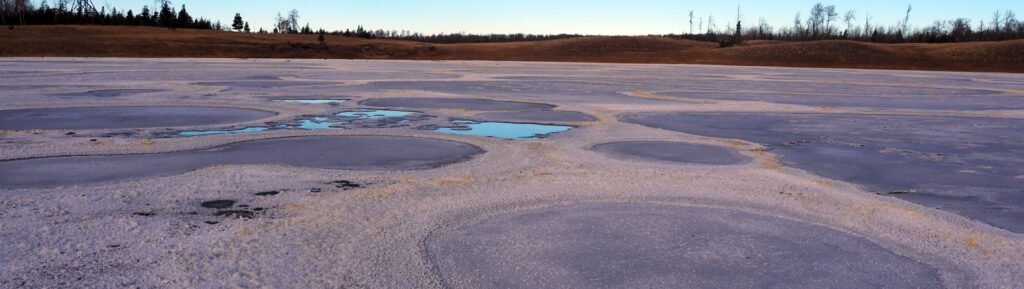
Alkaline lakes are incredibly dynamic, unique, and fascinating biogeochemical environments that have remained distinctive features of Earth’s evolving surface over much of its history. Understanding these evaporative surface waters, their exceptionally productive ecosystems, and their rare sedimentary deposits requires an inherently interdisciplinary approach at the intersection of hydrology, geology, and biology. The discipline-spanning articles in this issue evaluate the diverse characteristics that make these dry, salty, and habitable environments so valuable in unraveling the history and evolution of Earth’s surface, and in following the arc of habitability on ancient Mars. Here, in this introductory article, we summarize the characteristics and importance of alkaline lakes with the hope of attracting you, too, to join in our fascination with them.

This content is for Registered members only. To subscribe, please
join one of our participating societies or contact the Editorial Team.

Login
Already a member? Log in here

Dry, Salty, and Habitable: The Science of Alkaline Lakes Read More »

Scroll to Top

December 2025 --The Variscan Orogeny in Europe – Understanding Supercontinent Formation

The Variscan orogen formed between 380 and 300 million years ago through several accretionary and collisional cycles, culminating with the construction of the Pangea supercontinent. This process occurred via sequential opening and closure of oceanic basins, synchronous detachment of Gondwana derived continental ribbons, and their outboard amalgamation onto the Laurussia margin. The Variscan orogen is rather unique compared with other orogenic belts on Earth: its overthickened and dominantly magmatic crust in the central belt, surprisingly minor mantle involvement in the magmatic and geodynamic processes, coherent and pulsed magmatism along the collision suture, and its complex accretionary history. Because its final product, Pangea, is the youngest and best-understood supercontinent on Earth, the Variscan orogeny offers clues for understanding the mechanisms of supercontinent formation.