

Author name: Christian Koeberl

Geochemistry of Impactites

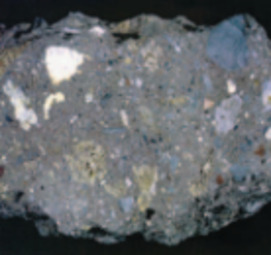
Geochemical analysis is an essential tool for the confirmation and study of impact structures and the characterization of the various rock types involved (target rocks, impact breccias, melt rocks, etc.). Concentrations and interelement ratios of the platinum-group elements, as well as the osmium and chromium isotope systems, allow quantification of extraterrestrial components and the identification of impactor types in impact deposits. In addition, chemolithostratigraphy can reveal the possible role of impacts in environmental change throughout the geologic record. This article deals predominantly with terrestrial impact structures.

This content is for Registered members only. To subscribe, please
join one of our participating societies or contact the Editorial Team.

Login
Already a member? Log in here

Geochemistry of Impactites Read More »
Impact Processes on the Early Earth

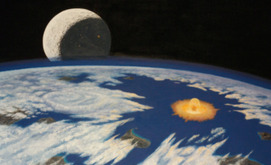
At the beginning of the solar system, impacts and collisions were dominant processes. After an early collision that may have led to the formation of the Moon, both Earth and Moon suffered intense post- accretionary bombardment between about 4.5 and 3.9 billion years before present. There is evidence from lunar rocks for an intense “Late Heavy Bom- bardment” at about 3.85–3.9 Ga, which must have had severe consequences for Earth as well, even though no terrestrial record has yet been found. Several 3.4 to 2.5 Ga old spherule layers in South Africa and Australia and two impact craters near 2 Ga represent the oldest terrestrial impact records found to date. Thus, the impact record for more than half of Earth’s geo- logical history is incomplete, and there is only indirect evidence for impact processes during the first 2.5 billion years of Earth history.

This content is for Registered members only. To subscribe, please
join one of our participating societies or contact the Editorial Team.

Login
Already a member? Log in here

Impact Processes on the Early Earth Read More »

Scroll to Top

December 2025 --The Variscan Orogeny in Europe – Understanding Supercontinent Formation

The Variscan orogen formed between 380 and 300 million years ago through several accretionary and collisional cycles, culminating with the construction of the Pangea supercontinent. This process occurred via sequential opening and closure of oceanic basins, synchronous detachment of Gondwana derived continental ribbons, and their outboard amalgamation onto the Laurussia margin. The Variscan orogen is rather unique compared with other orogenic belts on Earth: its overthickened and dominantly magmatic crust in the central belt, surprisingly minor mantle involvement in the magmatic and geodynamic processes, coherent and pulsed magmatism along the collision suture, and its complex accretionary history. Because its final product, Pangea, is the youngest and best-understood supercontinent on Earth, the Variscan orogeny offers clues for understanding the mechanisms of supercontinent formation.