
Author name: Vincent J. van Hinsberg

Tourmaline as a Petrologic Forensic Mineral: A Unique Recorder of Its Geologic Past

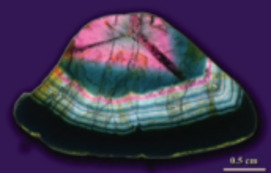
Tourmaline is nature’s perfect forensic mineral. From a single grain, the full geological past of its host rock can be reconstructed, including the pressure–temperature path it has taken through the Earth and the changing fluid compositions it has encountered. Tourmaline is able to provide this record owing to its compositional and textural sensitivity to the environment in which it grows, and is able to preserve this record because element diffusion in its structure is negligible. Furthermore, tourmaline has an exceptionally broad stability range, allowing it to record conditions in igneous, sedimentary, metamorphic, and hydrothermal settings. As our mineralogical and geochemical tools advance, we are able to interrogate tourmaline’s memory with increasing precision, making tourmaline a truly powerful indicator of conditions in the Earth.

This content is for Registered members only. To subscribe, please
join one of our participating societies or contact the Editorial Team.

Login
Already a member? Log in here

Tourmaline as a Petrologic Forensic Mineral: A Unique Recorder of Its Geologic Past Read More »
Tourmaline: A Geologic DVD

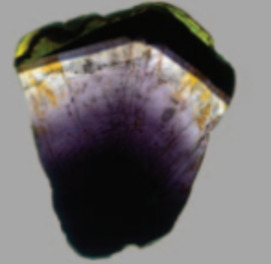
Tourmaline is an eye-catching mineral, but even more importantly, it has played a significant role in the evolution of scientific thought and, more recently, has been recognized as a medium for recording geologic information, not unlike a DVD. With its plethora of chemical constituents, its wide range of stability from conditions near the Earth’s surface to the pressures and temperatures of the upper mantle, and its extremely low rates of volume diffusion, tourmaline can acquire a chemical signature from the rock in which it develops and can retain that signature through geologic time. As a source as well as a sink for boron, tourmaline is nature’s boron recorder. Tourmaline can be used as a geothermometer, provenance indicator, fluid-composition recorder, and geochronometer. Although long prized as a gemstone, tourmaline is clearly more than meets the eye.

This content is for Registered members only. To subscribe, please
join one of our participating societies or contact the Editorial Team.

Login
Already a member? Log in here

Tourmaline: A Geologic DVD Read More »

Scroll to Top

December 2025 --The Variscan Orogeny in Europe – Understanding Supercontinent Formation

The Variscan orogen formed between 380 and 300 million years ago through several accretionary and collisional cycles, culminating with the construction of the Pangea supercontinent. This process occurred via sequential opening and closure of oceanic basins, synchronous detachment of Gondwana derived continental ribbons, and their outboard amalgamation onto the Laurussia margin. The Variscan orogen is rather unique compared with other orogenic belts on Earth: its overthickened and dominantly magmatic crust in the central belt, surprisingly minor mantle involvement in the magmatic and geodynamic processes, coherent and pulsed magmatism along the collision suture, and its complex accretionary history. Because its final product, Pangea, is the youngest and best-understood supercontinent on Earth, the Variscan orogeny offers clues for understanding the mechanisms of supercontinent formation.