
Author name: Paulo M. Vasconcelos

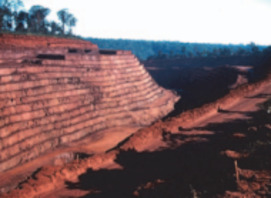
The Paleoclimatic Signatures of Supergene Metal Deposits

Supergene metal deposits host a comprehensive record of climate-driven geochemical reactions that may span the entire Cenozoic. Products of these reactions can be dated by a variety of radiogenic isotopic methods, such as 40Ar/39Ar, (U–Th)/He, U–Pb, and U-series. The frequency of mineral precipitation, determined by dating a representative number of samples of a particular mineral collected from distinct parts of the supergene ore body, refl ects times in the geological past when weathering conditions were conducive to water–rock interaction. The frequency of mineral precipitation through time permits identifying periods in the geological past when climatic conditions were most conducive to chemical weathering and supergene ore genesis.

This content is for Registered members only. To subscribe, please
join one of our participating societies or contact the Editorial Team.

Login
Already a member? Log in here

The Paleoclimatic Signatures of Supergene Metal Deposits Read More »
Lazed and Diffused: Untangling Noble Gas Thermochronometry Data for Exhumation Rates

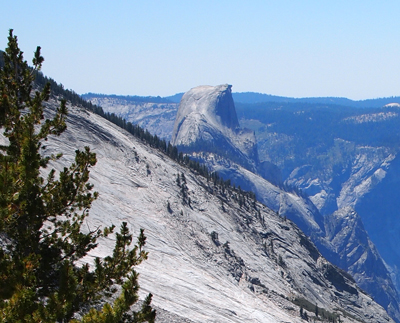
Thermochronometric data can record the thermal history of rocks as they cool from high temperatures at depth to lower temperatures at the surface. This provides a unique perspective on the tectonic processes that form topography and the erosional processes that destroy it. However, quantitatively interpreting such data is a challenge because multiple models can do an equally good job at reproducing the data. In this article, we describe how inverse modeling can be used to improve quantitative interpretations of noble gas thermochronometric data on a variety of scales, ranging from mountain belts to individual mineral grains.

This content is for Registered members only. To subscribe, please
join one of our participating societies or contact the Editorial Team.

Login
Already a member? Log in here

Lazed and Diffused: Untangling Noble Gas Thermochronometry Data for Exhumation Rates Read More »

Scroll to Top

December 2025 --The Variscan Orogeny in Europe – Understanding Supercontinent Formation

The Variscan orogen formed between 380 and 300 million years ago through several accretionary and collisional cycles, culminating with the construction of the Pangea supercontinent. This process occurred via sequential opening and closure of oceanic basins, synchronous detachment of Gondwana derived continental ribbons, and their outboard amalgamation onto the Laurussia margin. The Variscan orogen is rather unique compared with other orogenic belts on Earth: its overthickened and dominantly magmatic crust in the central belt, surprisingly minor mantle involvement in the magmatic and geodynamic processes, coherent and pulsed magmatism along the collision suture, and its complex accretionary history. Because its final product, Pangea, is the youngest and best-understood supercontinent on Earth, the Variscan orogeny offers clues for understanding the mechanisms of supercontinent formation.