


Author name: Gabriel M. Filippelli

Urban Geochemistry and Human Health

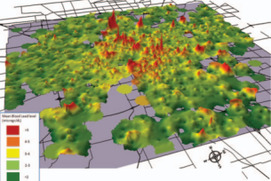
Cities are typically evaluated by metrics involving transportation, energy, and economics, but increasingly, environmental quality and human health are becoming important indicators of safe and habitable cities. Population density and industrialization history have resulted in urban contaminant legacies that can impact the health of urban populations. Integrating environmental assessment with human exposure and health studies is in its infancy, but combined geospatial and geotemporal studies have the capacity to explain and predict the health of urban environments. Studies integrating metal geochemistry with human health impacts reveal the complicated layering of environment, exposure, uptake, and human health in cities, and they call for more effort towards the integration of Earth and health science data.

This content is for Registered members only. To subscribe, please
join one of our participating societies or contact the Editorial Team.

Login
Already a member? Log in here

Urban Geochemistry and Human Health Read More »
Legacy Problems in Urban Geochemistry

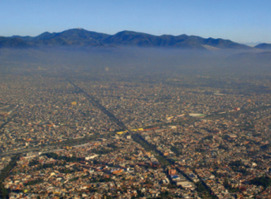
Modern cities are affected by multiple sources of contamination and pollution, the effects of which overlap in space and time. Toxic metal contamination, organic pollution, smog, acid rain, and greenhouse gas accumulation are the most widespread legacies of an often uncontrolled growth that has deeply changed the geochemical character of the urban environment over the last four millennia. Even though progress has changed human habits and positively influenced the quality of city life, the past is frequently a hidden source of environmental problems with the potential to affect the health of current and future urban residents.

This content is for Registered members only. To subscribe, please
join one of our participating societies or contact the Editorial Team.

Login
Already a member? Log in here

Legacy Problems in Urban Geochemistry Read More »

Scroll to Top

December 2025 --The Variscan Orogeny in Europe – Understanding Supercontinent Formation

The Variscan orogen formed between 380 and 300 million years ago through several accretionary and collisional cycles, culminating with the construction of the Pangea supercontinent. This process occurred via sequential opening and closure of oceanic basins, synchronous detachment of Gondwana derived continental ribbons, and their outboard amalgamation onto the Laurussia margin. The Variscan orogen is rather unique compared with other orogenic belts on Earth: its overthickened and dominantly magmatic crust in the central belt, surprisingly minor mantle involvement in the magmatic and geodynamic processes, coherent and pulsed magmatism along the collision suture, and its complex accretionary history. Because its final product, Pangea, is the youngest and best-understood supercontinent on Earth, the Variscan orogeny offers clues for understanding the mechanisms of supercontinent formation.