

Author name: Donald E. Brownlee

Flyby Missions to Comets and Return Sample Analysis

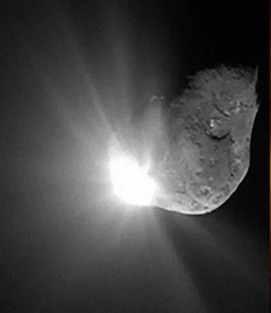
Images from flyby missions show comets to be geomorphically diverse bodies that spew jets of gas, dust, and rocks into space. Comet surfaces differ from other small bodies because of their ejection of mass into space. Comet solids >2 µm are similar to primitive meteorite ingredients and include the highest temperature materials made in the early solar system. The presence of these materials in ice-rich comets is strong evidence for large-scale migration of solid grains in the early solar system. Cometary silicates appear to have formed in numerous hot solar system regions. Preserved interstellar grains are rare, unless they have eluded identification by having solar isotopic compositions

This content is for Registered members only. To subscribe, please
join one of our participating societies or contact the Editorial Team.

Login
Already a member? Log in here

Flyby Missions to Comets and Return Sample Analysis Read More »
Cosmic Dust: Building Blocks of Planets Falling from the Sky

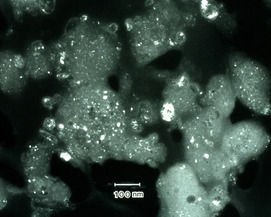
Throughout its history, Earth has accreted microscopic dust falling from space. Decelerating from cosmic speeds at the top of the atmosphere, the smallest particles can take weeks to reach the ground, failing a rate of 1 m−2 day−1. Although usually hidden among terrestrial materials, extraterrestrial particles can be collected from select environments and positively identified by their unique properties. Unmelted cosmic dust is often composed of large numbers of smaller silicate, sulfide, and organic components—the preserved materials from the early Solar System. Cosmic dust particles are samples of comets and asteroids and they are important samples of the initial materials that were to build the solid planets.

This content is for Registered members only. To subscribe, please
join one of our participating societies or contact the Editorial Team.

Login
Already a member? Log in here

Cosmic Dust: Building Blocks of Planets Falling from the Sky Read More »

Scroll to Top

December 2025 --The Variscan Orogeny in Europe – Understanding Supercontinent Formation

The Variscan orogen formed between 380 and 300 million years ago through several accretionary and collisional cycles, culminating with the construction of the Pangea supercontinent. This process occurred via sequential opening and closure of oceanic basins, synchronous detachment of Gondwana derived continental ribbons, and their outboard amalgamation onto the Laurussia margin. The Variscan orogen is rather unique compared with other orogenic belts on Earth: its overthickened and dominantly magmatic crust in the central belt, surprisingly minor mantle involvement in the magmatic and geodynamic processes, coherent and pulsed magmatism along the collision suture, and its complex accretionary history. Because its final product, Pangea, is the youngest and best-understood supercontinent on Earth, the Variscan orogeny offers clues for understanding the mechanisms of supercontinent formation.