Author name: Jon Chorover

Soil Biogeochemical Processes within the Critical Zone

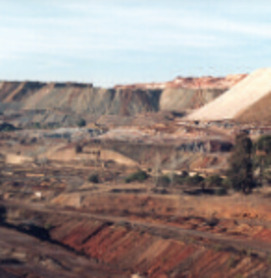
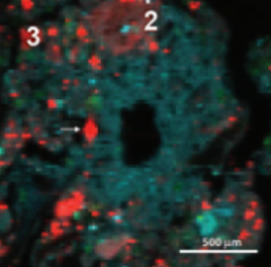
Many processes that affect soil and water quality occur at the water wetted interface of weathering products such as clays, oxides, and organic matter. Especially near the sunlit surface of the Critical Zone, these interfaces associate with plant roots and soil organisms to form porous, aggregated structures. Soil aggregates and intervening pore networks give rise to a patchwork of interconnected microenvironments. The ensuing steep geochemical gradients affect weathering processes, fuel the activities of microbes, and drive interfacial reactions that retain and transform rock- or ecosystem-derived chemicals and anthropogenic pollutants.

This content is for Registered members only. To subscribe, please
join one of our participating societies or contact the Editorial Team.

Login
Already a member? Log in here

Soil Biogeochemical Processes within the Critical Zone Read More »
Shining Light on Metals in the Environment

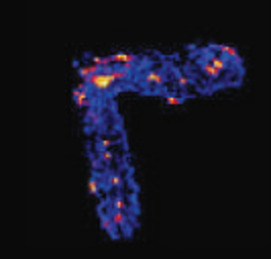
Elucidating the speciation of heavy metals in the environment is para- mount to understanding their potential mobility and bioavailability. Cutting-edge synchrotron-based techniques such as microfocused X-ray absorption fine-structure (XAFS) and X-ray fluorescence (XRF) spectroscopy and microtomography have revolutionized the way metal reactions and processes in natural systems are studied. In this article, we apply these intense-light tools to decipher metal forms (species) and associations in contaminated soils and metal-hyperaccumulating plants.

This content is for Registered members only. To subscribe, please
join one of our participating societies or contact the Editorial Team.

Login
Already a member? Log in here

Shining Light on Metals in the Environment Read More »

Toxic Metals in the Environment: The Role of Surfaces

Metals are prevalent in the environment. They are derived from both natural and anthropogenic sources. Certain metals are essential for plant growth and for animal and human health. However, if present in excessive concentrations they become toxic. Metals undergo an array of biogeochemical processes at reactive natural surfaces, including surfaces of clay minerals, metal oxides and oxyhydroxides, humic substances, plant roots, and microbes. These processes control the solubility, mobility, bioavailability, and toxicity of metals in the environment. The use of advanced analytical techniques has furthered our understanding of the reactivity and mobility of metals in the near-surface environment.

This content is for Registered members only. To subscribe, please
join one of our participating societies or contact the Editorial Team.

Login
Already a member? Log in here

Toxic Metals in the Environment: The Role of Surfaces Read More »

Scroll to Top

December 2025 --The Variscan Orogeny in Europe – Understanding Supercontinent Formation

The Variscan orogen formed between 380 and 300 million years ago through several accretionary and collisional cycles, culminating with the construction of the Pangea supercontinent. This process occurred via sequential opening and closure of oceanic basins, synchronous detachment of Gondwana derived continental ribbons, and their outboard amalgamation onto the Laurussia margin. The Variscan orogen is rather unique compared with other orogenic belts on Earth: its overthickened and dominantly magmatic crust in the central belt, surprisingly minor mantle involvement in the magmatic and geodynamic processes, coherent and pulsed magmatism along the collision suture, and its complex accretionary history. Because its final product, Pangea, is the youngest and best-understood supercontinent on Earth, the Variscan orogeny offers clues for understanding the mechanisms of supercontinent formation.