

Author name: Emily C. First

Galaxy of Green

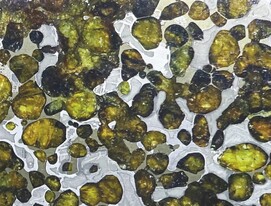
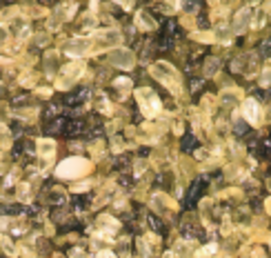
Olivine occurs across the galaxy, from Earth to extraterrestrial bodies including the Moon, Mars, and asteroids, to particles of comet dust and distant debris disks. The mineral is critical to our understanding of early Solar System chronology, planetary formation processes (e.g., magma ocean solidification), crustal evolution (e.g., volcanic eruptions), and surface weathering. Olivine’s ability to shed light on these processes lies in the linkage of small, physical samples and satellite-derived data. Laboratory spectra become the basis for olivine detection and compositional interpretation in remotely sensed spectra ranging from high-resolution planetary maps to single extra-solar datapoints. In turn, petrologic studies of olivine underpin the geologic interpretations of these spectral datasets. Finally, olivine chemistry records Solar System formation conditions and relative chronology. Olivine is our bridge across time and space.
This content is for Registered members only. To subscribe, please
join one of our participating societies or contact the Editorial Team.

Login
Already a member? Log in here

Galaxy of Green Read More »

Olivine—The Little Green Science Machine

In some ways, olivine has driven the evolution of the Solar System and likely beyond. As one of the earliest-crystallizing silicate minerals, olivine controls the initial chemical evolution of planet-wide magma oceans and individual lava flows alike. In solid aggregate form, it controls and records deformation of the mantle and smaller-scale intrusive complexes. The components of its crystal structure are mobile at high temperatures and their migration can be used to explore the timing of magmatic events. During chemical weathering, these olivine crystals capture carbon dioxide from the atmosphere as secondary minerals are formed. All of these processes take place not only on Earth, but also on other planetary bodies, making olivine ideally suited to shed light on both primordial planet-building processes and current-day volcanism and surface processes.

This content is for Registered members only. To subscribe, please
join one of our participating societies or contact the Editorial Team.

Login
Already a member? Log in here

Olivine—The Little Green Science Machine Read More »

Scroll to Top

December 2025 --The Variscan Orogeny in Europe – Understanding Supercontinent Formation

The Variscan orogen formed between 380 and 300 million years ago through several accretionary and collisional cycles, culminating with the construction of the Pangea supercontinent. This process occurred via sequential opening and closure of oceanic basins, synchronous detachment of Gondwana derived continental ribbons, and their outboard amalgamation onto the Laurussia margin. The Variscan orogen is rather unique compared with other orogenic belts on Earth: its overthickened and dominantly magmatic crust in the central belt, surprisingly minor mantle involvement in the magmatic and geodynamic processes, coherent and pulsed magmatism along the collision suture, and its complex accretionary history. Because its final product, Pangea, is the youngest and best-understood supercontinent on Earth, the Variscan orogeny offers clues for understanding the mechanisms of supercontinent formation.