


Author name: Ethan F. Baxter

Garnet Geochronology: Timekeeper of Tectonometamorphic Processes

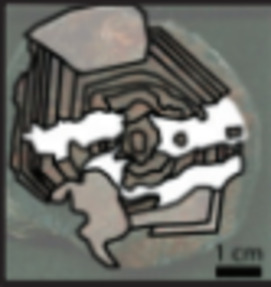
Garnet’s potential as a chronometer of tectonometamorphic processes and conditions was fi rst recognized over 30 years ago. The Sm–Nd and Lu–Hf systems have since emerged as the most effective chronometers, permitting age precision of better than ±1 My, even on tiny samples such as concentric growth zones within individual crystals. New, robust analytical methods mitigate the effects of ubiquitous mineral inclusions, improving the precision and accuracy of garnet dates. Important differences between Sm– Nd and Lu–Hf with respect to partitioning, diffusivity, contaminant phases, and isotopic analysis make these two systems powerfully complementary.

This content is for Registered members only. To subscribe, please
join one of our participating societies or contact the Editorial Team.

Login
Already a member? Log in here

Garnet Geochronology: Timekeeper of Tectonometamorphic Processes Read More »
Zircon as a Monitor of Crustal Growth

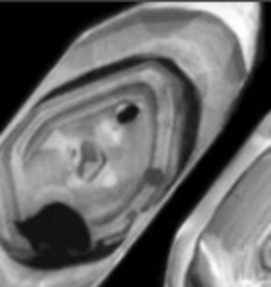
Zircon has long played a key role in crustal evolution studies as the preeminent U–Pb geochronometer. Recent advances in analytical capabilities now permit investigations of complex grains at high spatial resolution, where the goal is to link zircon ages to other petrographic and geochemical information. Zircon can provide time-stamped ‘snapshots’ of hafnium and oxygen isotope signatures of magmas throughout Earth’s history, even at the scale of individual growth zones within a single grain. This information is an invaluable help to geochemists trying to distinguish magmatic events that added new, mantle-derived material to the continental crust from those that merely recycled existing crust.

This content is for Registered members only. To subscribe, please
join one of our participating societies or contact the Editorial Team.

Login
Already a member? Log in here

Zircon as a Monitor of Crustal Growth Read More »

Scroll to Top

December 2025 --The Variscan Orogeny in Europe – Understanding Supercontinent Formation

The Variscan orogen formed between 380 and 300 million years ago through several accretionary and collisional cycles, culminating with the construction of the Pangea supercontinent. This process occurred via sequential opening and closure of oceanic basins, synchronous detachment of Gondwana derived continental ribbons, and their outboard amalgamation onto the Laurussia margin. The Variscan orogen is rather unique compared with other orogenic belts on Earth: its overthickened and dominantly magmatic crust in the central belt, surprisingly minor mantle involvement in the magmatic and geodynamic processes, coherent and pulsed magmatism along the collision suture, and its complex accretionary history. Because its final product, Pangea, is the youngest and best-understood supercontinent on Earth, the Variscan orogeny offers clues for understanding the mechanisms of supercontinent formation.