

Author name: Ze-Zhou Wang

Himalayan Leucogranites: A Geochemical Perspective

The geochemical characterization of Himalayan leucogranites offers important insights into both their petrogenesis and Himalayan orogenic processes. Himalayan leucogranites are characterized by strongly peraluminous compositions that are comparable to melts derived from anatexis of sedimentary rocks. Their radiogenic (Sr, Nd, and Hf) isotopic compositions point to metasediments from the Higher Himalayan Sequence of the Indian plate as the primary source rocks, with minor contributions from other lithologies. Himalayan leucogranites display considerable variability in trace element ratios (e.g., Rb/Sr, Nb/Ta, Zr/Hf, and Eu/Eu*) and significant fractionation of non-traditional stable isotopes (e.g., Mg, K, Zn, Rb, and Ba), which provide key constraints on the respective roles of source heterogeneity, crystal fractionation, magma–fluid interaction, and crustal melting in their formation.

This content is for Registered members only. To subscribe, please
join one of our participating societies or contact the Editorial Team.

Login
Already a member? Log in here

Himalayan Leucogranites: A Geochemical Perspective Read More »
Himalayan Leucogranites: Petrogenesis and Significance

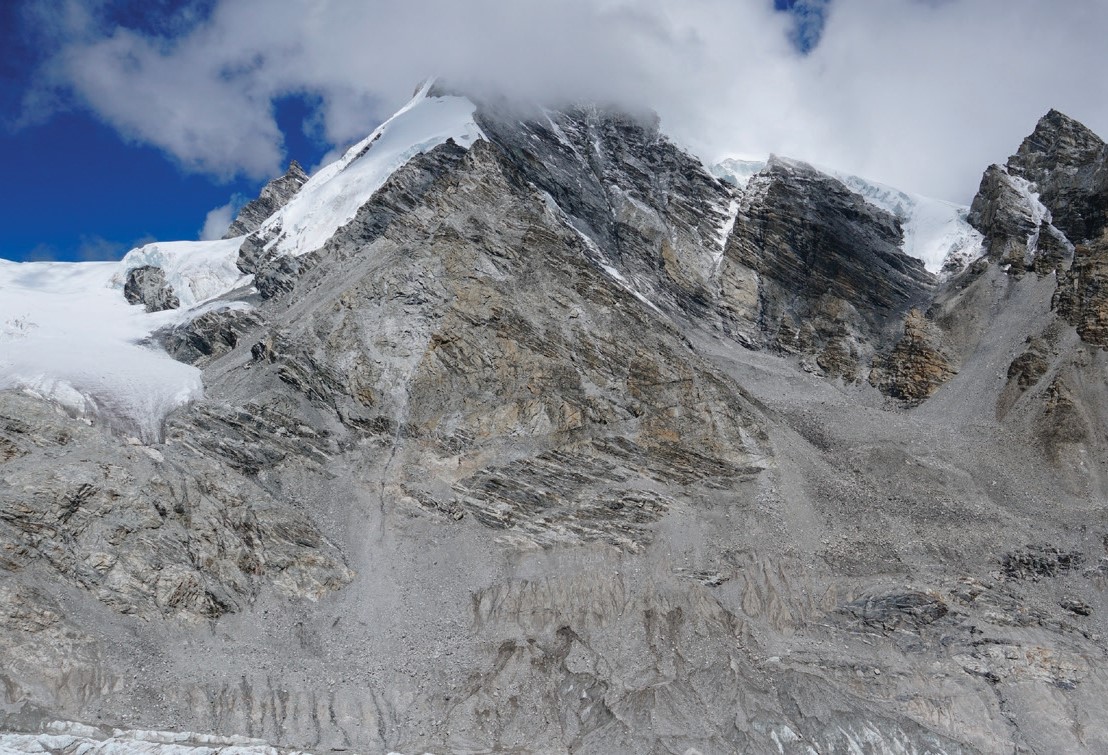
Himalayan leucogranites crop out intermittently over 2000 km along the crest of the world’s youngest and largest mountain range. They are derived from partial melting of continental crust during a classic continental collisional orogeny. Studies of these leucogranites have significantly advanced knowledge of crustal anatexis, felsic magmatic differentiation, and the tectonic evolution of the Himalayan-Tibetan orogen. This Elements thematic issue provides an overview of the petrogenesis and significance of the Himalayan leucogranites including field relations, source rocks, petrology, geochemistry, tectonics, and links to orogenesis and economic resources. It not only summarizes the state-of-the-art research on Himalayan leucogranites but also demonstrates how a multidisciplinary approach can help constrain the origins and evolution of granites, their associated mineralizations, and related geodynamic development.

This content is for Registered members only. To subscribe, please
join one of our participating societies or contact the Editorial Team.

Login
Already a member? Log in here

Himalayan Leucogranites: Petrogenesis and Significance Read More »

Scroll to Top

December 2025 --The Variscan Orogeny in Europe – Understanding Supercontinent Formation

The Variscan orogen formed between 380 and 300 million years ago through several accretionary and collisional cycles, culminating with the construction of the Pangea supercontinent. This process occurred via sequential opening and closure of oceanic basins, synchronous detachment of Gondwana derived continental ribbons, and their outboard amalgamation onto the Laurussia margin. The Variscan orogen is rather unique compared with other orogenic belts on Earth: its overthickened and dominantly magmatic crust in the central belt, surprisingly minor mantle involvement in the magmatic and geodynamic processes, coherent and pulsed magmatism along the collision suture, and its complex accretionary history. Because its final product, Pangea, is the youngest and best-understood supercontinent on Earth, the Variscan orogeny offers clues for understanding the mechanisms of supercontinent formation.