


Author name: William B. Simmons

Granitic Pegmatites as Sources of Colored Gemstones

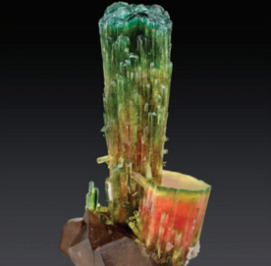
Pegmatites are sources of gem-quality crystals of beryl, tourmaline, topaz, spodumene, and spessartine. Historic localities are found in Brazil, Madagascar, Russia, and the United States, but important deposits have recently been discovered in Africa and Asia. Most high-quality gem minerals occur in miarolitic cavities found near the centers of pegmatite bodies or in reaction zones between pegmatites and ultramafi c host rocks. The most important gem-bearing granitic pegmatites formed at shallow levels in the continental crust during the latest stages of collisional plate tectonic events. Single, spectacular miarolitic cavities in some pegmatites have produced tons of gem crystals valued in excess of $50 million.

This content is for Registered members only. To subscribe, please
join one of our participating societies or contact the Editorial Team.

Login
Already a member? Log in here

Granitic Pegmatites as Sources of Colored Gemstones Read More »
Tourmaline: The Kaleidoscopic Gemstone

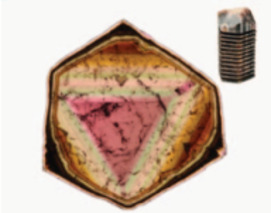
With their multitude of colors, gem tourmalines are among the most popular colored gemstones. Spectacular color-zoned tourmalines are valued as gems and crystal specimens, and some complexly zoned crystals contain nearly the entire spectrum of color variation found in the mineral world. The top-quality “neon” blue-to-green, copper-bearing tourmaline, the Paraíba-type, is one of the highest-priced colored gemstones, with values comparable to those of some diamonds. The wide variety and intensity of colors are related primarily to color-producing ions in the structure and to exposure to natural radiation. Gem tourmalines that form in magmatic, pegmatitic environments are most commonly elbaite and fluorliddicoatite species, and the rarer gem tourmalines that develop in metamorphic rocks are generally dravite–uvite species.

This content is for Registered members only. To subscribe, please
join one of our participating societies or contact the Editorial Team.

Login
Already a member? Log in here

Tourmaline: The Kaleidoscopic Gemstone Read More »

Scroll to Top

December 2025 --The Variscan Orogeny in Europe – Understanding Supercontinent Formation

The Variscan orogen formed between 380 and 300 million years ago through several accretionary and collisional cycles, culminating with the construction of the Pangea supercontinent. This process occurred via sequential opening and closure of oceanic basins, synchronous detachment of Gondwana derived continental ribbons, and their outboard amalgamation onto the Laurussia margin. The Variscan orogen is rather unique compared with other orogenic belts on Earth: its overthickened and dominantly magmatic crust in the central belt, surprisingly minor mantle involvement in the magmatic and geodynamic processes, coherent and pulsed magmatism along the collision suture, and its complex accretionary history. Because its final product, Pangea, is the youngest and best-understood supercontinent on Earth, the Variscan orogeny offers clues for understanding the mechanisms of supercontinent formation.