


Author name: Francis Albarède

Metal Stable Isotopes in the Human Body: A Tribute of Geochemistry to Medicine

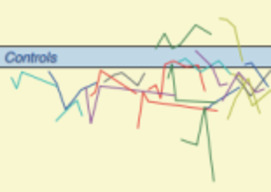
Metalloproteins play essential roles in biology and medicine. Calcium is a major component of bones, while electron and oxygen transport in the body relies on iron and copper. Isotope fractionation of metal stable elements uniquely reflects specific biochemical pathways. Variations in these isotope ratios from normal levels in body fluids can be used as reliable markers of pathological conditions. Metal stable isotope fractionation reflects the energetics of bonding, is amenable to theoretical calculations and is fast becoming a powerful medical diagnostic tool. Examples include how calcium isotopes can be used to monitor bone loss, how iron isotopes can react to genetic disorders, and how copper isotopes can help track cancer progression.

This content is for Registered members only. To subscribe, please
join one of our participating societies or contact the Editorial Team.

Login
Already a member? Log in here

Metal Stable Isotopes in the Human Body: A Tribute of Geochemistry to Medicine Read More »
The Impact of Geochemistry

As geochemists and mineralogists, we are well aware of the impact of our science. We can often reel off examples of how our discoveries have influenced industry and improved humankind’s knowledge about how the Earth works, as well as how natural and anthropogenic processes have led to its present state. Moreover, because of a century of analytical developments and conceptual breakthroughs, geochemists are now versatile and can now work across the entire spectrum of the Earth sciences. However, we are not so good at promoting the social and economic impacts of geochemistry.

This content is for Registered members only. To subscribe, please
join one of our participating societies or contact the Editorial Team.

Login
Already a member? Log in here

The Impact of Geochemistry Read More »

Scroll to Top

December 2025 --The Variscan Orogeny in Europe – Understanding Supercontinent Formation

The Variscan orogen formed between 380 and 300 million years ago through several accretionary and collisional cycles, culminating with the construction of the Pangea supercontinent. This process occurred via sequential opening and closure of oceanic basins, synchronous detachment of Gondwana derived continental ribbons, and their outboard amalgamation onto the Laurussia margin. The Variscan orogen is rather unique compared with other orogenic belts on Earth: its overthickened and dominantly magmatic crust in the central belt, surprisingly minor mantle involvement in the magmatic and geodynamic processes, coherent and pulsed magmatism along the collision suture, and its complex accretionary history. Because its final product, Pangea, is the youngest and best-understood supercontinent on Earth, the Variscan orogeny offers clues for understanding the mechanisms of supercontinent formation.