


Author name: Gerald Raab

Quartz—Hour-Glass for Surface Processes

Quartz is a key archive of Earth surface processes, recording erosion, burial, transport, and landscape evolution across a wide range of timescales. Recent advances in quartz-based analytical techniques have expanded the potential for integrative geochemical and geochronological approaches. Fourier-transform infrared spectroscopy (FTIR) enables detailed characterization of quartz provenance and geological history, while terrestrial cosmogenic nuclides (TCNs) constrain surface exposure, burial histories, and denudation rates. Optically stimulated luminescence (OSL) provides robust age control for fine-grained sediment transport and deposition, and ongoing developments in electron spin resonance (ESR) extend chronological constraints into previously inaccessible time ranges. Understanding the principles and limitations of each method is essential for their effective individual and combined applications in reconstructing Earth surface processes.

This content is for Registered members only. To subscribe, please
join one of our participating societies or contact the Editorial Team.

Login
Already a member? Log in here

Quartz—Hour-Glass for Surface Processes Read More »
Luminescence Thermochronometry: Investigating the Link between Mountain Erosion, Tectonics and Climate

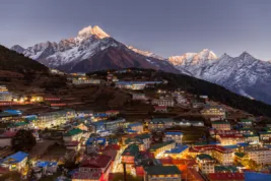
Luminescence thermochronometry is a recently developed method that can constrain erosion histories at sub-Quaternary timescales. Luminescence thermochronometry determines the timing and rate at which electrons are trapped and thermally released in minerals, in response to in situ radiation and rock cooling. Erosion histories can be inferred by translating rock cooling rates into an erosion rate using knowledge of the Earth’s thermal field. In this article, we use examples of luminescence thermochronometry applied to the Himalaya mountains, the New Zealand Alps and the Japanese Alps to infer (and link together) wider aspects of regional erosion, climate and tectonic activity.

This content is for Registered members only. To subscribe, please
join one of our participating societies or contact the Editorial Team.

Login
Already a member? Log in here

Luminescence Thermochronometry: Investigating the Link between Mountain Erosion, Tectonics and Climate Read More »

Scroll to Top

December 2025 --The Variscan Orogeny in Europe – Understanding Supercontinent Formation

The Variscan orogen formed between 380 and 300 million years ago through several accretionary and collisional cycles, culminating with the construction of the Pangea supercontinent. This process occurred via sequential opening and closure of oceanic basins, synchronous detachment of Gondwana derived continental ribbons, and their outboard amalgamation onto the Laurussia margin. The Variscan orogen is rather unique compared with other orogenic belts on Earth: its overthickened and dominantly magmatic crust in the central belt, surprisingly minor mantle involvement in the magmatic and geodynamic processes, coherent and pulsed magmatism along the collision suture, and its complex accretionary history. Because its final product, Pangea, is the youngest and best-understood supercontinent on Earth, the Variscan orogeny offers clues for understanding the mechanisms of supercontinent formation.