Quartz—Hour-Glass for Surface Processes
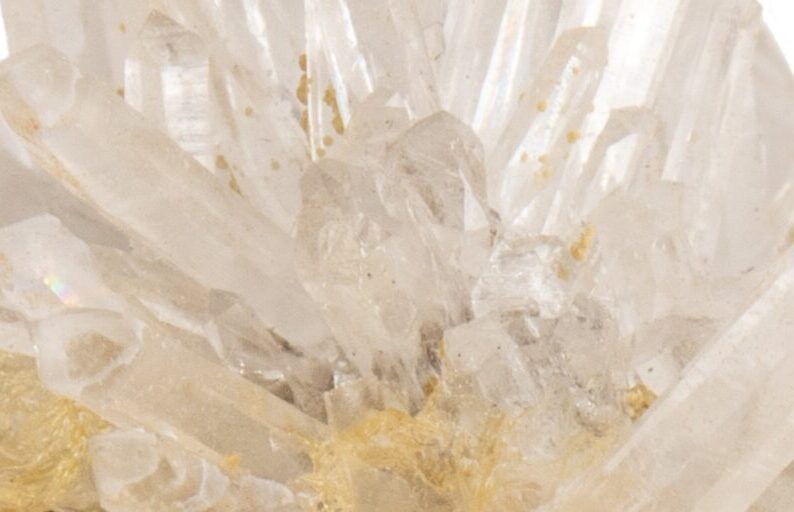
Quartz is a key archive of Earth surface processes, recording erosion, burial, transport, and landscape evolution across a wide range of timescales. Recent advances in quartz-based analytical techniques have expanded the potential for integrative geochemical and geochronological approaches. Fourier-transform infrared spectroscopy (FTIR) enables detailed characterization of quartz provenance and geological history, while terrestrial cosmogenic nuclides (TCNs) constrain surface exposure, burial histories, and denudation rates. Optically stimulated luminescence (OSL) provides robust age control for fine-grained sediment transport and deposition, and ongoing developments in electron spin resonance (ESR) extend chronological constraints into previously inaccessible time ranges. Understanding the principles and limitations of each method is essential for their effective individual and combined applications in reconstructing Earth surface processes.
Quartz—Hour-Glass for Surface Processes Read More »