
Author name: Gilberto Artioli

The Contribution of Geoscience to Cultural Heritage Studies

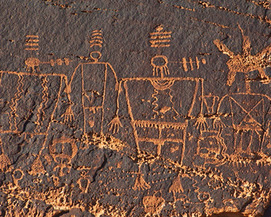
This issue of Elements celebrates the diverse contributions that the Earth sciences have made to characterizing, interpreting, conserving, and valorizing cultural heritage. Archaeometry and conservation science are connected to the geosciences at different levels. Earth scientists possess a profound perception of the complexity of natural materials, they have the necessary knowledge of the ancient and recent geological and physico-chemical processes acting on natural materials and on the artifacts produced by human activities, and they master most of the techniques useful to investigate our common heritage. Therefore, Earth scientists can greatly contribute towards a better understanding and preservation of our past.

This content is for Registered members only. To subscribe, please
join one of our participating societies or contact the Editorial Team.

Login
Already a member? Log in here

The Contribution of Geoscience to Cultural Heritage Studies Read More »
Imaging with Neutrons

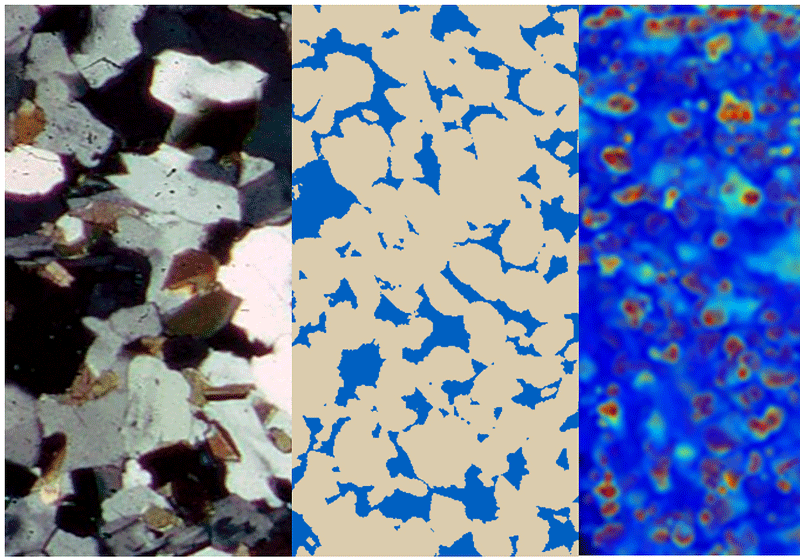
By exploiting the penetration, attenuation, and scattering properties of neutrons, images of matter in two or three dimensions reveal information unobtainable using other probes. Despite the limitation in brilliance of neutron sources, several neutron-based imaging techniques are essential to different aspects of modern geoscience. Typical examples include the evaluation of porosity in rocks and sediments, mapping of light elements in solids, noninvasive probing of cultural heritage objects, investigations of thick engineering components, and the exploration of diffusion and percolation processes of fluids within porous matrices, organo-inorganic composites, and living organisms. Techniques under development include simultaneous neutron and X-ray tomography in heterogeneous media, Bragg-edge imaging, and the possibility of porosimetry from dark-field imaging.

This content is for Registered members only. To subscribe, please
join one of our participating societies or contact the Editorial Team.

Login
Already a member? Log in here

Imaging with Neutrons Read More »

Scroll to Top

December 2025 --The Variscan Orogeny in Europe – Understanding Supercontinent Formation

The Variscan orogen formed between 380 and 300 million years ago through several accretionary and collisional cycles, culminating with the construction of the Pangea supercontinent. This process occurred via sequential opening and closure of oceanic basins, synchronous detachment of Gondwana derived continental ribbons, and their outboard amalgamation onto the Laurussia margin. The Variscan orogen is rather unique compared with other orogenic belts on Earth: its overthickened and dominantly magmatic crust in the central belt, surprisingly minor mantle involvement in the magmatic and geodynamic processes, coherent and pulsed magmatism along the collision suture, and its complex accretionary history. Because its final product, Pangea, is the youngest and best-understood supercontinent on Earth, the Variscan orogeny offers clues for understanding the mechanisms of supercontinent formation.