

Author name: Glenn A. Waychunas

Activators in Minerals and the Role of Electronic Defects

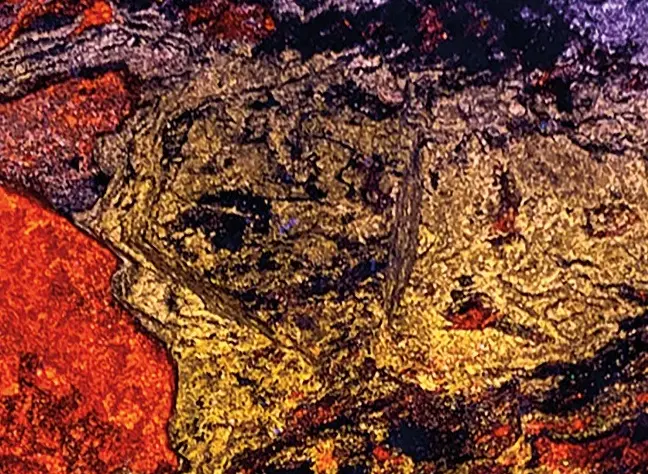
Luminescence in minerals is created by ions, groups of ions, or electronic defects that can absorb energy and emit it as visible light. These units are commonly referred to as “centers” or “activators.” They can be impurities in the mineral or intrinsic constituents. In some cases, separate ions (so-called “sensitizers”) act to aid the luminescence process by preferentially absorbing energy and sending it to the emitting unit. In other cases, ions or electronic defects can slow the emission process by trapping excited electrons. Ions preventing emission from other luminescence centers are called “quenchers.” Some impurities can potentially create almost any luminescent color, while others are known for particular colored emission. Luminescence may exhibit strong zonation in crystals due to selective uptake of the activating ions.

This content is for Registered members only. To subscribe, please
join one of our participating societies or contact the Editorial Team.

Login
Already a member? Log in here

Activators in Minerals and the Role of Electronic Defects Read More »
Structure, Chemistry, and Properties of Mineral Nanoparticles

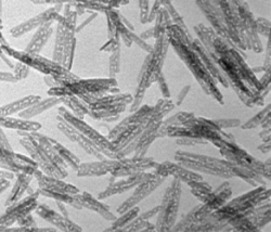
Nanoparticle properties can show marked departures from their bulk analog materials, including large differences in chemical reactivity, molecular and electronic structure, and mechanical behavior. The greatest changes are expected at the smallest sizes, e.g. 10 nanometers and less, where surface effects are likely to dominate bonding, shape, and energy considerations. The precise chemistry at nanoparticle interfaces can have a profound effect on structure, phase transformations, strain, and reactivity. Certain phases may exist only as nanoparticles, requiring transformations in chemistry, stoichiometry, and structure with evolution to larger sizes. In general, mineral nanoparticles have been little studied.

This content is for Registered members only. To subscribe, please
join one of our participating societies or contact the Editorial Team.

Login
Already a member? Log in here

Structure, Chemistry, and Properties of Mineral Nanoparticles Read More »

Scroll to Top

December 2025 --The Variscan Orogeny in Europe – Understanding Supercontinent Formation

The Variscan orogen formed between 380 and 300 million years ago through several accretionary and collisional cycles, culminating with the construction of the Pangea supercontinent. This process occurred via sequential opening and closure of oceanic basins, synchronous detachment of Gondwana derived continental ribbons, and their outboard amalgamation onto the Laurussia margin. The Variscan orogen is rather unique compared with other orogenic belts on Earth: its overthickened and dominantly magmatic crust in the central belt, surprisingly minor mantle involvement in the magmatic and geodynamic processes, coherent and pulsed magmatism along the collision suture, and its complex accretionary history. Because its final product, Pangea, is the youngest and best-understood supercontinent on Earth, the Variscan orogeny offers clues for understanding the mechanisms of supercontinent formation.