
Author name: Gordon E. Brown Jr.

Improving Mitigation of the Long-Term Legacy of Mining Activities: Nano- and Molecular-Level Concepts and Methods

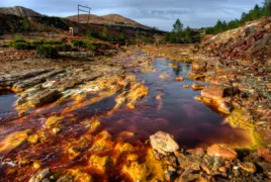
Mining activities over several millennia have resulted in a legacy of environmental contamination that must be mitigated to minimize ecosystem damage and human health impacts. Designing effective remediation strategies for mining and processing wastes requires knowledge of nano- and molecular-scale speciation of contaminants. Here, we discuss how modern nano- and molecular-level concepts and methods can be used to improve risk assessment and future management of contaminants that result from mining activities, and we illustrate this approach using relevant case studies.
This content is for Registered members only. To subscribe, please
join one of our participating societies or contact the Editorial Team.

Login
Already a member? Log in here

Improving Mitigation of the Long-Term Legacy of Mining Activities: Nano- and Molecular-Level Concepts and Methods Read More »

New Opportunities at Emerging Facilities

Synchrotron X-ray sources and pulsed neutron sources are getting brighter. This permits new opportunities for scattering, spectroscopy, and imaging studies of Earth materials and processes that were not possible a decade ago. The impact of these latest-generation facilities on Earth sciences research requiring nanometer- to micrometer-scale resolution is growing and will continue to grow as next-generation X-ray and neutron sources become available over the next six years. These facilities will include the world’s first X-ray free-electron lasers in the US (2009) and Europe (2012) and the Spallation Neutron Source at Oak Ridge National Laboratory, USA (2006). In addition, five nanoscale science research centers are under con- struction in the US and will impact the emerging field of nanogeoscience.

This content is for Registered members only. To subscribe, please
join one of our participating societies or contact the Editorial Team.

Login
Already a member? Log in here

New Opportunities at Emerging Facilities Read More »

Scientific Advances Made Possible by User Facilities

National scientific user facilities are becoming increasingly available to many different scientific communities in a number of countries. There is a growing use of these facilities by Earth and environmental scien- tists to study a broad range of materials and processes under realistic P–T and environmental conditions at unprecedented levels of energy and spatial resolution and elemental and isotopic sensitivity. The results of these studies are providing new insights into biogeochemical processes operating at Earth’s surface as well as petrological, geochemical, and geophysical processes in Earth’s interior. The availability of national user facilities is changing scien- tific approaches and is leading to multidisciplinary studies that were not possible a decade ago.

This content is for Registered members only. To subscribe, please
join one of our participating societies or contact the Editorial Team.

Login
Already a member? Log in here

Scientific Advances Made Possible by User Facilities Read More »

User Facilities around the World

National and international communities of scientists from a variety of disciplines have been successful in convincing a growing number of countries to construct major user facilities that collectively serve these communities. These user facilities make possible experimental studies that cannot be done in individual investigator laboratories. In addition, they have created a new style of research, in which scientists working in shared facilities conduct studies that benefit from a merging of ideas and techniques from different disciplines. Earth science users of these facilities are growing in number and are benefiting greatly from the multidisciplinary interactions such facilities stimulate and from the unique experimental capabilities they provide.

This content is for Registered members only. To subscribe, please
join one of our participating societies or contact the Editorial Team.

Login
Already a member? Log in here

User Facilities around the World Read More »

Scroll to Top

December 2025 --The Variscan Orogeny in Europe – Understanding Supercontinent Formation

The Variscan orogen formed between 380 and 300 million years ago through several accretionary and collisional cycles, culminating with the construction of the Pangea supercontinent. This process occurred via sequential opening and closure of oceanic basins, synchronous detachment of Gondwana derived continental ribbons, and their outboard amalgamation onto the Laurussia margin. The Variscan orogen is rather unique compared with other orogenic belts on Earth: its overthickened and dominantly magmatic crust in the central belt, surprisingly minor mantle involvement in the magmatic and geodynamic processes, coherent and pulsed magmatism along the collision suture, and its complex accretionary history. Because its final product, Pangea, is the youngest and best-understood supercontinent on Earth, the Variscan orogeny offers clues for understanding the mechanisms of supercontinent formation.