
Author name: Carla M. Zammit

The Geomicrobiology of Supergene Metal Deposits

Microbe-catalyzed redistribution of metals in the Earth’s crust can produce remarkable, and often economic, metal enrichments. These catalytic processes rely on redox transformations to produce secondary-mineral assemblages. Classic supergene systems relate to copper, where weathering is driven by microbial activity. Roll-front uranium deposits represent a similar, albeit lateral, evolution from aerobic weathering to anaerobic enrichment. Gold is generally resistant to oxidation but a remarkable biogeochemical cycle can produce secondary gold. Finally, banded iron formations, which are microbially catalysed sedimentary deposits, can be further weathered to form high-grade ore. Metals are as important to enzyme catalysts as these catalysts are to metal enrichment.

This content is for Registered members only. To subscribe, please
join one of our participating societies or contact the Editorial Team.

Login
Already a member? Log in here

The Geomicrobiology of Supergene Metal Deposits Read More »
Minerals as Substrates for Life: The Prokaryotic View

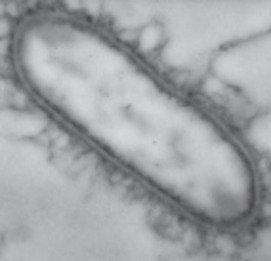
Conceptually, minerals represent challenging “substrates” (sources of nutrients and/or energy) for prokaryotes because they can transfer only soluble compounds into or out of their cells. Yet, prokaryotes are able to use a wide array of minerals as sources of energy, trace nutrients, electron acceptors and, remarkably, for positioning themselves using the Earth’s magnetic field. Mineral dissolution exposes microorganisms to a wide range of soluble and potentially toxic metals. Conversely, microbial mineralformation processes can entrap cells, producing microfossils. Intuitively, mineral dissolution and mineral precipitation must provide a benefit for the organism, that is, they must supply the cell with the energy and materials needed to maintain cell structure and function.

This content is for Registered members only. To subscribe, please
join one of our participating societies or contact the Editorial Team.

Login
Already a member? Log in here

Minerals as Substrates for Life: The Prokaryotic View Read More »

The Biogeochemistry of Gold

The biosphere catalyzes a variety of biogeochemical reactions that can transform gold. Microbial weathering contributes to the mobilization of gold by releasing elemental gold trapped within minerals and by solubilizing gold via oxidation-promoting complexation. Subsequent microbial destabilization of gold complexes coupled with bioprecipitation and biomineralization can immobilize gold, completing the cycle. Secondary gold can occur as colloidal particles, crystalline gold and bacteriomorphic structures, the latter being a controversial form of ‘biogenic’ gold.

This content is for Registered members only. To subscribe, please
join one of our participating societies or contact the Editorial Team.

Login
Already a member? Log in here

The Biogeochemistry of Gold Read More »

Scroll to Top

December 2025 --The Variscan Orogeny in Europe – Understanding Supercontinent Formation

The Variscan orogen formed between 380 and 300 million years ago through several accretionary and collisional cycles, culminating with the construction of the Pangea supercontinent. This process occurred via sequential opening and closure of oceanic basins, synchronous detachment of Gondwana derived continental ribbons, and their outboard amalgamation onto the Laurussia margin. The Variscan orogen is rather unique compared with other orogenic belts on Earth: its overthickened and dominantly magmatic crust in the central belt, surprisingly minor mantle involvement in the magmatic and geodynamic processes, coherent and pulsed magmatism along the collision suture, and its complex accretionary history. Because its final product, Pangea, is the youngest and best-understood supercontinent on Earth, the Variscan orogeny offers clues for understanding the mechanisms of supercontinent formation.