


Author name: Adrian A. Finch

Luminescence Applications in Petrology

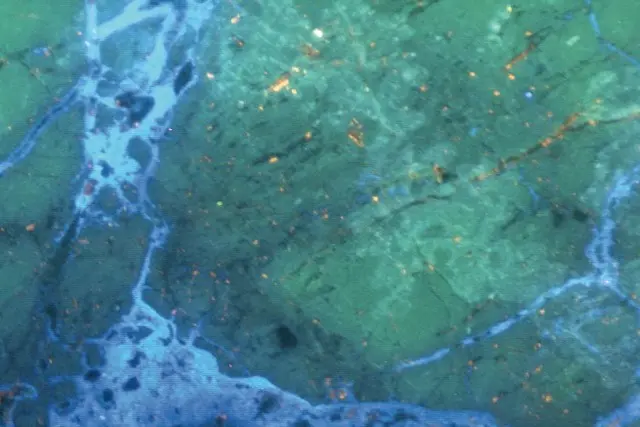
Luminescence is a powerful tool to infer physical and chemical conditions during mineral growth. It is very subtly linked to temperature of formation, composition and structural state, and related changes during rock evolution that often cause striking contrasts in the light emitted. This information can show magma sources and the hydrothermal evolution of igneous rocks, sources and diagenesis in sedimentary systems, and the pressure–temperature evolution during metamorphism. However, luminescence is most powerful when it goes beyond imaging, coupling with spectroscopies and microgeochemical techniques. We present examples of luminescence spectroscopies in igneous, sedimentary, and metamorphic rocks to show how these methods elucidate geological processes. Luminescence imaging is an exciting scientific frontier in which novel methods provide ever deeper insights into petrogenesis.

This content is for Registered members only. To subscribe, please
join one of our participating societies or contact the Editorial Team.

Login
Already a member? Log in here

Luminescence Applications in Petrology Read More »
Continental Crust at Mantle Depths: Key Minerals and Microstructures

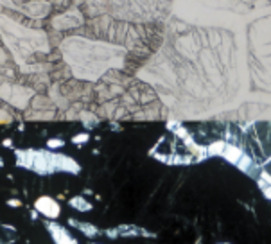
Finding evidence for ultrahigh-pressure (UHP) metamorphism in crustal rocks is far from straightforward. The index minerals coesite and diamond are incredibly inconspicuous and are therefore difficult to use as UHP prospecting tools. Consequently, petrographers rely on recognizing subtle breakdown microstructures that result from pressure release during the return to the surface of the once deeply buried rock. Similarly, many other UHP minerals are first suspected on the basis of typical reaction or exsolution microstructures. Thus, the painstaking use of microscopic techniques has been fundamental to the tremendous advances in characterizing, quantifying, and understanding macroscopic-scale, deep continental subduction, rapid exhumation, and mountain-building processes.

This content is for Registered members only. To subscribe, please
join one of our participating societies or contact the Editorial Team.

Login
Already a member? Log in here

Continental Crust at Mantle Depths: Key Minerals and Microstructures Read More »

Scroll to Top

December 2025 --The Variscan Orogeny in Europe – Understanding Supercontinent Formation

The Variscan orogen formed between 380 and 300 million years ago through several accretionary and collisional cycles, culminating with the construction of the Pangea supercontinent. This process occurred via sequential opening and closure of oceanic basins, synchronous detachment of Gondwana derived continental ribbons, and their outboard amalgamation onto the Laurussia margin. The Variscan orogen is rather unique compared with other orogenic belts on Earth: its overthickened and dominantly magmatic crust in the central belt, surprisingly minor mantle involvement in the magmatic and geodynamic processes, coherent and pulsed magmatism along the collision suture, and its complex accretionary history. Because its final product, Pangea, is the youngest and best-understood supercontinent on Earth, the Variscan orogeny offers clues for understanding the mechanisms of supercontinent formation.