
Author name: Hikaru Yabuta

One’s Trash is Another’s Treasure: Cosmic Rubble Piles

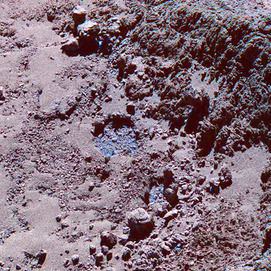
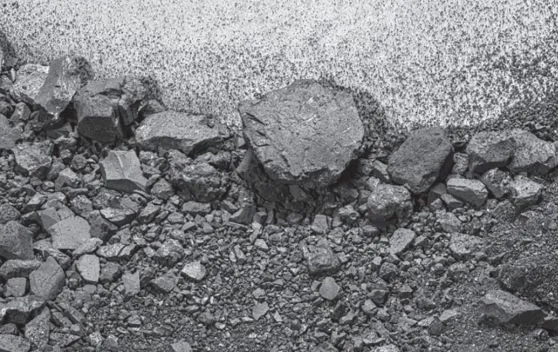
Until 15 years ago, meteorites and cosmic dust were the only extraterrestrial materials available for investigating the nature and chemical evolution of the early Solar System. Since then, three major sample return missions have significantly advanced our understanding of the material composing the small bodies that populate our Solar System. The asteroid sample return mission Hayabusa first proved the direct link between an asteroid type and the most common type of meteorites falling to Earth. The Hayabusa2 and OSIRIS-REx missions recently collected and returned material from two carbonaceous asteroids, Ryugu and Bennu, respectively. Together, the results from those samples are revealing information not gleaned from studies of meteorites and are revolutionizing our understanding of the formation and evolution of planetary bodies at the dawn of our Solar System.

This content is for Registered members only. To subscribe, please
join one of our participating societies or contact the Editorial Team.

Login
Already a member? Log in here

One’s Trash is Another’s Treasure: Cosmic Rubble Piles Read More »
Formation and Evolution Mechanisms for Organic Matter in Space

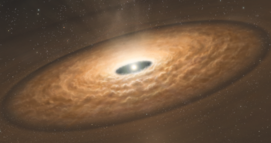
Organic compounds are a major component of dust in molecular clouds, alongside silicates and water ice, due to the high abundances of elements that make up these compounds in the Galaxy. The initial molecular inventory of the Solar System, inherited from the molecular cloud, was modified and new complex molecules were formed in the protoplanetary disk and planetesimals. Because astronomical observations mainly target gas, while cosmochemical evidence deals with solid phases, it is crucial to link discrepant knowledge on organic species through state-of-the-art modeling. This chapter reviews the latest understanding of surface reactions on inter- stellar dusts, gas–dust reactions in the protoplanetary disk, and alteration processes on planetesimals in the early Solar System.

This content is for Registered members only. To subscribe, please
join one of our participating societies or contact the Editorial Team.

Login
Already a member? Log in here

Formation and Evolution Mechanisms for Organic Matter in Space Read More »

Organic Molecules and Volatiles in Comets

Organic molecules and volatiles (e.g. H2O, CO, CO2) are the major components of comets. The majority of the organic compounds found within comets were produced by ice irradiation in dense molecular clouds and in the protoplanetary disk prior to comet formation. Comets are essentially repositories of protocometary material. As a result, comets do not show the clear trends in chemical and isotopic compositions that would be expected from our understanding of their formation locations. Rather, comets record chemical evolution in the protoplanetary disk and allow us to unveil the formation history of the organics and volatiles.

This content is for Registered members only. To subscribe, please
join one of our participating societies or contact the Editorial Team.

Login
Already a member? Log in here

Organic Molecules and Volatiles in Comets Read More »

Scroll to Top

December 2025 --The Variscan Orogeny in Europe – Understanding Supercontinent Formation

The Variscan orogen formed between 380 and 300 million years ago through several accretionary and collisional cycles, culminating with the construction of the Pangea supercontinent. This process occurred via sequential opening and closure of oceanic basins, synchronous detachment of Gondwana derived continental ribbons, and their outboard amalgamation onto the Laurussia margin. The Variscan orogen is rather unique compared with other orogenic belts on Earth: its overthickened and dominantly magmatic crust in the central belt, surprisingly minor mantle involvement in the magmatic and geodynamic processes, coherent and pulsed magmatism along the collision suture, and its complex accretionary history. Because its final product, Pangea, is the youngest and best-understood supercontinent on Earth, the Variscan orogeny offers clues for understanding the mechanisms of supercontinent formation.