
Author name: Holly Stein

Sulfides and Their Little Darling, Molybdenite

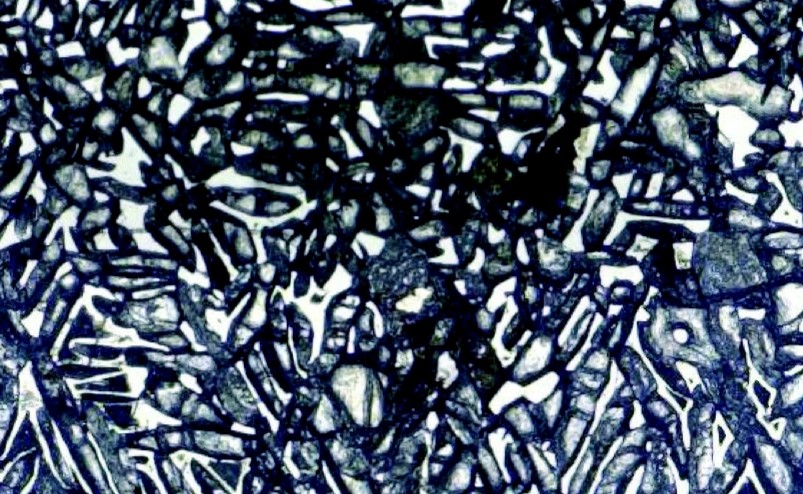
Rhenium-osmium geochronology of sulfides and its Os tracer accompaniment have taken their place among geochronometers, although the journey was not without doubters and disparagers. This review highlights several historical hurdles overcome in dating sulfides. The opening act was the debut of molybdenite, which provided an accessible radiometric clock and early insight into the accuracy of the 187Re decay constant. Once controversies surrounding newly minted and game-changing Re-Os molybdenite ages died down, the door flung wide open to begin dating other sulfides, most notably, arsenopyrite and pyrite. Applications sprinted from the ore geology community to constraining the timing of important events, from Earth’s oxygenation to the amalgamation of tectonic terranes. The power of Re-Os sulfide dating in crustal environments was unleashed.

Sulfides and Their Little Darling, Molybdenite Read More »
The Re-Os Revolution: Mighty Messages From Two of Earth’s Rarest Elements

The exceptional power and versatility of the Re-Os radioactive decay system for Earth science stems from the distinctive geochemical behavior of its constituent elements. Here, we first explain how the positions of Re and Os in the periodic table are responsible for their highly siderophile, chalcophile, and organophile properties. We then discuss how these properties dictate the distribution of Re and Os within and at the surface of the Earth and other planetary bodies. Lastly, we describe how the analytical challenges posed by the unusual geochemistry of these elements were overcome with major technological advances, leading to a dramatic decrease in the amount of sample material required for Re-Os isotopic analysis, thereby sparking an explosion of new applications.

This content is for Registered members only. To subscribe, please
join one of our participating societies or contact the Editorial Team.

Login
Already a member? Log in here

The Re-Os Revolution: Mighty Messages From Two of Earth’s Rarest Elements Read More »

Scroll to Top

December 2025 --The Variscan Orogeny in Europe – Understanding Supercontinent Formation

The Variscan orogen formed between 380 and 300 million years ago through several accretionary and collisional cycles, culminating with the construction of the Pangea supercontinent. This process occurred via sequential opening and closure of oceanic basins, synchronous detachment of Gondwana derived continental ribbons, and their outboard amalgamation onto the Laurussia margin. The Variscan orogen is rather unique compared with other orogenic belts on Earth: its overthickened and dominantly magmatic crust in the central belt, surprisingly minor mantle involvement in the magmatic and geodynamic processes, coherent and pulsed magmatism along the collision suture, and its complex accretionary history. Because its final product, Pangea, is the youngest and best-understood supercontinent on Earth, the Variscan orogeny offers clues for understanding the mechanisms of supercontinent formation.