


Author name: Punam Dalai

Incubating Life: Prebiotic Sources of Organics for the Origin of Life

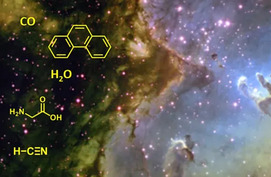
The onset of life on Earth was preceded by prebiotic chemistry in which complex organic molecules were formed from simpler ones in the presence of energy sources. These prebiotic organics were either synthesized on Earth itself (endogenously) or synthesized extraterrestrially (exogenously) and then delivered to Earth. Organics have been detected in space and have been successfully synthesized under experimental conditions simulating both extraterrestrial environments and early Earth environments. Homochirality and enantiomeric enrichment of organic molecules, which were once considered to be biosignatures, can, in fact, be achieved abiotically. It is important to determine conditions that allow the formation of prebiotic organics and those that preserve them against degradation.

This content is for Registered members only. To subscribe, please
join one of our participating societies or contact the Editorial Team.

Login
Already a member? Log in here

Incubating Life: Prebiotic Sources of Organics for the Origin of Life Read More »
The Transition from Geochemistry to Biogeochemistry

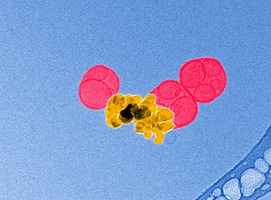
Paradigm-changing discoveries about stellar and planetary evolution, the survival of organic molecules and microorganisms under extreme conditions, and geochemical environments on early Earth and other planets are sparking a synergistic dialogue between geoscientists, chemists, and biologists to understand how life originated. To achieve this goal, we must (i) explain the non enzymatic synthesis of biologically relevant organic molecules under geologically plausible conditions; (ii) overcome the rigid conceptual dichotomy of the “RNA world” versus the “metabolism-first” hypotheses; and (iii) develop high-throughput analytical systems to sample the myriad possible combinations of environmental conditions to find those that could initiate life. This issue of Elements highlight the roles of minerals and geochemical environments in the emergence of protocells, the cell-like entities that might have preceded the Last Universal Common Ancestor.

This content is for Registered members only. To subscribe, please
join one of our participating societies or contact the Editorial Team.

Login
Already a member? Log in here

The Transition from Geochemistry to Biogeochemistry Read More »

Scroll to Top

December 2025 --The Variscan Orogeny in Europe – Understanding Supercontinent Formation

The Variscan orogen formed between 380 and 300 million years ago through several accretionary and collisional cycles, culminating with the construction of the Pangea supercontinent. This process occurred via sequential opening and closure of oceanic basins, synchronous detachment of Gondwana derived continental ribbons, and their outboard amalgamation onto the Laurussia margin. The Variscan orogen is rather unique compared with other orogenic belts on Earth: its overthickened and dominantly magmatic crust in the central belt, surprisingly minor mantle involvement in the magmatic and geodynamic processes, coherent and pulsed magmatism along the collision suture, and its complex accretionary history. Because its final product, Pangea, is the youngest and best-understood supercontinent on Earth, the Variscan orogeny offers clues for understanding the mechanisms of supercontinent formation.