
Author name: James D. Webster

Magmatic Apatite: A Powerful, Yet Deceptive, Mineral

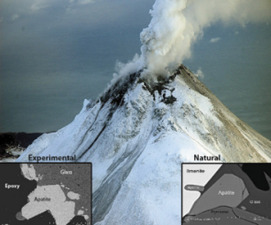
Apatite may be a minor constituent in magmatic rocks but it is a powerful research tool because it is ubiquitous and it incorporates magmatic water, halogens, S, C, and trace elements including Sr, U, Th, and the rare earth elements. Recent advances in experimental and analytical methodologies allow geologists to analyze apatite textures and compositions in great detail. This information improves understanding of the behavior of volatiles and trace elements both in terrestrial igneous melts and their related fluids and in extraterrestrial bodies, such as the Moon and Mars. With more research, the petrological power of apatite can only increase with respect to understanding eruptive, pluton-building, and mineralizing magmatic systems.

This content is for Registered members only. To subscribe, please
join one of our participating societies or contact the Editorial Team.

Login
Already a member? Log in here

Magmatic Apatite: A Powerful, Yet Deceptive, Mineral Read More »
Volatiles in Magmatic-Volcanic Systems

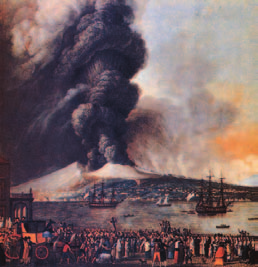
The abundance and flux of volatiles are important to the hazards associated with explosive volcanic eruptions. Volatiles in magmas can be determined from investigations of melt and fluid inclusions in combination with volatile solubility data. A comparison of the newly deter- mined solubilities of H 2O, SO2, and Cl in a molten Vesuvius phonolite with the compositions of Mt. Somma-Vesuvius melt and fluid inclusions further elucidates degassing and eruptive processes for this volcano.

This content is for Registered members only. To subscribe, please
join one of our participating societies or contact the Editorial Team.

Login
Already a member? Log in here

Volatiles in Magmatic-Volcanic Systems Read More »

Scroll to Top

December 2025 --The Variscan Orogeny in Europe – Understanding Supercontinent Formation

The Variscan orogen formed between 380 and 300 million years ago through several accretionary and collisional cycles, culminating with the construction of the Pangea supercontinent. This process occurred via sequential opening and closure of oceanic basins, synchronous detachment of Gondwana derived continental ribbons, and their outboard amalgamation onto the Laurussia margin. The Variscan orogen is rather unique compared with other orogenic belts on Earth: its overthickened and dominantly magmatic crust in the central belt, surprisingly minor mantle involvement in the magmatic and geodynamic processes, coherent and pulsed magmatism along the collision suture, and its complex accretionary history. Because its final product, Pangea, is the youngest and best-understood supercontinent on Earth, the Variscan orogeny offers clues for understanding the mechanisms of supercontinent formation.