


Author name: Richard B. Johnston

Water and Sanitation in Developing Countries: Geochemical Aspects of Quality and Treatment

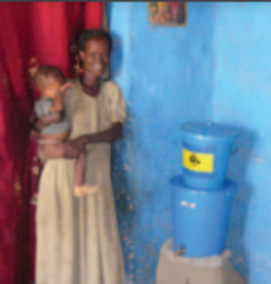
Safe drinking water and basic sanitation are key elements of the Millennium Development Goals, a United Nations initiative. The microbial quality of drinking water is inherently linked to sanitation practices because fecal pathogens are the most common source of drinking water contamination in developing countries. Filtration of water through soil and aquifer sediments can provide natural protection against pathogens, and this makes groundwater an attractive option for safe drinking water supply. Groundwater quality may, however, be compromised by the leaching of natural chemical constituents from geologic materials. Conversely, geochemical processes provide the basis both for the removal of such contaminants and for the recovery of nutrients from wastewater through physicochemical treatment.
This content is for Registered members only. To subscribe, please
join one of our participating societies or contact the Editorial Team.

Login
Already a member? Log in here

Water and Sanitation in Developing Countries: Geochemical Aspects of Quality and Treatment Read More »

Water: Is There a Global Crisis?

Providing safe drinking water to the world’s 6.9 billion and growing population is one of the greatest challenges of the century. Consideration of the global water cycle, however, shows that the available renewable freshwater resources exceed the current human demand by roughly a factor of 10. Scarcity results from the uneven spatial and temporal distribution of water. Over-withdrawal of surface water and groundwater has led to depletion of water resources and environmental damage in some regions. In many developing countries, inadequate sanitation is a major cause of disease. These problems can be solved through the improved management of water infrastructure and water resources, advances in technology, and a valuation of water that reflects its importance to society. The role of Earth scientists in addressing the global water crisis is crucial. Indeed, resource monitoring, development of novel waste-water treatment technologies, and determination of the quantities of water that can be withdrawn without causing adverse effects on the environment will be essential for the efficient management of global water resources in the future.

This content is for Registered members only. To subscribe, please
join one of our participating societies or contact the Editorial Team.

Login
Already a member? Log in here

Water: Is There a Global Crisis? Read More »

Scroll to Top

December 2025 --The Variscan Orogeny in Europe – Understanding Supercontinent Formation

The Variscan orogen formed between 380 and 300 million years ago through several accretionary and collisional cycles, culminating with the construction of the Pangea supercontinent. This process occurred via sequential opening and closure of oceanic basins, synchronous detachment of Gondwana derived continental ribbons, and their outboard amalgamation onto the Laurussia margin. The Variscan orogen is rather unique compared with other orogenic belts on Earth: its overthickened and dominantly magmatic crust in the central belt, surprisingly minor mantle involvement in the magmatic and geodynamic processes, coherent and pulsed magmatism along the collision suture, and its complex accretionary history. Because its final product, Pangea, is the youngest and best-understood supercontinent on Earth, the Variscan orogeny offers clues for understanding the mechanisms of supercontinent formation.