
Author name: Jean-François Moyen

Granites and the Nature of the Variscan Crust

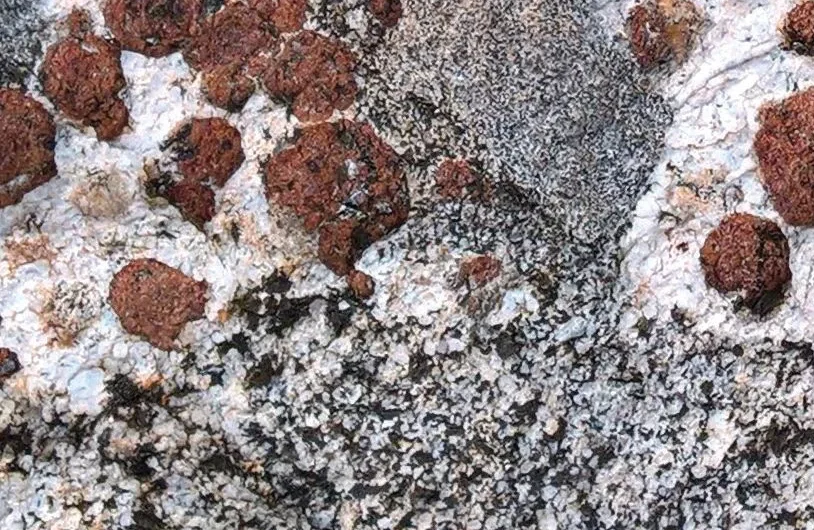
The orogenic crust of the European Variscan belt is granite-rich and only locally has a mafic lower layer. The core of the belt originated by massive melting of fertile quartzo–feldspathic sources (felsic meta-sedimentary or meta-igneous) derived from an Ediacaran–Ordovician accretionary system. An unusually felsic lower crust formed either by relamination of previously subducted continental crust or by melting of crustal rocks to produce a granitic upper crust and a laminated, restitic lower crust. This is in strong contrast to conventional models, developed mainly for magmatic arcs, that find or infer mafic lower crustal compositions. Thus, global estimates on the nature and evolution of the continental crust should consider the heterogeneity of the deep crust produced in various types of orogenies.

This content is for Registered members only. To subscribe, please
join one of our participating societies or contact the Editorial Team.

Login
Already a member? Log in here

Granites and the Nature of the Variscan Crust Read More »
At the Dawn of Continents: Archean Tonalite-Trondhjemite- Granodiorite Suites

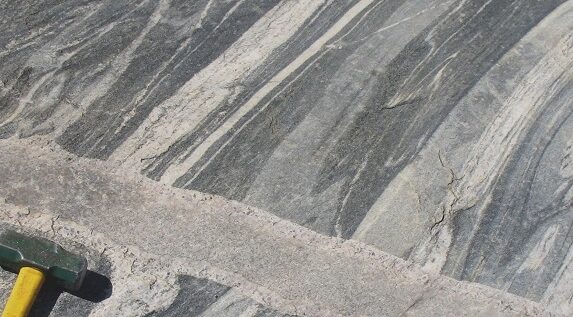
Archean rocks of the tonalite-trondhjemite-granodiorite (TTG) suite are dominant constituents of Earth’s earliest preserved silicic crust, while conversely rare in Phanerozoic continental crust. Their formation represents the first critical step towards the construction and preservation of continents. Formation of most TTG magmas involved partial melting of hydrous, probably silicified, mafic rocks at various depths (20–50 km, possibly up to 100 km). Many possible tectonic scenarios fit the petrological and geochemical constraints on TTG formation, whether compatible with a global plate tectonic- like regime or not. Refining such scenarios is a major challenge that requires systematically integrating the constraints on TTG formation—relying especially on accessory minerals as key petrogenetic tools—with the geological context on a regional scale.

This content is for Registered members only. To subscribe, please
join one of our participating societies or contact the Editorial Team.

Login
Already a member? Log in here

At the Dawn of Continents: Archean Tonalite-Trondhjemite- Granodiorite Suites Read More »

Scroll to Top

December 2025 --The Variscan Orogeny in Europe – Understanding Supercontinent Formation

The Variscan orogen formed between 380 and 300 million years ago through several accretionary and collisional cycles, culminating with the construction of the Pangea supercontinent. This process occurred via sequential opening and closure of oceanic basins, synchronous detachment of Gondwana derived continental ribbons, and their outboard amalgamation onto the Laurussia margin. The Variscan orogen is rather unique compared with other orogenic belts on Earth: its overthickened and dominantly magmatic crust in the central belt, surprisingly minor mantle involvement in the magmatic and geodynamic processes, coherent and pulsed magmatism along the collision suture, and its complex accretionary history. Because its final product, Pangea, is the youngest and best-understood supercontinent on Earth, the Variscan orogeny offers clues for understanding the mechanisms of supercontinent formation.