

Author name: Michel Jébrak

Educating the Resource Geologist of the Future: Between Observation and Imagination

Training geologists for a career in the mining industry has changed over the years. It has become at the same time more specialized and with a broader approach. The modern resource geologist needs to understand new styles of ore deposits, the impact of energy transition on the types of deposits and to implement mining processes, the increasing number of mining regulations, and the shift toward educating populations in countries that are new to mining. Based on observation and imagination, rooted in fundamental science, the education of a resource geologist has been transformed by the digital revolution and the integration of the principles of sustainable development. Training future resource geologists means changing the role of teachers to better develop the imaginations of their students and to increasing what students know about the social impact of mining.

This content is for Registered members only. To subscribe, please
join one of our participating societies or contact the Editorial Team.

Login
Already a member? Log in here

Educating the Resource Geologist of the Future: Between Observation and Imagination Read More »
Phosphates and Nuclear Waste Storage

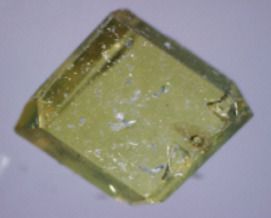
Asignificant effort has been made by the scientific community to evaluate the potential of phosphate minerals and glasses as nuclear waste storage hosts. Radioactive waste–bearing phosphates, including monazites, apatites, and glasses, can be readily synthesized in the laboratory. Because of their low solubilities and slow dissolution rates, these phosphates are more resistant to corrosion by geological fluids than many other potential nuclear waste storage hosts, including borosilicate glass. Phosphates are, however, not currently being used for nuclear waste storage, in part because their synthesis at the industrial scale is relatively labor intensive, often requiring the separation of the waste into distinct fractions of elements. Such limitations may be overcome by adding phosphate amendments to backfill material, which could provoke the precipitation of stable radiactive waste–bearing phosphate minerals in situ.

This content is for Registered members only. To subscribe, please
join one of our participating societies or contact the Editorial Team.

Login
Already a member? Log in here

Phosphates and Nuclear Waste Storage Read More »

Scroll to Top

December 2025 --The Variscan Orogeny in Europe – Understanding Supercontinent Formation

The Variscan orogen formed between 380 and 300 million years ago through several accretionary and collisional cycles, culminating with the construction of the Pangea supercontinent. This process occurred via sequential opening and closure of oceanic basins, synchronous detachment of Gondwana derived continental ribbons, and their outboard amalgamation onto the Laurussia margin. The Variscan orogen is rather unique compared with other orogenic belts on Earth: its overthickened and dominantly magmatic crust in the central belt, surprisingly minor mantle involvement in the magmatic and geodynamic processes, coherent and pulsed magmatism along the collision suture, and its complex accretionary history. Because its final product, Pangea, is the youngest and best-understood supercontinent on Earth, the Variscan orogeny offers clues for understanding the mechanisms of supercontinent formation.