


Author name: John Ludden

Geochemically Based Solutions for Urban Society: London, A Case Study

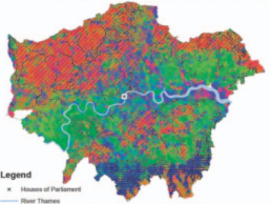
Geochemical data and models can provide a baseline by which to compare changes in the composition of surface waters, groundwater, the atmosphere, soils, and sediments in the coastal megacity of London. The usefulness of geochemical data is dependent on effective communication, which can be challenging. Geochemical tools and approaches can provide evidence to underpin decision making as well as solutions to environmental problems in cities. Geochemists must move beyond simple provision of evidence to describing a solution and then convincing politicians to put this solution into practice.

This content is for Registered members only. To subscribe, please
join one of our participating societies or contact the Editorial Team.

Login
Already a member? Log in here

Geochemically Based Solutions for Urban Society: London, A Case Study Read More »
The Impact of Geochemistry

As geochemists and mineralogists, we are well aware of the impact of our science. We can often reel off examples of how our discoveries have influenced industry and improved humankind’s knowledge about how the Earth works, as well as how natural and anthropogenic processes have led to its present state. Moreover, because of a century of analytical developments and conceptual breakthroughs, geochemists are now versatile and can now work across the entire spectrum of the Earth sciences. However, we are not so good at promoting the social and economic impacts of geochemistry.

This content is for Registered members only. To subscribe, please
join one of our participating societies or contact the Editorial Team.

Login
Already a member? Log in here

The Impact of Geochemistry Read More »

Scroll to Top

December 2025 --The Variscan Orogeny in Europe – Understanding Supercontinent Formation

The Variscan orogen formed between 380 and 300 million years ago through several accretionary and collisional cycles, culminating with the construction of the Pangea supercontinent. This process occurred via sequential opening and closure of oceanic basins, synchronous detachment of Gondwana derived continental ribbons, and their outboard amalgamation onto the Laurussia margin. The Variscan orogen is rather unique compared with other orogenic belts on Earth: its overthickened and dominantly magmatic crust in the central belt, surprisingly minor mantle involvement in the magmatic and geodynamic processes, coherent and pulsed magmatism along the collision suture, and its complex accretionary history. Because its final product, Pangea, is the youngest and best-understood supercontinent on Earth, the Variscan orogeny offers clues for understanding the mechanisms of supercontinent formation.