

Author name: Jonathan D. Blundy

Crustal Magmatic Systems from the Perspective of Heat Transfer

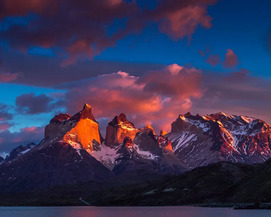
Crustal magmatic systems are giant heat engines, fed from below by pulses of hot magma, and depleted by loss of heat to their surroundings via conduction or convection. Heat loss drives crystallization and degassing, which change the physical state of the system from relatively low-viscosity, eruptible melt, to high-viscosity, immobile, partially molten rock. We explore the temporal evolution of incrementally grown magmatic systems using numerical models of heat transfer. We show that their physical characteristics depend on magma emplacement rates and that the majority of a magma system’s lifetime is spent in a highly crystalline state. We speculate about what we can, and cannot, learn about magmatic systems from their volcanic output.

This content is for Registered members only. To subscribe, please
join one of our participating societies or contact the Editorial Team.

Login
Already a member? Log in here

Crustal Magmatic Systems from the Perspective of Heat Transfer Read More »
Superhydrous Arc Magmas in the Alpine Context

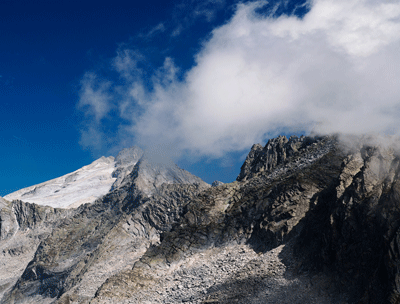
Magmatic rocks in the Alps are scarce. What little arc magmatism there was pre-dates the Eurasia–Adria collision at 43–34 Ma but ends at 30–29 Ma. Conversely, geochemical data for magmatic rocks from the Alps resemble that of subduction-related magmatic arcs. A characteristic of Alpine magmatism is the occurrence of relatively deep (80–100 km) superhydrous (>8 wt% H2O) low-K primary magmas in the east and shoshonitic K-rich magmas in the west. These features are likely related to the absence of vigorous mantle wedge convection. Superhydrous primary magmas undergo extensive crystallization and fluid saturation at depth, producing high ratios of plutonic to volcanic rocks. We speculate that superhydrous primary arc magmas are a consequence of slow convergence and the initial architecture of subducting crust.

This content is for Registered members only. To subscribe, please
join one of our participating societies or contact the Editorial Team.

Login
Already a member? Log in here

Superhydrous Arc Magmas in the Alpine Context Read More »

Scroll to Top

December 2025 --The Variscan Orogeny in Europe – Understanding Supercontinent Formation

The Variscan orogen formed between 380 and 300 million years ago through several accretionary and collisional cycles, culminating with the construction of the Pangea supercontinent. This process occurred via sequential opening and closure of oceanic basins, synchronous detachment of Gondwana derived continental ribbons, and their outboard amalgamation onto the Laurussia margin. The Variscan orogen is rather unique compared with other orogenic belts on Earth: its overthickened and dominantly magmatic crust in the central belt, surprisingly minor mantle involvement in the magmatic and geodynamic processes, coherent and pulsed magmatism along the collision suture, and its complex accretionary history. Because its final product, Pangea, is the youngest and best-understood supercontinent on Earth, the Variscan orogeny offers clues for understanding the mechanisms of supercontinent formation.