

Author name: Jörg Hermann

Deep Fluids in Subducted Continental Crust

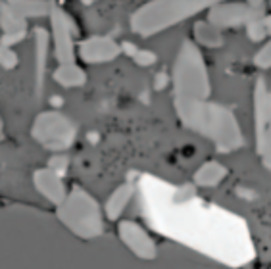
Establishing the timing and duration of ultrahigh-pressure metamorphism (UHP) for crustal rocks subducted to mantle depths of over 100 km requires high-precision geochronology directly coupled with pressure-sensitive indicators. The best links between UHP conditions and an age estimate are inclusions of the UHP indicator minerals coesite and/or diamond in datable zircon or garnet. Lu–Hf and Sm–Nd garnet ages define the prograde and peak portions of the pressure–temperature path for cold (<700 ºC), fast (>1 cm/y) UHP systems. UHP metamorphism in hotter (>800 ºC) and slower (<1 cm/y) terranes is best dated by U–Pb analysis of coesite-bearing zircon domains coupled with Sm–Nd and Lu–Hf garnet analysis.><1 cm/y) terranes is best dated by U–Pb analysis of coesite-bearing zircon domains coupled with Sm–Nd and Lu–Hf garnet analysis.

This content is for Registered members only. To subscribe, please
join one of our participating societies or contact the Editorial Team.

Login
Already a member? Log in here

Deep Fluids in Subducted Continental Crust Read More »
Zircon Behaviour in Deeply Subducted Rocks

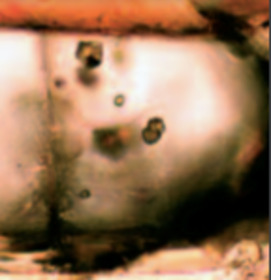
Zircon is of fundamental importance in the investigation of deeply subducted crustal rocks in which it is a trace constituent. Tiny mineral inclusions within zircon may be the only indicators that rocks were subducted to a depth of up to 150 km. Because zircon is resistant to physical and chemical changes, it preserves stages of the subduction and exhumation history within submillimetre-size grains. Advanced in situ techniques allow us to date zircon domains and to determine their trace element composition. We can thus acquire a detailed knowledge of the temperature–pressure–time paths that these extraordinary rocks have experienced. Zircon studies provide evidence that subduction and exhumation act at plate tectonic speeds of 1–3 cm/year.

This content is for Registered members only. To subscribe, please
join one of our participating societies or contact the Editorial Team.

Login
Already a member? Log in here

Zircon Behaviour in Deeply Subducted Rocks Read More »

Scroll to Top

December 2025 --The Variscan Orogeny in Europe – Understanding Supercontinent Formation

The Variscan orogen formed between 380 and 300 million years ago through several accretionary and collisional cycles, culminating with the construction of the Pangea supercontinent. This process occurred via sequential opening and closure of oceanic basins, synchronous detachment of Gondwana derived continental ribbons, and their outboard amalgamation onto the Laurussia margin. The Variscan orogen is rather unique compared with other orogenic belts on Earth: its overthickened and dominantly magmatic crust in the central belt, surprisingly minor mantle involvement in the magmatic and geodynamic processes, coherent and pulsed magmatism along the collision suture, and its complex accretionary history. Because its final product, Pangea, is the youngest and best-understood supercontinent on Earth, the Variscan orogeny offers clues for understanding the mechanisms of supercontinent formation.